Pendant Lighting FAQs; Sizing, Placement, Style, and Everything Else
Pendant lights look simple. One fixture, one drop, one glow. Then you try to pick one for a kitchen island, a dining table, a bedroom corner, or a tall entry, and suddenly you are doing math, squinting at ceiling boxes, and debating bulb temperatures like it is a personality test.
This guide is built to answer the real, practical questions people ask about modern pendant lighting: size, spacing, hanging height, brightness, bulbs, dimmers, finishes, installation, safety, and care. It is brand-agnostic on purpose. Where it helps, we will also share how we think about pendants at Research.Lighting: fixtures as functional sculpture, with proportion and presence doing most of the heavy lifting.
Consider a lot of the answers as loose starting points. In a lot of instances (like aesthetic choices, spacing, etc) some of the most creative spaces are ones where designer's choose to break a 'rule' or two.
To start, though, if you're confused about what a pendant is - or want a briefer on their history or etymology, check out Defined: What Is a Pendant Light? Pendant Light Meaning. And for the sections that skew a little more technical, if you're confused about any of the terminology we've made a Glossary of Lighting Terminology page that may be worth perusing.

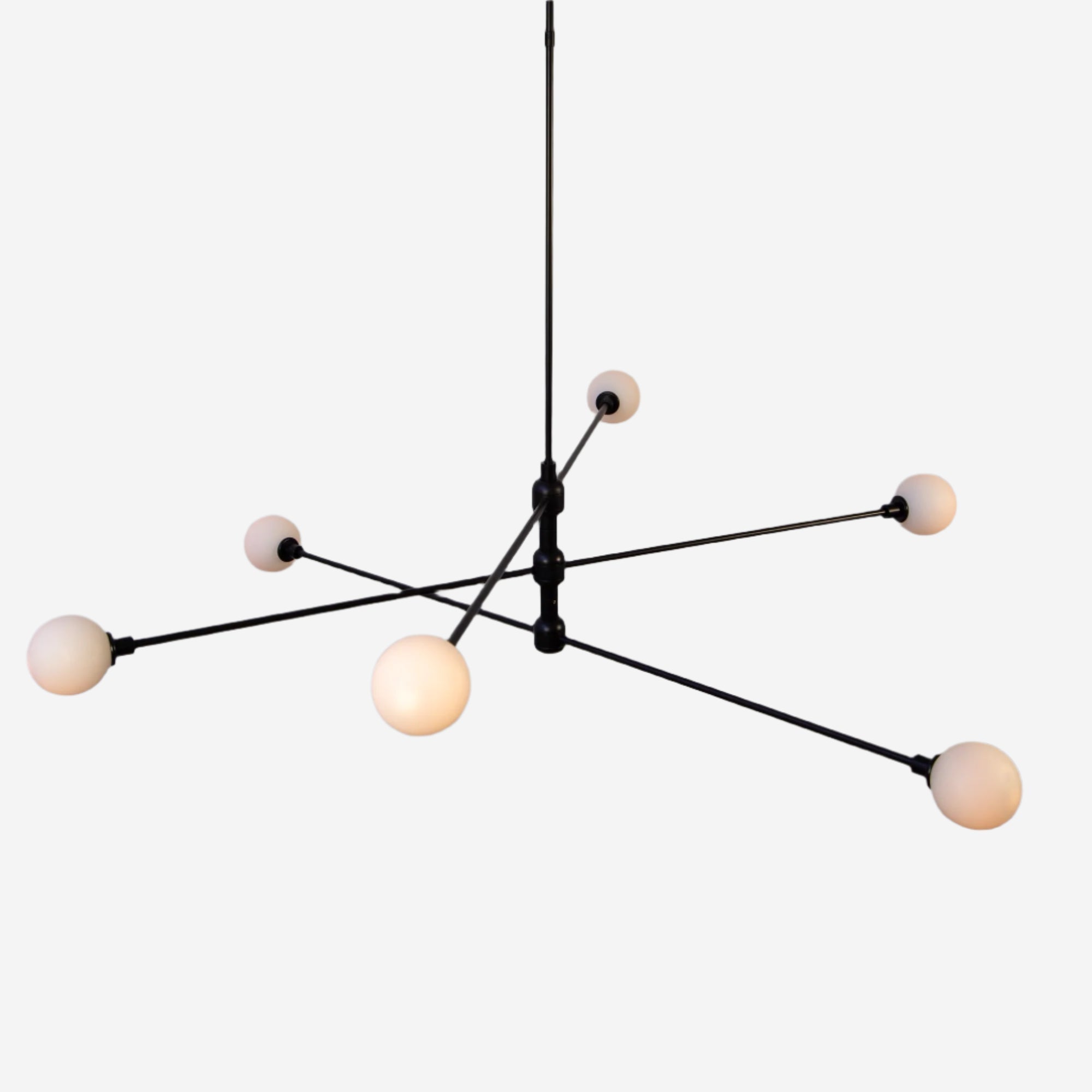
Bunch Pendant Light from Research.Lighting
Pendant Light Size, Scale, and Overall Proportion
How big should a pendant light be for a given space?
Start with what the pendant hangs over, not the room size. A pendant needs a relationship: island, table, nightstand, reading chair. If it is too small, it feels like a placeholder. If it is too large, it can crowd sightlines and make the room feel top-heavy. When in doubt, choose a size that reads clearly from across the room but still leaves breathing room around the edges of the surface below.
How do I choose the right pendant size for a dining table?
A solid rule is one half to two thirds of the table width for the overall fixture footprint. That applies whether you pick a single pendant, a multi-light fixture, or a linear pendant. The goal is to frame the table, not eclipse it. If your table is narrow, keep the fixture narrower. If your table is wide, you can scale up without it feeling aggressive.
What pendant size works best over a small or round table?
Round tables usually like round-ish pendants. The shape harmony helps. Keep the fixture compact enough that it does not extend past the table edge when viewed from the side. In breakfast nooks and small dining areas, a slightly smaller pendant often feels more relaxed and less like it is trying to dominate the room.
For more, see Do Pendant Lights Make a Room Look Smaller?
How wide should pendant lights be over a kitchen island?
For kitchen island pendant lights, think in zones. You want light where hands work, not at the very ends of the island where nothing happens except someone leaning with a coffee. A common approach is two or three pendants that visually fill the middle span of the island while leaving margin at both ends. If you choose a single large pendant, it should still leave clear space at the edges so the island does not feel crowded.
Is it better to use one large pendant or multiple smaller pendants?
One large pendant reads as one clean idea. It can feel calm and sculptural, especially over a dining table or a smaller island. Multiple smaller pendants create rhythm and distribute light more evenly over long work surfaces. Neither is more correct. Pick the mood: one confident gesture, or a repeat pattern that organizes the ceiling line.
How many pendants should I hang over a kitchen island or long table?
Two pendants is common for medium islands. Three for longer islands. Over long tables, a single linear pendant or a multi-light fixture often looks cleaner than a row of separate pendants. If you do use multiple pendants over a long table, keep them aligned and evenly spaced so the setup reads intentional, not improvised.
Can a pendant be intentionally off-center and still look right?
Yes. Off-center pendants can feel modern and architectural, especially in bedrooms, reading corners, and living areas where the furniture layout is not perfectly symmetrical. The key is commitment: align it to a purposeful element (a side table, a chair, a vignette) so it looks chosen, not mistaken.

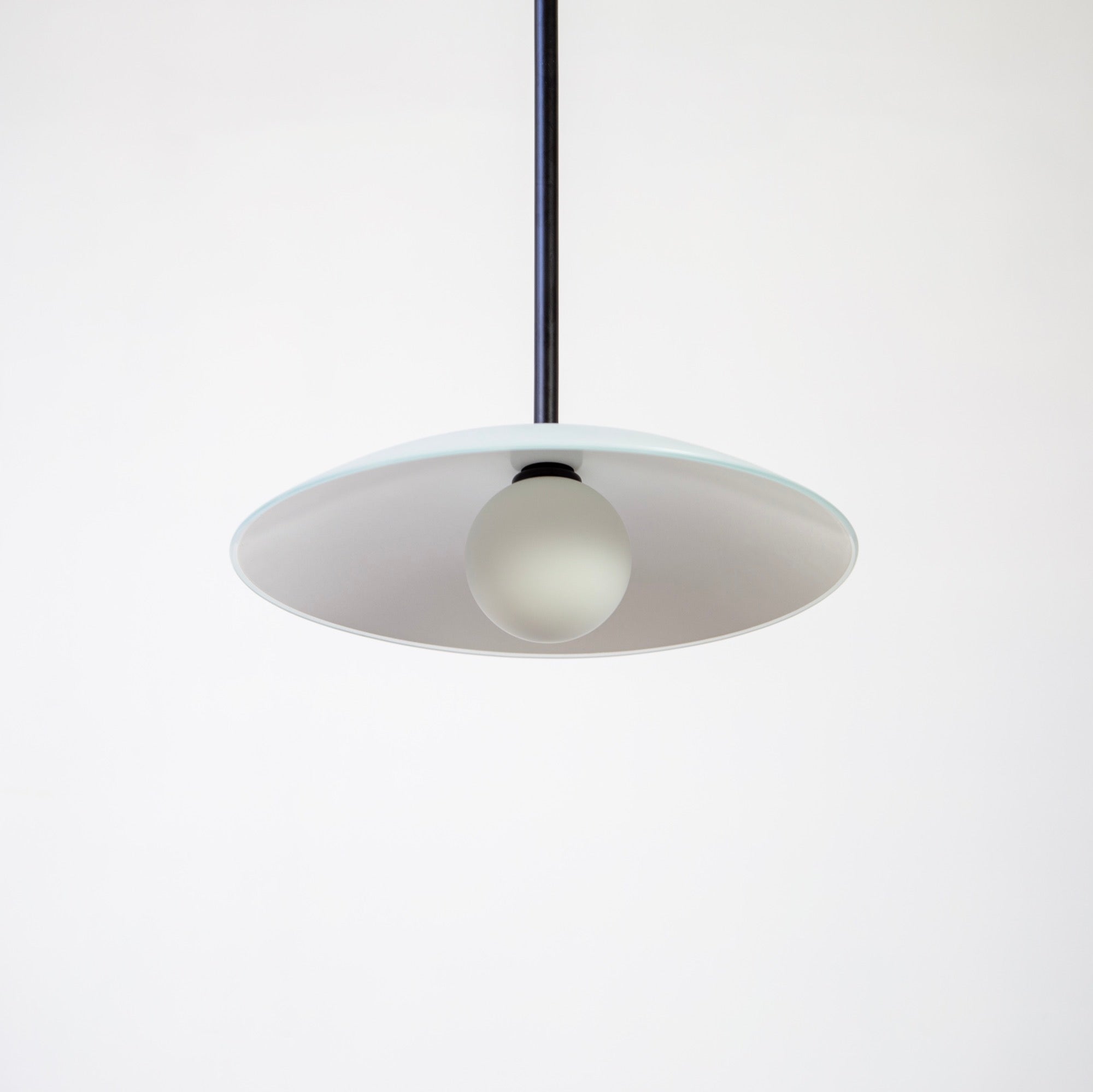
Dish Pendant Light from Research.Lighting
Pendant Light Spacing and Alignment
What is the ideal spacing between multiple pendant lights?
A common guideline is 24 to 30 inches from center to center, but spacing should also consider pendant diameter. Bigger pendants need more room. Smaller pendants can be closer. Stand back and look at the grouping as one composition. You want a steady rhythm, not a cluster.
How far from the edge of a kitchen island should pendants hang?
Often 12 to 15 inches in from the island edge works well. This keeps light over the work surface and helps avoid head bumps when someone leans over the counter. If you have a sink on the island, you may shift slightly based on where the main prep zone actually is.
For more, see Where Should Pendant Lights Be Placed?
Should pendants be centered on the island, sink, or work zone?
Choose function over pure symmetry. If your main work zone is the prep area, center pendants there. If the sink is the anchor of daily use, center over the sink line. The best pendant layout supports how the kitchen is used, not how it photographs.
Should pendants align with bar stools or the island length?
Usually align with the island length. Bar stools move. The island does not. Centering pendants over the island span tends to look cleaner and stays correct even when the seating shifts.
How do I space pendants evenly when the ceiling box placement is off?
You have options: a swag setup, a multi-point canopy, a larger canopy that covers an imperfect box location, or rewiring and relocating the box. If you want perfect alignment and the ceiling box is far off, an electrician can move it. If the offset is minor, a thoughtful canopy solution can make it disappear visually.
For more, see Can You Hang a Pendant Light Anywhere?.

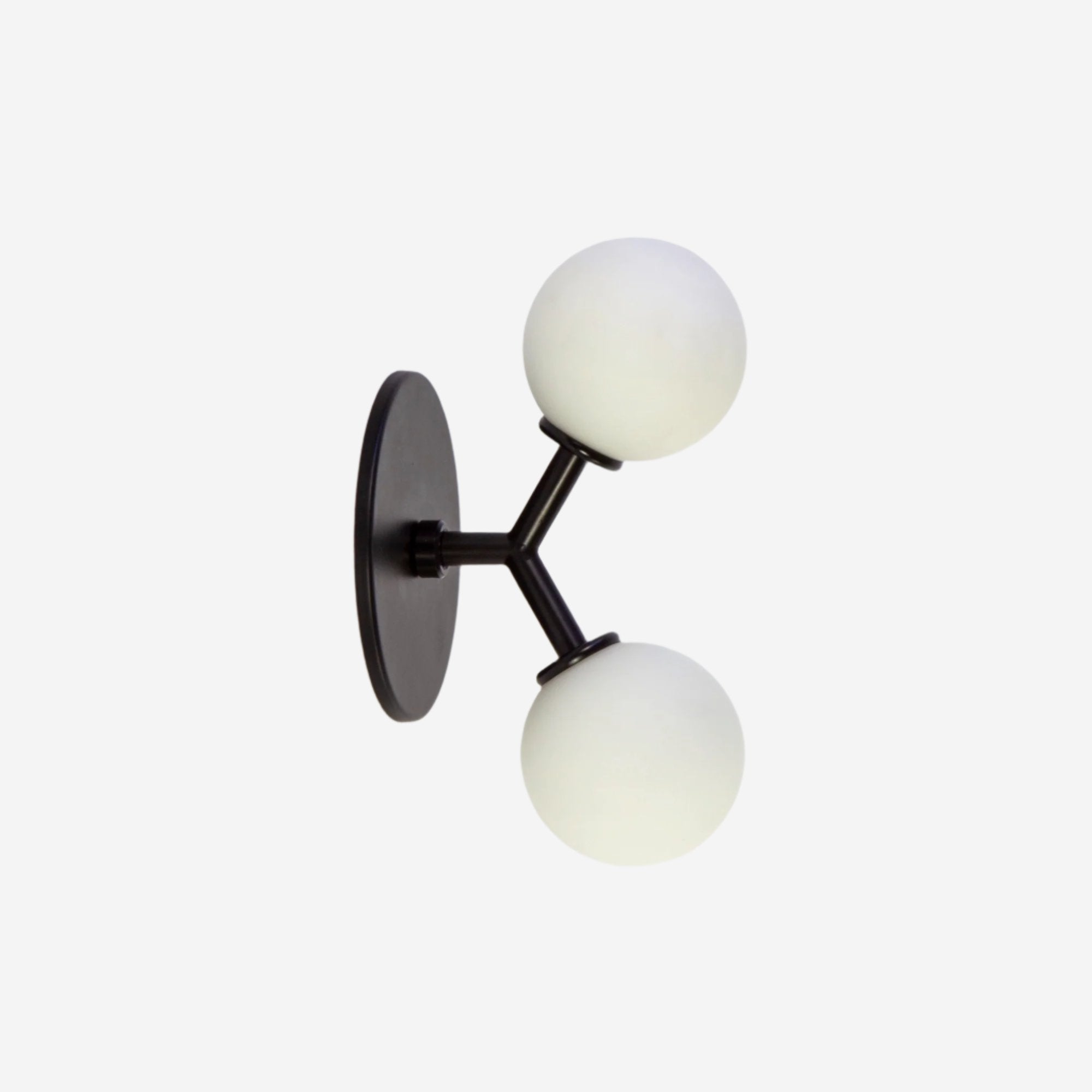
Y Pendant Light Mini from Research.Lighting
Pendant Light Hanging Height Guidelines
How high should a pendant light hang over a dining table?
A typical range is 30 to 34 inches from tabletop to the bottom of the pendant. This gives good light on the table and keeps faces visible. If the fixture is visually dense, hang slightly higher. If you want a more intimate dining mood, slightly lower can work, as long as sightlines stay comfortable.
How high should pendant lights hang over a kitchen island?
Many kitchens land in the same 30 to 36 inches from countertop to the bottom of the pendant. Go a bit higher if your space is open-plan and you want clear views across the room. Go a bit lower if the pendant is small and you need it to feel connected to the island.
How high should a pendant hang in an entryway or foyer?
In an entryway, prioritize clearance. A common baseline is at least 7 feet from the floor to the bottom of the pendant. In taller foyers, you can hang lower visually while still keeping that clearance, especially if the pendant is centered and not in a main walking path.
How much head clearance do pendant lights need?
In walkways, aim for 7 feet minimum. Over surfaces like tables and islands, clearance is measured from the surface instead of the floor. If you have tall household members or frequent guests, give yourself extra breathing room.
How does ceiling height affect pendant hanging height?
Tall ceilings do not automatically mean higher pendants. What matters is the relationship between the pendant and what it lights. Over a dining table, the pendant should still feel tied to the table. Over an island, it should still feel like it belongs to the work zone. Use the extra ceiling height to add drop length, not distance from the surface below.
Can pendant lights be hung lower for mood or ambiance?
Yes. In dining rooms and bedrooms, hanging a pendant slightly lower can create a softer, more focused atmosphere. Just make sure it does not block sightlines across the table or become a daily obstacle. The best mood lighting still behaves.
How do I choose pendant height before furniture is in place?
Use standard clearances as a starting point, then plan for adjustability. If you know the table height and approximate placement, set the drop accordingly and leave a little slack for fine-tuning. If you are truly unsure, it is easier to shorten a cord than to magically grow one.
How long should a pendant cord or downrod be?
Long enough to reach your intended hanging height with a little extra for adjustments. For taller ceilings, a longer cord or rod is often necessary so the pendant does not look like it is clinging to the ceiling. Many high-ceiling pendant installations are less about a bigger fixture and more about a longer, calmer drop.

Deep Pendant in black from Research.Lighting
Brightness, Light Output, and Atmosphere
How bright should a pendant light be in different rooms?
Kitchen pendants typically need more output for food prep and task lighting. Dining room pendant lighting usually wants softer light that flatters faces and can dim down for evenings. Bedroom pendant lights are often best kept gentle, especially near the bed. Entryway pendants sit in the middle: bright enough to welcome, not so bright it feels clinical.
Are pendant lights meant to be ambient lighting or task lighting?
They can be either, but they are rarely the only light you need. Over an island, pendants often function as task lighting. Over a table, they lean more ambient. In living rooms, pendants may be more about mood and composition than brightness. Layering with recessed lights, sconces, or floor lamps makes pendants feel intentional instead of overworked.
How do I avoid glare from pendant lighting?
Glare usually comes from exposed bulbs, overly clear glass, or a pendant hung too high so the bulb is in your line of sight. Solutions include using frosted or opal bulbs, choosing a shade that diffuses light, and setting the hanging height so the bright source is not aimed directly at eyes when seated.
Will a pendant cast shadows on a kitchen counter?
Yes, especially if pendants are the only light source. Your body blocks light while you work, creating shadows right where you need clarity. Pair pendants with under-cabinet lighting, recessed lights, or another layer of task lighting to keep countertops usable.
How can I keep a room from feeling dim with smaller pendants?
Use a layered plan: pendants for presence and zone lighting, plus additional sources for overall brightness. Increase lumens thoughtfully, and add dimming so you can tune it. A small pendant can absolutely work, it just should not be asked to carry the whole room on its own.
Read Lumens Explained: How Bright is Bright Enough? if you want a more thorough understanding of how brightness is measured.
How do pendant shape and material affect light distribution?
Glass pendants tend to spread light more broadly and evenly, especially with an opal diffuser. Metal or opaque shades push light downward, which is great for task zones but can leave ceilings darker. Open-bottom shades brighten surfaces well but can increase glare if the bulb is visible. The material is not only aesthetic. It is how the light behaves.
What pendant styles work best for ambient lighting vs task lighting?
Ambient pendant lights often use diffused glass, wider shades, or designs that distribute light softly in multiple directions. Task pendant lights are typically more directional, aiming light downward over islands, sinks, and worktops. If you want a pendant to do both, look for a design that balances diffusion with focus, and plan for dimming.
How do I create a warmer, softer mood with pendant lights?
Choose a warm color temperature, use dimmers, and favor diffused shades or bulbs that soften the source. In dining rooms and bedrooms, warm light with a gentle falloff usually feels best. In kitchens, you can still keep warmth while ensuring enough brightness by layering lighting and using higher-CRI bulbs.

Globe Pendant Light in Black from Research.Lighting
Pendant Light Bulbs and Color Temperature
What type of bulb do pendant lights use?
Most pendant lights use standard screw-base bulbs, but it varies by fixture. Always confirm the bulb base, bulb shape allowance, and wattage or LED equivalent. Some pendants use integrated LED modules instead of replaceable bulbs, which changes how you think about maintenance and dimming compatibility.
What is the difference between LED, incandescent, and filament LED bulbs?
Incandescent bulbs are warm and familiar but less energy efficient and often being phased out depending on region. LED bulbs use far less energy and last much longer. Filament LED bulbs are LEDs designed to look like old-school incandescent filaments, which is helpful when the bulb is visible and part of the design.
What color temperature is best for pendant lighting?
For most homes, 2700K to 3000K is a comfortable range. 2700K feels warmer and more relaxed, often nice for dining rooms, bedrooms, and living rooms. 3000K can feel a touch cleaner and is popular for kitchen light fixtures and bathroom lighting. Higher than that can start to feel less residential, depending on the space.
If you wanna dive a bit deeper into understanding color temperature, check out Color Temperature Explained: Finding the Right Tone for Your Space.
What is the difference between warm white and soft white light?
These labels vary by bulb brand, which is annoying, but common. Warm white is often around 2700K. Soft white can land around 2700K to 3000K. When possible, choose by Kelvin number instead of the marketing label so you know what you are getting.
How many lumens should a pendant light have?
It depends on the job. For ambient pendant lighting in dining rooms and bedrooms, 400 to 800 lumens per pendant is common, especially with dimming. For kitchen island pendant lights used for task lighting, you may want more, or you may rely on layered lighting and keep pendants softer. The best plan is brightness plus control.
If you're more familiar with measuring brightness in watts than 'lumens,' we've made a Lumens to Watts Conversion Chart & Brightness Comparison to help.
Does CRI matter for pendant lighting?
Yes, especially in kitchens and dining rooms where food and materials should look like themselves. Higher CRI makes colors appear more accurate. It is one of those details you do not notice when it is good, but you notice when it is not.
Should I use clear, frosted, or opal bulbs in pendants?
Clear bulbs feel crisper and more direct, but can increase glare. Frosted bulbs soften the source and reduce harshness. Opal bulbs are the softest of the bunch and work well when you want an even, gentle effect. If the bulb is visible, many people prefer filament LEDs for style, but diffusion for comfort.
Can pendant lights use smart bulbs?
Often, yes. Just confirm bulb size, base type, and whether the fixture is enclosed (some smart bulbs run warmer). Also decide whether you are dimming at the wall, via the app, or both. Mixing smart bulbs with incompatible dimmers is a common source of flicker and frustration.
Why does my pendant light flicker when dimmed?
Most flicker issues come from incompatibility between the bulb and the dimmer, or from using a non-dimmable bulb on a dimmer. Try an LED-rated dimmer, confirm the bulb is dimmable, and avoid mixing different bulb brands on the same circuit. If it persists, an electrician can help diagnose wiring or load issues.

Dome Pendant Light in Black by Research.Lighting
Dimming, Switching, and Lighting Controls
Are pendant lights dimmable?
Many are, but not all. Replaceable-bulb pendants are typically dimmable if you use dimmable bulbs and a compatible dimmer. Integrated LED pendants may be dimmable, but they can require specific dimmers. If you care about mood (most people do), treat dimming as a must-have feature.
What type of dimmer works best with pendant lights?
For LED bulbs, use an LED-compatible dimmer. Standard incandescent dimmers can cause flicker, buzzing, or limited dimming range with LEDs. Check your bulb and fixture guidance, then match the dimmer type accordingly. It is not glamorous advice, but it saves a lot of late-night troubleshooting.
Can multiple pendants be dimmed together?
Yes, if they are on the same circuit and controlled by the same dimmer. The key is consistency: same bulb type, same dimmability, and a dimmer rated for the total load. When pendants behave differently on a shared dimmer, it usually comes down to mixed bulbs or a mismatched dimmer.
Can pendant lights be placed on separate switches?
Yes, and it can be very useful in kitchens and open-plan spaces. Separate switching lets you run a couple of pendants for everyday light, then bring the full set on when you need brighter task lighting or you have company. More control tends to make lighting feel more tailored.
Should I use a wall dimmer or a smart dimmer?
A wall dimmer is simple and reliable. A smart dimmer adds scheduling, scenes, and app control. If you already use smart home lighting, a smart dimmer can be great. If you prefer a switch that always works no matter what, a standard LED dimmer is hard to beat.
Why does a pendant buzz or hum when dimmed?
Buzzing often points to dimmer-bulb mismatch or low-quality bulbs. Try switching to a higher-quality dimmable LED bulb and an LED-rated dimmer. If you are using an integrated LED pendant, check for recommended dimmers. If the hum persists, consult an electrician, especially if the sound is coming from the wall box.
Can pendant lights be used with 3-way switches?
Yes. Pendant lights can be wired into 3-way switch configurations just like other fixtures. If you want dimming on a 3-way setup, you may need a compatible dimmer system. This is a good moment to bring in an electrician if you are not sure what wiring is behind your walls.
For more info about dimming, see Dimming & Lighting Controls FAQs: How LED Dimming Actually Works.

Y Pendant Light in Black from Research.Lighting
Pendant Light Materials and Finishes
How do I choose the right finish for pendant lights?
Pick a finish that relates to the room, not one that matches every other metal exactly. Look at what you already have: cabinet hardware, faucets, appliances, door handles, furniture legs. A pendant finish should feel like it belongs in that family. If everything is warm, a warm metal can feel natural. If everything is cool, a cooler tone may settle in better.
Do pendant light finishes need to match other hardware?
No. Exact matches can actually feel a bit forced. A better goal is harmony: finishes that complement each other and repeat in the space so nothing looks random. Two or three finishes in a room is common and often looks more lived-in than one strict metal rule.
How can I mix metal finishes without it looking messy?
Limit the palette, then repeat intentionally. For example: black pendant lights with warm brass accents, or brushed nickel pendant lights with small black details. Repeat each finish at least twice (pendants and cabinet pulls, or faucet and sconce accents) so it reads as a plan.
Will brass pendant lights patina over time?
Often, yes. Many brass finishes deepen or mellow with age, especially in kitchens where humidity and cooking are part of life. If you love a lived-in look, patina can be a feature. If you want it to stay consistent, look for sealed finishes and gentle cleaning habits.
Do matte finishes show fingerprints or dust?
Matte finishes tend to hide fingerprints better than glossy ones, but dust still exists and will show eventually. The good news is matte finishes are usually forgiving to clean. A soft, dry cloth handled regularly does more than an intense cleaning once a year.
Are pendant light finishes durable enough for kitchens?
Most metal and glass finishes hold up well in kitchens, especially if you wipe them occasionally and avoid harsh cleaners. Kitchens are high-use environments, so durability matters. If you cook a lot, choose finishes and materials that do not demand perfection to look good.
Do glass pendant lights show water spots or grease?
They can, especially near sinks and cooktops. Glass pendant lights spread light beautifully, but it is honest. If your pendants are near cooking zones, plan on light maintenance. For many people, the visual payoff is worth it.
Are fabric pendant shades practical in kitchens?
If you happen to have a pendant with a fabric shade, be prepared for more upkeep. Fabric can absorb cooking residue and dust. That is why fabric shades are less common over kitchen islands and cooktops. If you love the look, consider placing fabric-shaded pendants away from heavy cooking zones.
How do I clean and maintain different pendant materials?
Use a soft cloth for dusting, a mild cleaner for smudges, and avoid abrasive pads. For glass, a gentle glass cleaner and a lint-free cloth helps prevent streaks. For metal, a damp cloth and mild soap is usually enough. Always turn off power before cleaning, and let bulbs cool if they were recently on.

Dish Pendant Light from Research.Lighting
Pendant Light Style and Design Choices
How do I choose a pendant style that fits my home?
Start with architecture and furniture, then add personality. If your home has clean lines and minimal trim, a pared-back pendant often feels right. If your home has more texture and detail, you can choose something with more shape or presence. The best pendant feels like it belongs, not like it is trying to audition.
What pendant styles work with modern or Scandinavian interiors?
Modern and Scandinavian pendant lighting often favors simple geometry, clean silhouettes, and materials that feel honest: metal, glass, and restrained finishes. The lighting tends to be functional first, with a quiet sculptural edge. If you want an easy match, look for clarity in the form and softness in the light.
How do I choose pendant lights that won’t feel dated?
Prioritize proportion and restraint. Trendy details date faster than good scale. A pendant with a clear shape, good materials, and a thoughtful drop length often stays relevant longer than something built around a momentary novelty. Also: dimming helps. A fixture that can shift mood tends to age well.
See more at: Are Pendant Lights Dated or Still in Style?
Should pendant lights blend in or stand out?
Decide the job. In a busy kitchen, blending in can keep the room calm. For dining room light fixtures or foyer/entryway lighting, standing out can give the space identity. Either approach works. Just do not accidentally land in the middle where the fixture is trying to be both and succeeds at neither.
Can I mix different pendant styles over one island?
You can, but keep something consistent: finish, size, or overall silhouette family. Mixed pendants work best when they feel like cousins, not strangers. If the kitchen already has a lot going on, matching pendants often looks cleaner and easier to live with.
Should pendant lights match chandeliers or other fixtures?
They should relate, not necessarily match. Think of lighting like an outfit: coordination beats uniformity. You can mix styles if you keep a thread consistent, like finish, material, or overall simplicity.
How do pendants work with recessed lighting?
Recessed lighting provides general coverage. Pendants create focus, mood, and a sense of place. Together they work well: recessed lights handle utility, pendants handle zones. In kitchens, this combo is especially useful for balancing task lighting and atmosphere.
Are oversized pendant lights still in style?
Oversized pendants can look great when the room can handle them. The important part is proportion: ceiling height, table size, island length, and visual weight of surrounding furniture. Oversized does not mean loud. It can be calm, if the shape is clear and the placement is right.

Bunch Pendant Light from Research.Lighting
Pendant Light Installation and Electrical Basics
Can I install a pendant where a recessed light currently exists?
Often, yes. A recessed can location can sometimes be converted to a pendant, depending on the existing junction box and ceiling conditions. Some conversions require a retrofit kit or additional support. When in doubt, have an electrician confirm what is behind the ceiling.
Can pendant lights be installed without attic access?
Yes, in many cases. Most pendant installations happen from below using an existing junction box. Attic access can help when adding new wiring or relocating boxes, but it is not always required for a straightforward swap.
What type of junction box is required for pendant lights?
A standard ceiling junction box rated for fixtures is typical. Heavier pendants may require a fan-rated or reinforced box. The key is that the box is properly secured to framing, not just hanging in drywall.
Do I need a licensed electrician to install pendants?
If you are replacing an existing fixture and are comfortable with basic electrical work, some homeowners do it themselves. If you are adding new locations, moving boxes, working with old wiring, or dealing with multi-switch setups, a licensed electrician is a smart call. Less stress, fewer surprises.
For more, see: Do You Need an Electrician to Install Pendant Lights?
How much does pendant installation usually cost?
Installation costs vary widely by region and complexity: existing box swap vs new wiring, ceiling height, access, and number of fixtures. As a general approach, expect higher costs when moving electrical boxes or installing multiple pendants on separate circuits. Get a quote based on your specific ceiling and wiring situation.
Can a pendant be swagged or moved off-center?
Yes. Swagging uses a ceiling hook to shift the hanging point away from the junction box. It is useful when a ceiling box is not centered over a table or seating area. Just make sure the swag hardware is rated and installed securely.
What is the difference between hardwired and plug-in pendants?
Hardwired pendants connect directly to ceiling wiring and are controlled by a switch. Plug-in pendants use a cord that plugs into an outlet and often have an in-line switch. Plug-in versions can be renter-friendly and flexible, but they come with visible cords and different control options.
Can pendant cords or downrods be shortened?
Many can. Cords can often be cut and re-terminated during installation. Downrods can sometimes be swapped for a shorter length. Always confirm what the fixture allows. If you might move later, leaving adjustability can be helpful.
Can a plug-in pendant be converted to hardwired?
Sometimes, yes, but it depends on the product design and safety requirements. Conversions should be handled by an electrician to ensure proper strain relief, connections, and code compliance. If you want a hardwired look, it is often easier to start with a hardwired fixture.
How do I hide extra cord, chain, or cable?
Extra cord is typically stored in the canopy at the ceiling if the design allows. For chain, you can remove links. For rods, you usually need the correct rod length. Plan drop length early so you do not end up with a loop of cord that looks like an afterthought.
What is the difference between cord, chain, and downrod pendants?
Cord pendants feel lighter and are often easiest to adjust. Chain adds a more traditional, decorative element and can be adjusted by removing links. Downrods feel more architectural and stable, and they can look especially clean with taller ceilings. Pick based on the look you want and how much adjustability you need.

Y Pendant Light Mini from Research.Lighting
Pendant Light Canopies and Ceiling Conditions
What size canopy does a pendant light need?
The canopy should cover the junction box and leave a neat finish at the ceiling. Many fixtures come with a standard canopy size. If your ceiling has imperfections or a larger hole, you may need a larger canopy or a cover plate to clean up the look.
Can a pendant canopy cover an existing ceiling hole?
Sometimes. If the hole is larger than the canopy, a cover plate can help. If the hole is very large or irregular, patching may be needed. The good news is most ceiling issues are cosmetic and fixable.
What if my ceiling electrical box is off-center?
You can move the box (best for perfect alignment), swag the pendant, or use a canopy solution that makes the offset less noticeable. For kitchen islands and dining tables, a centered fixture often feels best, so relocating the box is common when the mismatch is obvious.
Can I use a larger canopy or ceiling cover plate?
Yes. Larger canopies and cover plates are often used to hide old fixture marks, patchwork, or imperfect box placement. They are practical and they can look clean when chosen thoughtfully.
Can pendant lights be installed on sloped ceilings?
Often, yes. Many pendants can work on sloped ceilings with an angled canopy or a slope adapter. Confirm what the fixture supports. For steep slopes, the hardware matters more than the pendant itself.
Do pendants need special hardware for sloped ceilings?
Sometimes. Some fixtures include slope-compatible hardware. Others need a separate adapter. If you have a sloped ceiling, choose a fixture designed for it or plan for the right accessory so the pendant hangs straight and looks settled.
What pendant styles work best for low ceilings?
Shorter drops, compact shades, and semi-flush or flush mount alternatives can be more comfortable in low-ceiling rooms. If you want a pendant look in a low-ceiling apartment, keep the form tight and the hanging height conservative so the fixture does not become a daily hazard.
Related reading: What Are the Disadvantages of Pendant Lights?
How do pendants work with beams or coffered ceilings?
Beams and coffers add visual structure, which can be great for pendants. Align pendants with the ceiling grid where possible, and avoid placing a canopy where trim or beam edges will interfere. Sometimes the best placement is the one that respects the ceiling architecture first.
How do I hang multiple pendants at the same height on uneven ceilings?
Measure from the countertop or tabletop, not from the ceiling. Use a laser level if you have one. Small ceiling inconsistencies are common, and measuring from the surface below is the easiest way to keep the pendants visually aligned.

Deep Pendant in black from Research.Lighting
Pendant Light Safety, Ratings, and Code
Are pendant lights UL listed or ETL listed?
Many reputable fixtures are UL or ETL listed, which indicates safety testing to recognized standards. If you are buying for a permanent install, especially in kitchens and bathrooms, listings matter. If you are unsure, check the product documentation.
Are pendant lights rated for bathrooms or damp locations?
Not all pendants are damp-rated. Bathrooms, covered porches, and other humid spaces may require damp-location rated fixtures. Always verify the rating before installing in a bathroom or similar environment.
Are pendant lights rated for outdoor or wet locations?
Wet-rated fixtures are designed for direct exposure to water and weather. Most indoor pendants are not wet-rated. For outdoor pendant lighting, choose a fixture specifically rated for wet locations and follow installation guidance closely.
Can pendant lights be used in a shower area?
This depends on local code, the exact shower zone, and whether the fixture is rated appropriately. Many shower area installations require wet-rated fixtures and specific clearances. Consult an electrician or local code guidance for your situation.
What is the maximum bulb wattage for a pendant?
Every fixture has a maximum rating for bulb wattage or LED equivalent. Exceeding it can cause overheating and safety issues. Always follow the fixture rating, and remember that LEDs can provide high lumens with low wattage, which is usually the smarter move.
Do pendant lights get hot?
Incandescent bulbs run hot. LEDs run much cooler, though enclosed fixtures can still trap heat. If heat is a concern, use LED bulbs, respect max ratings, and ensure the fixture has appropriate ventilation for the bulb type.
Are LED pendants safer than traditional bulbs?
LEDs generally run cooler and reduce heat-related issues, which can be beneficial for safety and comfort. Safety still depends on proper installation, correct ratings, and compatible dimmers or drivers.
Do pendant lights require fire-rated boxes?
In some building types and jurisdictions, fire-rated boxes may be required. This is common in multi-unit buildings or specific ceiling assemblies. If you are in an apartment or condo, ask your building management or electrician what applies.
Are pendants safe to use over bathtubs?
It depends on location, rating, and code. Many situations require damp or wet ratings and specific clearances. If you want a pendant over a tub, treat it as a code-first decision and verify requirements before installation.
What clearance is recommended above a cooktop?
Clearance above cooktops often depends on the fixture, bulb heat, and local code. Many designers avoid pendants directly over cooktops because of heat, grease, and safety. If you want lighting over a cooking surface, consider recessed or range hood lighting designed for that purpose.

Detail of Research.Lighting's Pendant Canopy + Downstem
Kitchen Pendant Lighting Questions
What pendant lights work best over a kitchen island?
Kitchen island pendant lights should balance task performance and visual calm. Look for fixtures that direct light downward without harsh glare and that are easy to clean. Glass can look great and spread light well, while metal can be more forgiving in busy kitchens. Dimming is a strong feature here, because kitchens do everything.
How do I choose pendants for a small kitchen?
In a small kitchen, keep the pendant scale controlled and the silhouette clean. Too much visual bulk can make the room feel crowded. Consider fewer pendants, compact shades, and a layout that keeps sightlines open, especially in galley kitchens and small open-plan apartments.
Do pendant lights block sightlines in open kitchens?
They can. If your kitchen opens into living and dining areas, choose pendants that do not visually slice the space. Higher hanging heights, fewer fixtures, and simpler forms can keep the kitchen feeling connected to the rest of the room.
Will pendants interfere with cabinet doors?
They can if placed too close to upper cabinets or if the pendants are oversized. Plan placement so pendants sit comfortably in the open zone above the island, and confirm clearance if you have tall cabinet doors or lift-up hardware nearby.
How do pendants work with range hoods?
Pendants should respect the range hood as a visual anchor. Typically, pendants sit away from the hood zone and center over the main prep and seating areas. If the hood is large, keep pendants simpler so the ceiling does not feel busy.
How can I prevent grease buildup on pendant lights?
Choose materials that wipe clean, keep pendants out of direct cooking zones, and plan light maintenance. Glass and smooth metal are easier to clean than porous materials. If you cook frequently, a quick wipe every so often keeps pendants looking fresh without turning it into a project.
Are pendant lights okay over a kitchen sink?
Yes, as long as the fixture is rated appropriately for the environment and installed with proper clearance. Over-sink pendants can be very useful, especially in kitchens with limited overhead lighting. Just be mindful of water splash and choose a fixture that is easy to maintain.
Is glass or metal better for kitchen pendants?
Glass spreads light more broadly and can feel lighter visually, but it shows spots and fingerprints. Metal directs light more intentionally and can be easier to keep looking consistent. There is no universal winner. Choose based on how you use your kitchen and how much maintenance you are willing to do.
How many pendants should I use for different island lengths?
Short islands often work with one pendant or two compact pendants. Medium islands frequently look best with two. Longer islands often suit three. The more important part is spacing and margin at the ends, so the layout looks composed and the light lands where work happens.

Dome Pendant Light in Black by Research.Lighting
Dining Room Pendant Lighting Questions
Should I use a chandelier or a linear pendant over a dining table?
A chandelier can create a centered focal point and feels classic in function: one object anchoring the table. A linear pendant can feel more architectural and can suit long rectangular tables especially well. Both can work in modern dining rooms. Choose based on the table shape and how sculptural you want the fixture to feel.
For more, see What is the difference between pendants and chandeliers?
How do I size pendant lighting for extendable dining tables?
Size for the table at its most common setting, then choose a fixture that still feels balanced when the table expands. Linear fixtures and multi-light designs can be forgiving here. If your table expands often for gatherings, consider a longer fixture footprint so the lighting still feels connected to the full length.
Can I use multiple pendants over one dining table?
Yes. Two pendants over a long table can look great if they are aligned and spaced evenly. The setup should read as one system. If your table is not very long, multiple pendants can feel busy. In that case, a single fixture often feels calmer.
How do I avoid glare when people are seated?
Use diffused bulbs or a shade that softens the source, and keep the pendant at a height where the bulb is not in direct view when seated. Dimming also helps. Dining lighting should feel flattering, not interrogating.
How low can a dining pendant hang without blocking views?
Many people land in the 30 to 34 inch range above the tabletop. Lower can be beautiful for intimacy, but if it blocks eye contact across the table, it will get old fast. Aim for a height that feels cozy in mood, but still social in practice.

Globe Pendant Light in Black from Research.Lighting
Bedroom and Living Space Pendant Lighting
Are pendant lights a good alternative to bedside lamps?
Yes, especially when you want to free up nightstand space or create a cleaner look. Bedside pendant lights can provide focused reading light and a softer overall mood. Just plan the drop carefully and make sure switching is convenient from the bed.
How low should pendant lights hang next to a bed?
Low enough to feel connected to the bedside zone, high enough to avoid head bumps when you sit up or stand. Many setups place the bottom of the pendant around shoulder to chest height when seated on the bed, but it depends on fixture size and bulb glare. Comfort wins here.
Should I use pendant lights instead of table or floor lamps?
Pendants can replace lamps, but you may still want layered lighting for flexibility. Lamps are easy to move and adjust. Pendants are fixed and architectural. In living rooms, pendants often work best as part of a layered plan that includes floor lamps and wall sconces.
Are pendant lights safe for kids’ rooms or nurseries?
They can be, as long as they are installed securely, kept out of reach, and used with appropriate bulbs and dimming. In nurseries, many people prefer soft, dimmable light for late-night calm. Avoid anything that swings easily or invites grabbing.
Are pendant lights safe around bunk beds?
Use caution. Bunk beds reduce clearance and increase the chance of contact. If you choose a pendant near bunks, keep it high, compact, and out of the climbing path. A wall-mounted sconce is often a safer, simpler solution near bunks.
Can a pendant replace a floor lamp in a living room?
Sometimes. A pendant can provide general ambient light, but it may not give the same flexible, targeted light a floor lamp provides next to a sofa or reading chair. If your goal is reading light, a floor lamp or sconce may still be the better tool. If your goal is a clean ceiling composition, a pendant can help define the room.

Bunch Pendant Light from Research.Lighting
Entryway and Stairwell Pendant Lighting
What pendant lights work best in entryways?
Entryway pendants should feel welcoming and keep clear sightlines. In a small entry, choose a compact fixture with a clear form. In a larger foyer, you can scale up and let the pendant act as a calm anchor that sets the tone for the home.
How do I size a pendant for a two-story entry?
Two-story entries can handle larger fixtures, but size should still relate to the width of the space and the view from multiple angles. Consider how the fixture looks from upstairs and downstairs. The best stairwell pendant feels centered and composed, not lost in the volume.
Can pendant lights be installed in stairwells?
Yes, but plan for clearance and maintenance. Stairwell lighting needs to be able to be serviced safely. If bulb changes require special equipment, that can become a long-term annoyance. Choose a fixture that looks good and remains practical.
How do I change bulbs in high entry pendants?
This depends on height and fixture design. Some homeowners use extension tools, others hire help for high ceilings. If you are planning a very high install, consider a fixture with easier access or longer-lasting LED solutions to reduce maintenance frequency.
What pendant styles work best in small or narrow entries?
Keep the profile compact and avoid wide shades that feel like they are crowding the space. This is particularly necessary for hallway lighting, or other places where space is tight. Clear, simple silhouettes often work best in narrow spaces. Soft diffusion helps, since harsh light in a tight entry can feel unwelcoming.

Dish Pendant Light from Research.Lighting
Pendant Lighting for Small Spaces and Rentals
What pendant lights work best in low-ceiling apartments?
Choose pendants with shorter drops and compact forms. Low ceilings do not mean you cannot use pendants, it just means you should avoid long, dangling cords and large shades that sit in the way. Semi-flush or flush options can also deliver a similar mood with better clearance.
Can pendant lights be added without hardwiring?
Yes, plug-in pendants exist and can be a good option for renters or temporary setups. They use a cord to an outlet, often with a ceiling hook. The tradeoff is visible cord management and typically less clean switching than hardwired fixtures.
Are there renter-friendly pendant lighting options?
Plug-in pendants, swag pendants, and some conversion kits can work in rental spaces, depending on landlord rules. If you cannot change wiring, focus on solutions that use existing outlets and avoid permanent ceiling modifications.
How can I add pendant lighting without cutting into the ceiling?
Use plug-in or swag solutions that hang from a ceiling hook and route the cord to an outlet. You can also improve lighting with wall sconces and floor lamps if ceiling changes are not possible. The goal is still layering, even if the ceiling stays untouched.
Can pendants be hung using ceiling hooks?
Yes, for swag or plug-in pendants. Make sure the hook is rated and installed into appropriate structure, not just drywall. If you are renting, check what is allowed before drilling into the ceiling.

Dish Pendant Light from Research.Lighting
Buying, Customization, and Long-Term Ownership
What is the typical lead time for pendant lights?
Lead times vary based on whether a pendant is stocked or made to order. Some brands ship quickly, while studios that build fixtures in-house may have longer lead times. If timing matters, confirm availability early and factor shipping into your project schedule.
Can I order a pendant with a longer cord or custom drop?
Often, yes. Custom drop length is common, especially for tall ceilings, stairwells, and two-story foyers. If you suspect you will need extra length, ask before ordering. It is easier to shorten later than to extend after the fact.
What if my ceiling is taller than average?
Plan for a longer drop so the pendant does not feel stuck to the ceiling. Tall ceilings benefit from fixtures with presence and a deliberate hanging length. At Research.Lighting, we think about the drop as part of the composition, not an afterthought. A good cord or rod length can make a pendant feel like it belongs.
What is the return policy for custom pendant lengths?
Custom orders are often final sale or have limited return options, since the fixture is made specifically for your project. Always confirm policy before ordering a custom drop. If you are unsure about length, ask for guidance or order slightly longer when possible.
Do pendant lights include bulbs?
Some do, some do not. Many fixtures require you to purchase bulbs separately so you can choose brightness and color temperature. If included bulbs matter to you, check the product details. If not, treat it as an opportunity to pick the exact bulb behavior you want.
How can I tell if a pendant will look too small in person?
Use painter’s tape or paper to mock the pendant diameter on the ceiling and approximate drop length. You can also compare the fixture dimensions to familiar objects in your home. Scale is hard online. Simple mockups make it real fast.
Can I order finish samples?
Some brands offer finish samples, others do not. If you are matching to hardware or cabinetry, samples can be helpful. If samples are not available, look for photos in multiple lighting conditions, since metal finishes can shift based on warm vs cool room lighting.
What kind of warranty do pendant lights usually have?
Warranties vary by maker and by whether the fixture uses replaceable bulbs or integrated LED. Look for coverage on electrical components and manufacturing defects. If you are investing in a piece you will live with daily, warranty clarity is part of the value.

Y Pendant Light in Black from Research.Lighting
Pendant Light Troubleshooting
Why is my pendant light hanging crooked?
This can come from an uneven canopy, a ceiling box that is not level, a cord that twisted during install, or a fixture that needs a final adjustment. Start by checking the canopy seating and cord alignment. If it still hangs crooked, an electrician can confirm the box and mounting bracket are properly installed.
Why does my pendant sway or spin?
Air movement, ceiling fans, and HVAC can cause sway. Some pendants also naturally rotate if the cord twists. Let the cord settle, avoid over-twisting during installation, and consider a more stable mounting style if movement is a daily annoyance.
Why is my pendant buzzing?
Buzzing is usually dimmer compatibility or a bulb issue. Try a different dimmable LED bulb, confirm you have an LED-rated dimmer, and avoid mixing bulb brands on the same circuit. If buzzing persists, consult an electrician to check the dimmer and wiring.
Why does one pendant look brighter than the others?
Most often, the bulbs are not identical, even if they look similar. Confirm wattage, lumens, color temperature, and bulb type match. Also check that shades are installed consistently. Small differences become obvious when fixtures sit side by side.
Why is the light output uneven or spotty?
Uneven light can come from bulb shape, shade geometry, or fixture orientation. Some designs naturally create patterning, especially open shades. If it looks unintentional, try a different bulb finish (frosted or opal) or adjust the hanging height so the distribution feels smoother.
Why does the shade cast unexpected shadows?
Some pendants create shadow patterns by design. Others do it because the bulb is too directional or the shade has openings that project. If you want fewer shadows, choose a more diffused bulb, an opal glass option, or a shade that softens the source.
Can pendant height be adjusted after installation?
Often yes, especially with cord pendants. Many can be shortened, and some can be lengthened if extra cord was left in the canopy. If you have downrods, adjustments may require swapping rod lengths. Plan for adjustability during install so future tweaks are easier.
What can I do if my pendant is still too bright after dimming?
Switch to a lower lumen bulb, use a warmer color temperature (warm light often feels softer), or choose a more diffused bulb finish. You can also add other lighting layers and let pendants run at a gentler setting. Brightness is not only about dimming, it is about bulb choice and distribution.

Dome Pendant Light in Black by Research.Lighting
Cleaning and Caring for Pendant Lights
How do I clean glass pendant lights without streaks?
Use a lint-free cloth and a gentle glass cleaner. Spray the cloth rather than the fixture to avoid drips near sockets. For stubborn spots, a slightly damp cloth followed by a dry polish usually does the trick. Clean when the fixture is off and cool.
How do I clean matte or painted finishes safely?
Use a soft cloth and mild soap if needed. Avoid abrasive pads and harsh chemicals that can change the finish. Matte surfaces are generally forgiving, but aggressive cleaners can leave shiny patches or discoloration.
How do I dust pendant lights without damaging them?
A microfiber cloth or soft duster works well. Support the pendant gently with one hand if it is lightweight so you do not twist the cord. Regular light dusting is easier than waiting until you can write your name in it.
How often should kitchen pendant lights be cleaned?
It depends on how much you cook. In active kitchens, a quick wipe every few weeks keeps grease and dust from building up. In lighter-use kitchens, occasional dusting may be enough. If you cook frequently, choose materials you do not mind wiping down.
Can fabric pendant shades be cleaned or replaced?
If you happen to have a fabric shade, check the manufacturer guidance. Some can be vacuumed gently, others can be spot-cleaned, and some are best replaced when they age. In kitchens, fabric can absorb residue over time, so replacement is sometimes the simplest path.
How do I keep bugs out of open pendant shades?
Bugs are drawn to light and warmth. Keeping windows screened and reducing nighttime open-window lighting helps. For open shades, occasional cleaning and using bulbs that run cooler can reduce attraction. If it is a persistent problem, consider more enclosed or diffused shade styles.

Bunch Pendant Light from Research.Lighting
Final Thoughts
Pendant lighting is not just decoration. It is structure, mood, and daily utility rolled into one hanging object. When it works, it feels quiet and inevitable, like the room finally makes sense. When it does not, you notice it every time you walk under it.
If you want a simple way to choose: start with proportion, plan for dimming, and decide what the pendant is supposed to do in the room. Task clarity? Warm dining atmosphere? A calm anchor in an entryway? Once the job is clear, the rest gets easier.
And if you are the kind of person who cares about how light behaves, not just how a fixture looks, you are in good company. That is basically our whole thing at Research.Lighting. Simple on purpose. Always present, never pushy.
Have other lighting questions, check out The Ultimate Guide to Modern Lighting.