Kitchen Lighting FAQs: A Practical Starting Point
Kitchen lighting gets debated more than it should. Pendants or flush mounts. Bright or soft. One switch or five. The kitchen pulls a lot of weight, and the lighting has to keep up without feeling harsh or overthought. Nobody wants to cook dinner under interrogation lighting. Or trip over shadows either.
This post covers the questions that come up most when planning kitchen lighting. Spacing, brightness, layering, and how to think about light where real life actually happens. This is general guidance, not advice tied to any specific Research.Lighting product. For details on sizing, output, or compatibility, always check the individual product pages. That’s where the specifics live.
Think of this as a foundation. A way to get your bearings before choosing fixtures or mapping out a plan. You can fine-tune later. For now, it helps to understand what matters, and what usually doesn’t.
Table of Contents
- Kitchen Lighting Planning & Strategy
- Ceiling Height, Structure & Constraints
- General (Ambient) Kitchen Lighting
- Task Lighting & Work Zones
- Under-Cabinet, Shelf & Cabinet Lighting
- Island & Peninsula Lighting
- Kitchen Dining & Breakfast Areas
- Pantries, Secondary Zones & Adjacent Spaces
- Accent, Atmosphere & Visual Impact
- Style, Finish & Cohesion
- Glare, Comfort & Visual Quality
- Cleaning, Grease & Durability
- Electrical, Installation & Flexibility
- Kitchen-Specific Questions from Adjacent Topics

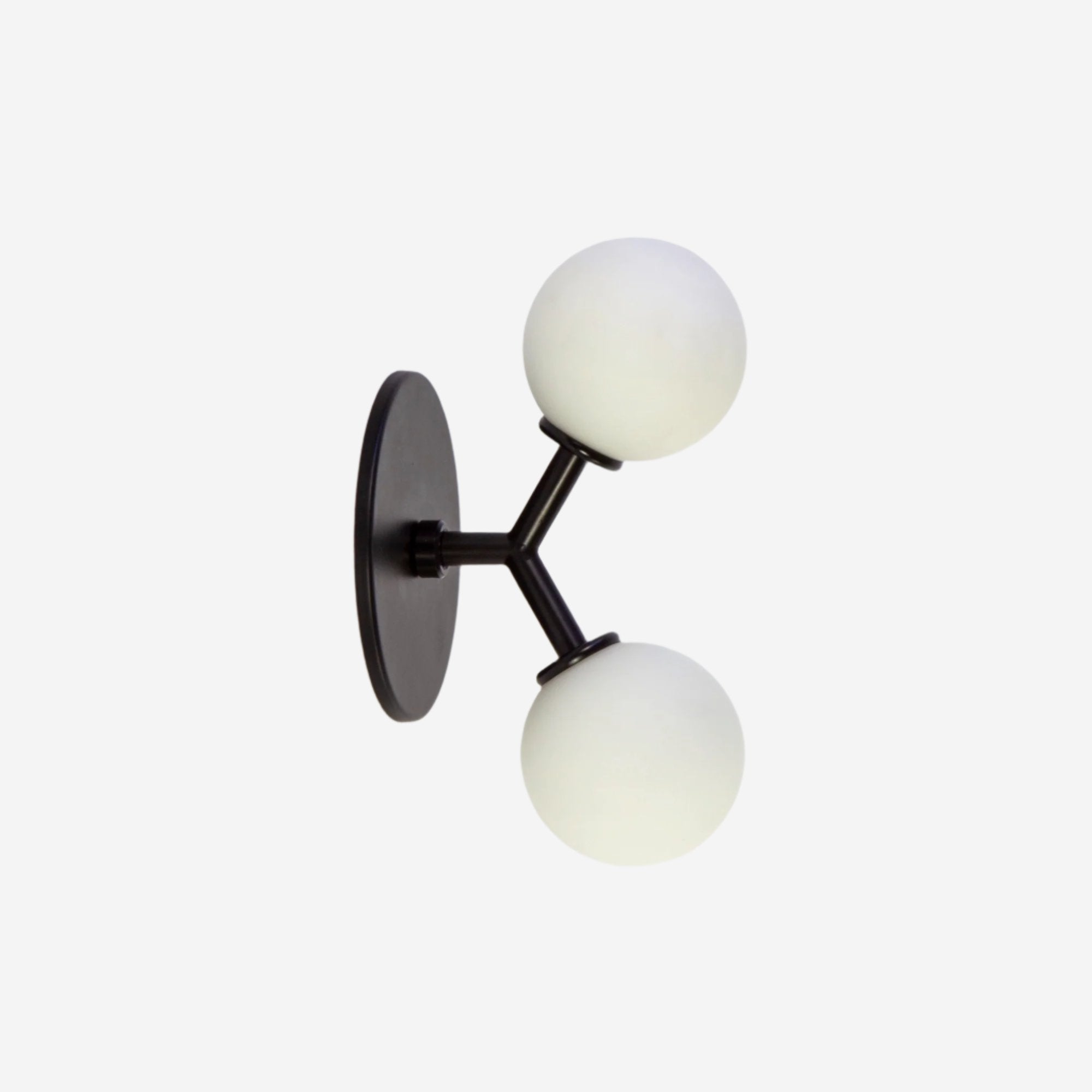
Hive Sconce by Research.Lighting
Kitchen Lighting Planning & Strategy
What types of lighting does a kitchen really need (ambient, task, accent)?
A kitchen runs well when these three layers work together instead of competing. Ambient light keeps the overall room bright enough so you aren’t working in a cave. Task lighting focuses on the places where you actually do things: counters, sink, stove, islands. Accent lighting is the optional layer that makes the room feel more finished, whether that’s a glow along shelving or a softer evening mode. You don’t need every category in equal measure, but you do need each job covered by the right beam, not just whatever fixture happens to be nearby.
How do I create a lighting plan for my kitchen layout (galley, L-shape, U-shape, open plan)?
Start by tracing how you actually move through the room. In a galley, the goal is even coverage and strong task light along both runs. L- and U-shapes usually need extra attention in the corners to avoid dark pockets. Open-plan kitchens benefit from fixtures that visually anchor the working side of the room without fighting the spaces around it. Once you map out counters, appliances, and circulation paths, the lighting plan becomes less abstract: highlight the work zones first, then layer in the general light, then refine the mood.
How many light sources does a typical kitchen need to feel well lit?
Most kitchens feel balanced with three to five meaningful light sources, not counting appliances or inside-cabinet accents. You might have recessed lighting for ambient coverage, under-cabinet strips for prep, pendants for the island, and one ceiling fixture for fill. The exact count depends on the size and complexity of the room, but the key is distribution. Too few lights forces everything to do double duty, which creates glare in some places and shadows in others. A handful of well-placed fixtures almost always outperforms a ceiling packed with bulbs.
What are the most common kitchen lighting mistakes homeowners make?
The biggest one: relying on a single overhead fixture to do everything. It creates shadows exactly where you need clarity. Another common issue is placing recessed lights behind you instead of in front of the counter edge, which puts your own shadow on the work surface. People also underestimate under-cabinet lighting, or choose kitchen pendant lights that look great but hang too high or too wide to be useful. And of course, skipping dimmers means the room only has one “mood,” which rarely suits both cooking and unwinding.
Should my kitchen lighting match the rest of the house or stand on its own?
It helps if the kitchen shares a broad design language with the nearby rooms, but it doesn’t need to match everything precisely. Think of it as rhythm rather than uniformity. If the adjacent spaces lean warm and minimal, the kitchen should echo that tone, even if the fixtures themselves differ. The important thing is that the finishes and shapes feel intentional when viewed together. The kitchen does a lot of visual heavy lifting, so giving it a bit more personality is totally fair, as long as it doesn’t feel disconnected.
How should I plan lighting during a kitchen remodel or new build?
Lock in lighting locations early, ideally before cabinetry and appliance layouts are finalized. This gives you control over where beams land rather than squeezing lights into whatever space is left. Mark out the major work zones first: sink, stove, prep surfaces, island. Then consider general illumination and any accent features worth highlighting. Keep an eye on sightlines into adjacent rooms. A remodel is also the moment to add extra wiring, move junction boxes, or improve switching, because those upgrades become far harder once the walls close up.
How can I improve kitchen lighting without moving electrical or opening ceilings?
You can get surprisingly far with plug-in options and smarter bulbs. Under-cabinet LED strips often make the biggest difference and usually stick on without any demolition. Swapping a dim fixture for a brighter flush mount or semi-flush can help immediately. Upgrading bulbs to higher-quality LEDs improves color, clarity, and dimming. If you have pendants, adjusting height or shade style can also change how light spreads. Think about layering: add focused task light where you’re missing it, and soften existing overhead light with better control.
Which areas should I prioritize first when upgrading kitchen lighting?
Always start with the places where your hands and eyes work hardest: countertops, sink, prep areas, and the stove. Clear, shadow-free task light makes the biggest functional difference. After that, look at the island, which often does double duty as a social space. Then improve general light so the room doesn’t feel uneven. Accent lighting is the final layer, helpful but not urgent. Tackling the kitchen in this order keeps the upgrades practical and ensures you feel the benefits immediately rather than chasing purely decorative fixes.

Cone 2 Sconce by Research.Lighting
Ceiling Height, Structure & Constraints
What types of lights work best in kitchens with low ceilings?
Low ceilings benefit from fixtures that sit close to the surface but still provide broad, even illumination. Flush or low-profile semi-flush fixtures work well because they spread light outward rather than downward in a tight beam. Recessed lights can be helpful, but they should be used sparingly and placed with intention to avoid glare. The trick is choosing fixtures with diffusers or softer edges so the light feels generous rather than intense. Avoid large pendants unless they’re tucked over an island where height is less of an issue.
What lighting works best in kitchens with high or vaulted ceilings?
High ceilings give you more room to play with scale. Larger pendants or linear fixtures over islands help visually anchor the room. Recessed lighting with higher output works well, but spacing is important so the light actually reaches the surfaces below. In vaulted spaces, directional recessed lights or adjustable track heads can point light down toward counters rather than illuminating the upper rafters. You can also incorporate layered accents lower in the room to create balance so your work surfaces feel grounded instead of lost under all that vertical volume.
How do you light a kitchen with sloped or angled ceilings?
Sloped ceilings benefit from fixtures that can aim or adjust. Gimbal-style recessed lights or track lighting are often the simplest solutions because you can direct the beam where you need it. Pendants can still work, but they should be mounted so they hang level rather than following the slope. The main goal is to aim light toward surfaces, not the ceiling plane itself. Under-cabinet and under-shelf options become even more important in angled rooms because they guarantee usable task light regardless of ceiling geometry.
How do you work around soffits, beams, or bulkheads in kitchen lighting?
Obstructions like soffits and beams tend to break up the ceiling visually, so your goal is to use lighting that respects those boundaries rather than fighting them. Recessed lights can be placed just forward of a soffit to keep counter areas bright, while pendants can help shift the visual focus away from bulky elements. Under-cabinet lighting is especially useful here because it bypasses ceiling limitations entirely. Treat the ceiling as a backdrop and place light where you need it, even if that means leaning more on wall and cabinet-mounted options.
What’s the best way to light a kitchen with very few existing junction boxes?
If adding wiring isn’t in the cards, choose fixtures that provide more output or spread in each location. A bright but well-diffused semi-flush fixture can act almost like a mini lighting system on its own. Plug-in pendants or rails can fill gaps if you have a camouflaged way to route cords. Under-cabinet lighting becomes essential because it creates task lighting without touching the ceiling at all. Think of it as using fewer, smarter sources rather than trying to force a traditional grid into a limited setup.
Can I significantly improve lighting without adding new wiring?
Usually, yes. Swapping dim overhead fixtures for brighter, broader ones is an easy win. Adding plug-in sconces or pendants gives you targeted light where you need it without opening walls. Under-cabinet or above-cabinet LED strips dramatically improve both task visibility and overall brightness. Even changing bulb types can help: higher-quality LEDs with better color rendering make surfaces feel cleaner and more defined. In many kitchens, a combination of updated fixtures and strategic plug-in solutions solves most issues without touching the wiring.
How do I handle lighting in kitchens with concrete ceilings or limited ceiling access?
Concrete ceilings limit flexibility, so focus on fixtures that work with existing junction points or avoid the ceiling entirely. A strong central fixture, well-chosen pendants, or a surface-mounted track are good starts. Under-cabinet lighting becomes a major player because it puts usable light exactly where you need it. Wall-mounted fixtures can also help fill in gaps. The goal is not to force a full remodel but to build a layered plan that lives independently of the ceiling’s constraints.

Shapes Sconce small by Research.Lighting
General (Ambient) Kitchen Lighting
What’s the best way to provide overall lighting in a kitchen?
A good ambient layer feels even and calm, with no glaring hot spots. Recessed lighting is a common solution, but it’s not the only one. A bright flush or semi-flush fixture can often carry more of the load than people expect. The key is spreading light across the room without illuminating only the floor. You want coverage that keeps shadows off the counters while still feeling comfortable from every angle. Once that base layer works, task and accent lighting build on top naturally.
Are flush or semi-flush fixtures good choices for kitchens?
Yes—especially in rooms where ceiling height is limited or recessed lighting would crowd the ceiling. Flush and semi-flush fixtures provide broad, comfortable illumination and can help the kitchen feel more finished. Semi-flush styles add a bit more dimension while staying practical for busy spaces. They work best when paired with thoughtful task lighting, since overhead alone rarely solves everything. Look for diffusers that soften the output so the light spreads evenly instead of creating a bright central spot.
Do kitchens really need recessed lighting, or are there alternatives?
Recessed lighting is popular because it creates clean lines and predictable coverage, but it isn’t mandatory. A combination of ceiling fixtures, pendants, and under-cabinet lighting can do the job beautifully. Track lighting is another option for adjustable beams without adding more junction boxes. What matters most is placing light where you actually need it, not following a template. If the room is evenly lit, shadows are minimized, and you have useful task lighting, the specific fixture type becomes secondary.
How do I avoid a ceiling that feels cluttered with too many lights?
Start with fewer, more strategic sources. Recessed lights should follow function, not a strict grid. If a central fixture or island pendants can handle part of the workload, you might not need as many recessed cans. Keep finishes consistent so fixtures feel like one family rather than competing elements. Dimmer controls also help because over-bright lighting tends to emphasize clutter. A cleaner ceiling usually comes from good planning rather than simply reducing the fixture count.
How do I get even light coverage across the entire kitchen?
Focus on forward placement: recessed lights should fall just in front of the counter edges so beams land on the work surface. Fill the center of the room with broader light, either through a kitchen flush mount or additional recessed spacing. Under-cabinet lighting handles shadows that overhead fixtures miss. If the room still feels uneven, check your bulb consistency—mixing color temperatures or lumen levels creates imbalance even when the fixtures are spaced correctly.
Why does my kitchen still feel dim even with multiple fixtures?
Brightness isn’t just about quantity; it’s about direction and quality. Overhead lights that illuminate the floor but miss the counters create a dim-feeling workspace. Warm-white bulbs with low color rendering can also make surfaces appear dull. Under-cabinet lighting often solves these gaps instantly. Another culprit is fixture height or shade style—some designs trap light rather than spreading it. Before adding new lights, make sure your existing ones are aimed well and using the right bulbs.
Is it better to use one main fixture or several smaller ones?
In most kitchens, a combination of fixtures gives you better control. One large fixture can feel nice but often leaves shadows in corners or under cabinets. Several smaller sources, thoughtfully placed, provide more even coverage and let you tune the room’s brightness throughout the day. The trick is not to overdo it—too many fixtures can make the ceiling feel busy. Aim for a balanced spread that respects the layout: one or two ambient sources plus targeted task lighting.

Globe Table Lamp by Research.Lighting
Task Lighting & Work Zones
What’s the best way to light kitchen countertops for food prep?
The most reliable approach is under-cabinet lighting that directs a clean, even beam onto the counters without relying on overhead placement. LED linear strips or low-profile fixtures give consistent coverage and avoid the patchiness you get from older pucks. If you don’t have upper cabinets, consider adjustable wall-mounted fixtures or directed track heads. The goal is bright, shadow-free light that shows texture and color clearly. Once the counters are properly lit, the whole kitchen tends to feel more functional.
How should the sink area be lit?
The sink does best with a dedicated light placed slightly forward so it illuminates the basin and counter rather than casting shadows behind the faucet. A small recessed light or a compact pendant works well. You don’t need high intensity here—just enough clarity to wash produce or prep without guesswork. If the sink sits under a window, consider how the lighting behaves at night; overhead lighting should take over cleanly once daylight fades. Keep the beam soft to avoid reflections on shiny fixtures.
What’s the best lighting for a cooktop or range area?
A range hood with built-in lights is often the simplest solution because the beam lands exactly where you’re cooking. Look for LEDs with good color quality so food doesn’t appear dull or overly warm. If your hood lighting is weak, supplemental recessed lights placed slightly in front of the cooking area can fill in the shadows. Just avoid placing them too far back, where the hood might block part of the beam. The goal is clear, focused light that doesn’t create heat or glare.
How do I light a dedicated prep or baking station?
Prep areas benefit from bright, even illumination that avoids shadows from upper cabinets or your own stance. Under-cabinet strips are ideal, but if that’s not an option, a small directional ceiling fixture or track head aimed at the surface works surprisingly well. For baking zones, where precision matters, choose LEDs with high color rendering to make textures and colors more visible. Treat these zones as mini workstations: target the surface first, then fill in surrounding light as needed.
How do I prevent shadows on the counter when I’m standing at it?
Shadows come from overhead lights positioned directly behind you. The fix is placing recessed lights slightly in front of the counter edge so the beam lands where your hands are working. Under-cabinet lighting also eliminates shadows by sidestepping the ceiling entirely. If you’re working at an island, pendants should hang high enough to spread light but low enough to illuminate the surface evenly. The goal is to let the light fall forward, not backward.
How do I light dark corners or dead zones on countertops?
Dead zones usually appear where overhead light can’t reach or where cabinets block illumination. Under-cabinet lighting solves most of these instantly. For open shelving or corners without cabinets, small directional fixtures or LED strips tucked along the underside of shelves work well. Track lighting can also reach awkward spots if positioned thoughtfully. Don’t over-brighten the whole room just to fix one corner—targeted beams are almost always the cleaner solution.
What’s the best lighting for a kitchen desk or homework nook?
A kitchen desk needs focused task lighting that won’t spill glare into the rest of the room. A small table lamp, a wall-mounted sconce, or a plug-in under-shelf light keeps the surface bright without overwhelming nearby zones. If kids use the space, consider warmer bulbs to keep the area calm and avoid harsh contrast with the main kitchen lights. Keep switching simple—ideally something they can reach easily—so the nook functions well whether it’s for bills, schoolwork, or a quick laptop session.

Dish Sconce By Research.Lighting
Under-Cabinet, Shelf & Cabinet Lighting
Is under-cabinet lighting really necessary in a kitchen?
Necessary might be strong, but once you add it, it’s hard to go back. Under-cabinet lighting solves the exact problem general lighting can’t: shadows created by upper cabinets. It puts clean, direct light where you prep food, read recipes, and chop vegetables. Even in bright kitchens, this layer adds clarity without glare. It also doubles as a great evening light source when you don’t want the whole room lit up. It’s one of the most cost-efficient upgrades you can make.
What type of under-cabinet lighting works best: tape, pucks, or linear fixtures?
Linear LED strips or slim bar lights usually give the most even coverage. Pucks create bright spots and shadows between them, which can be distracting on reflective counters. Tape lights are flexible and easy to install, but quality varies, and some cheaper versions show visible LED dots. If you want a smooth, continuous wash of light, choose strips with a built-in diffuser or a bar-style fixture. The idea is to make the lighting feel seamless rather than dotted across the surface.
Where should under-cabinet lights be positioned for even coverage?
The best placement is along the front underside of the cabinet, closest to the counter edge. This ensures the beam reaches the whole surface rather than fading out near the front. Positioning them too far back lights the backsplash beautifully but leaves your prep area dim. A clean, forward placement also helps avoid glare from shiny countertops. The goal is to create a calm, even wash of light that supports actual cooking, not just aesthetics.
How do I avoid visible dots or hot spots from LED strips?
Look for LED strips with a high diode count and pair them with a diffuser channel. This softens the light into a continuous bar instead of a row of pinpoints. Mounting the strip slightly back from the front edge can also help, as long as you keep enough forward illumination for the counter. Strong reflective surfaces like polished stone may show dots unless the strip is diffused, so if you’re unsure, go with linear fixtures that hide the diodes completely.
Do I need diffusers for under-cabinet lighting?
You don’t technically need them, but diffusers usually make the final result feel more finished. They soften the beam, reduce glare, and help prevent visible LED dots on shiny countertops. Diffusers also protect the strips from dust and grease, extending their lifespan. If you prefer a very crisp, directional beam, you can skip them, but most homeowners prefer the cleaner, more consistent look that diffusers provide. It’s a small detail that often makes a big difference.
How should I light glass-front cabinets or display cabinets?
Glass-front cabinets look great with subtle, even lighting that highlights what’s inside without feeling theatrical. LED strips placed along the interior sides or top work well, especially with a warm, gentle output. Puck lights can create hotspots, so they’re better for accenting a single object rather than the whole cabinet. If you want a softer effect, consider lighting the backside of the cabinet frame so the glow washes across the shelves. Keep brightness low—this layer should feel like a whisper, not a spotlight.
What’s the best way to light open shelving?
Open shelving benefits from lighting that highlights objects without creating glare. LED strips mounted along the underside of shelves provide clean, even light that washes downward. For a more decorative look, backlighting the shelf or adding small, directed fixtures can create gentle shadows and texture. Avoid anything too bright, which can overpower the room or make the shelves feel staged. Aim for a glow that supports the kitchen’s atmosphere while helping you see what you reach for most often.
Can I add cabinet lighting without hardwiring?
Yes—there are plenty of plug-in and battery-powered options that look polished when installed well. Rechargeable LED bars are sleek and easy to mount, and many include motion sensors so they only activate when needed. Plug-in strips can be routed discreetly along cabinet undersides with small clips or channels. The key is keeping cords tidy and out of the main sightlines. While hardwiring is the cleanest solution long-term, plug-in options are often enough to transform how the kitchen feels day to day.
Should under-cabinet lighting be on a separate switch or control?
Ideally, yes. Under-cabinet lights serve a different purpose from general illumination, so having independent control gives you more flexibility. You can use them as task lights during prep, then leave them on alone in the evening for a soft, ambient glow. A dedicated switch or smart control lets you adjust intensity separately from other fixtures, which helps avoid the “all-or-nothing” brightness of older kitchens. It’s a small wiring decision that pays off every single day.

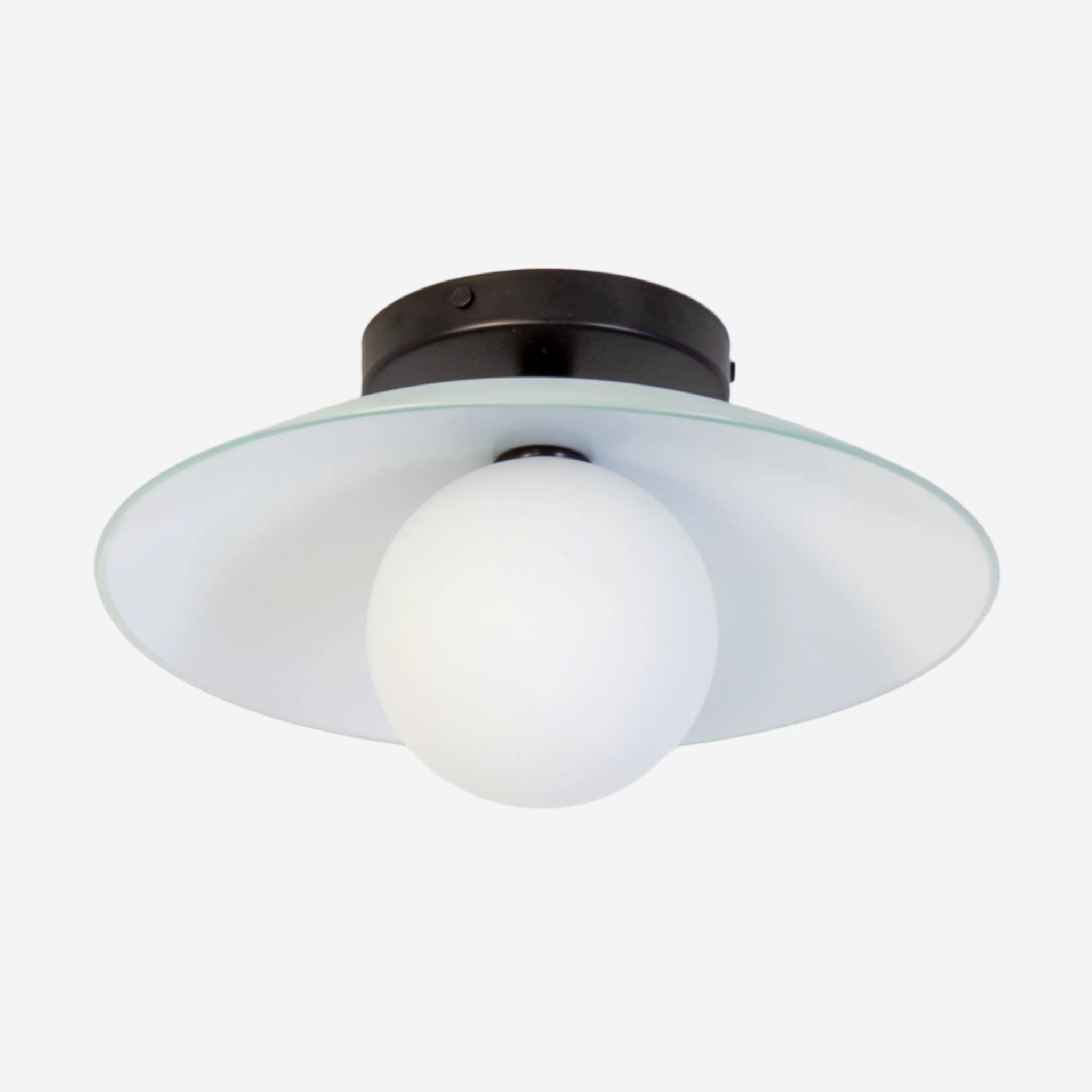
Y Flush Mount by Research.Lighting
Island & Peninsula Lighting
What types of fixtures work best over a kitchen island?
Islands do well with fixtures that can handle both task and conversation. Pendants, linear suspensions, or a simple row of compact shades all work. You want light that pushes down onto the surface without blasting sideways into people’s eyes. Shades that are opaque on the sides and open at the bottom are great for this. In smaller kitchens, a single linear fixture can feel calmer than several separate pieces. Whatever you choose, the light should make food and hands easy to see.
How many lights should go over an island?
It depends on the island length and how present you want the fixtures to feel. Shorter islands often look and function best with one or two lights. Longer islands can handle two or three pendants, or one longer linear fixture. A simple test: each seat or work zone should feel like it has its own share of light, without big dark gaps. At the same time, the fixtures should have breathing room so the ceiling doesn’t feel crowded or over-decorated.
How do I choose the right size fixtures for an island?
Look at the island as the main reference, not the whole room. For two pendants, each one can be a little larger; for three, each usually needs to be slimmer. Leave some margin at the ends so the fixtures don’t feel jammed against the edges. From across the room, the shades should read as clearly intentional but not oversized for the surface beneath them. If your eye goes straight to the lights and barely registers the island, they’re probably too big.
Should island lights be centered on the island, the overhang, or the work area?
In most cases, center them on the island itself so the layout looks calm from every angle. Within that, you can cheat slightly toward the main work zone or seating area if one side gets more use. If there’s a strong overhang where people sit, the lights should feel visually aligned with that section, not floating over an unused strip of counter. When in doubt, stand at the island, pretend to chop or sit, and ask where you’d want the light to land.
How do I avoid blocking sightlines with island lighting in an open kitchen?
Keep fixtures high enough and light enough visually that you can see under and around them easily. Slimmer profiles, open frames, or smaller shades help. Avoid hanging the lights at eye level when you’re standing, which can make the room feel chopped up. If your island faces a view, TV, or living area, check sightlines from those spots too. You want the lights to frame the view, not sit right in the middle of it every time you look up.
Can I use a chandelier over a kitchen island?
You can, as long as the scale and style make sense for a working surface. A more linear or open chandelier often feels better than a very dense, formal one. The light should still reach the countertop clearly, not just make a pretty shape in the air. Keep the height comfortable so nobody feels like they’re dodging arms or crystals when they sit or serve. If it’s dimmable and easy to clean, it can be a nice way to add some character.
Does having a sink or cooktop in the island change the lighting approach?
Yes, a bit. If you’re washing dishes or cooking on the island, you’ll want more focused, practical light directly over those zones. That might mean a slightly stronger pendant, a linear fixture that spreads light evenly, or a supporting recessed light nearby. You also want to avoid fixtures that are hard to clean, because splashes and steam are inevitable. The island becomes more of a working line than just a hangout spot, so task lighting takes a small step forward.
How should lighting over a peninsula differ from an island?
A peninsula often sits closer to walls and upper cabinets, so the lighting has to play nicely with those. A single linear fixture or a small pair of pendants can work well, but they usually need to be more compact and a bit quieter visually than island pieces. You also have to consider how people walk around the end and how close the light is to the adjacent room. The peninsula often acts as a transition, so the lighting should feel a little more blended.
How do I balance decorative island lighting with functional task lighting?
Let the island fixtures carry some personality, but don’t make them your only serious light source. Pair them with good under-cabinet lighting or well-placed recessed lights so the rest of the kitchen still feels usable if the pendants are dimmed. Choose shades that look interesting but still direct a good portion of light downward. If you want something very sculptural, keep the beam strong enough or back it up with nearby task lights. The island can be pretty and practical at the same time.

Shapes Sconce by Research.Lighting
Kitchen Dining & Breakfast Areas
How should I light a breakfast table or dining nook in the kitchen?
A single, well-placed pendant or small kitchen chandelier centered over the table usually does the trick. You want light that feels welcoming and relaxed, not as bright as your main prep zones. Shades that diffuse or soften the beam help faces and food look good without glare. If the nook sits near a window, think about how it feels at night, when that fixture has to carry the mood. Dimming is useful here so you can go from weekday breakfast to slower weekend brunch.
Should the dining light match the island lighting or be different?
They don’t have to be twins, but they should feel related. If your island pendants are simple and minimal, the dining room light fixture can be a bit more expressive, or vice versa. Repeating a finish, general shape, or level of detail is enough to tie them together. What you want to avoid is a dining light that feels like it belongs in a different house. When you look across the room, the two pieces should feel like part of the same sentence, not competing headlines.
How can lighting help separate dining and cooking zones in the same space?
Use lighting levels and fixture types to subtly mark the shift. Brighter, more focused light in the kitchen signals “work mode,” while a lower, softer glow over the table says “sit, linger.” Pendants or a chandelier over the dining area instantly give it its own presence, even if the flooring and walls are continuous. At night, you can dim the kitchen and let the table glow a little more, which makes the whole room feel more like a place to gather than a workspace.
What’s the best lighting for a banquette or built-in breakfast nook?
Banquettes feel good with light that wraps rather than blasts. A pendant or small chandelier centered over the table usually works, hung low enough to feel intimate but high enough that people can slide in and out easily. Kitchen wall sconces along the bench back are another option if ceiling wiring is tricky. You want light that flatters faces and doesn’t glare off nearby windows or artwork. A slightly warmer, dimmable bulb helps this zone feel like a little pocket inside the busier kitchen.

Dome Sconce by Research.Lighting
Pantries, Secondary Zones & Adjacent Spaces
What’s the best lighting for a walk-in pantry?
Walk-in pantries just need clear, honest light that makes labels easy to read. A bright flush mount, a couple of recessed fixtures, or a simple strip down the center usually works. You want the shelves and floor lit evenly, without dark corners where things disappear. If the pantry door is often open, choose something that doesn’t clash with the main kitchen. Motion sensors are surprisingly nice here so you don’t have to think about switches with full hands and an armful of groceries.
How should a reach-in pantry or cabinet pantry be lit?
For reach-in pantries, a compact ceiling light or small recessed fixture placed slightly in front of the shelves helps you see into the depths. Cabinet pantries benefit more from interior lighting: LED strips along the sides, pucks at the top, or even motion-activated lights that turn on when doors open. The idea is to light the contents, not your shoulders. You don’t need drama—just enough brightness to grab what you need without rummaging through shadowy shelves.
What’s the best lighting for a coffee bar or beverage station?
A coffee station feels good with a little extra focus and a touch of mood. Under-cabinet lighting is often enough for the practical side—measuring, pouring, cleaning. A small sconce or pretty pendant nearby can layer in some atmosphere if the station is visible from other rooms. Since this zone gets a lot of early-morning and late-night use, dimming helps. It’s nice to keep the rest of the kitchen lower and just have this area quietly glowing when you make something.
How should lighting work for a wet bar connected to the kitchen?
A wet bar is part task zone, part display. You want enough light to mix drinks, rinse glasses, and find bottles without squinting, but you also want it to feel a bit more relaxed than the main prep counters. Under-cabinet or under-shelf lighting paired with a small overhead or nearby wall light usually works. If there’s glassware or bottles on display, softer interior or backlighting can make them feel like part of the room’s personality without turning the area into a stage.
How do I handle lighting where the kitchen connects to a hallway or mudroom?
That transition zone should feel clear and safe, but not as bright as your counters. A ceiling fixture or a couple of recessed lights in the hallway or mudroom give you a defined path. If the spaces are open to each other, keep color temperature consistent so the connection feels natural. Wall sconces or low-level lights near hooks, benches, or shoe areas help those zones work better. The idea is to gently guide people between “arriving” and “cooking” without harsh contrast.

Globe Sconce by Research.lighting
Accent, Atmosphere & Visual Impact
How can I add accent lighting without making the kitchen feel busy?
Pick one or two things you actually want to emphasize and stop there. That might be open shelving, a backsplash, or a glass-front cabinet. Use simple, hidden sources—like slim LED strips or small, directed fixtures—so the effect is about the light, not the hardware. Keep accent lighting on its own dimmer or switch so it can drop to a supporting role when you’re cooking. When accents are subtle and controlled, the kitchen feels layered instead of cluttered.
Should I light open shelves or keep them unlit for a cleaner look?
It depends on how much you want the shelves to participate in the room. If they hold everyday items and you like a calmer look, leaving them unlit can be simple and clean. If they display objects you enjoy seeing at night, gentle lighting can bring them to life. A compromise is to light only one key shelf or niche rather than every open surface. Whatever you choose, make sure the lighting feels like it belongs to the shelves, not just another floating glow.
What’s the best way to highlight a backsplash with lighting?
Under-cabinet lighting is the workhorse here. Mounted toward the front of the cabinet, it sends light down the wall and across the counter, bringing out tile texture, stone pattern, or color. If you have no uppers, small wall washers or adjustable recessed lights aimed at the backsplash can do the job. You want an even wash with minimal harsh hotspots. Think “soft reveal” rather than gallery spotlight, especially if the backsplash has any reflective surfaces.
Can lighting make a small kitchen feel larger?
Yes, if it’s used to stretch the eye. Lighting walls, corners, and vertical surfaces helps the room feel deeper than it is. Under-cabinet lights pull brightness out to the edges instead of concentrating it in the center. Avoid extremely dark pockets or very bright single points, both of which visually shrink the space. Softer, even illumination across upper cabinets and ceilings also keeps the room from feeling cramped. It’s more about where the light lands than how many fixtures you have.
How do I add warmth and atmosphere to a modern or all-white kitchen?
Warmth comes from both the color of the light and what it touches. Slightly warmer bulbs, especially on dimmers, soften glossy white surfaces. Accent lighting on wood, textured tile, or open shelves adds depth. Swapping one or two very sharp, exposed fixtures for shaded or diffused ones helps too. Even a small kitchen table lamp or sconce near the edge of the kitchen can change how the whole room feels at night. You’re giving the light softer surfaces to bounce from, not just hard edges.
What are subtle ways to introduce a more “designer” lighting look?
It’s often about proportion and restraint. Choose island fixtures with a considered shape rather than something generic, and let them lead while the rest of the lighting stays quiet. Use one or two accent moments—like a lit niche or a thoughtful sconce—rather than a dozen features. Keep color temperature consistent so the whole space feels intentional. Even aligning fixtures carefully with cabinetry and architectural lines makes the room read as more designed, without adding a single extra light.

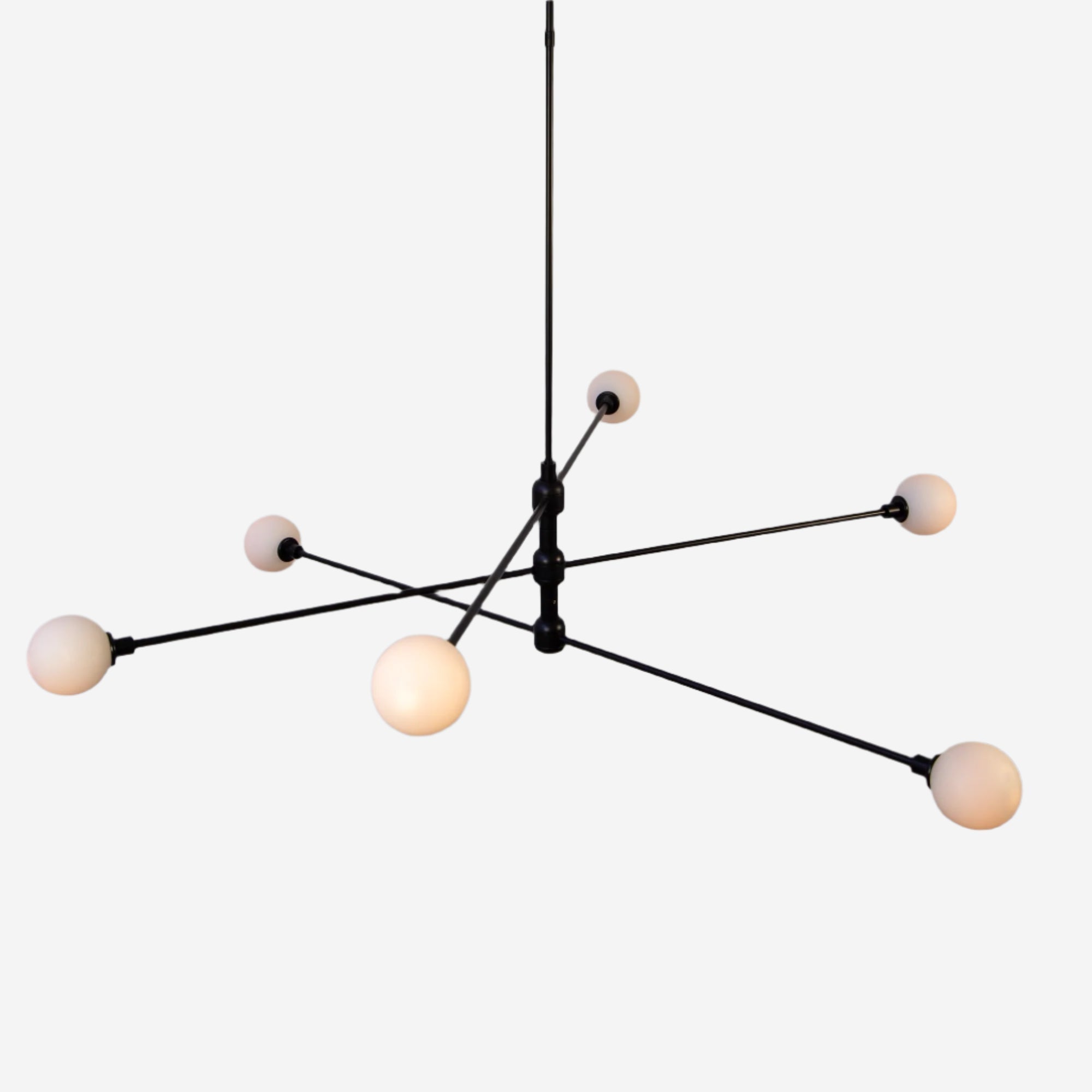
Globe 4 Chandelier by Research.Lighting
Style, Finish & Cohesion
How do I choose lighting that complements my cabinet style and architecture?
Start by looking at the major lines in your kitchen. Slab-front cabinets and minimal hardware usually pair well with simple, clean fixtures. More detailed doors or traditional trim can handle slightly softer forms and a bit more detail. You don’t need to mimic every profile, but the lights should feel like they speak the same language as the cabinetry and architecture. Hold photos of fixtures up against the room and ask if they feel like they could have been chosen at the same time.
How should lighting finishes relate to cabinet hardware and appliances?
You don’t need every metal to match exactly, but there should be some logic. Often, one finish “leads”—maybe that’s your faucet and cabinet hardware—and lighting either repeats it or introduces a second supporting tone. For example, black hardware with warm metal lights, or stainless appliances with softer, brushed fixtures. Try to show each finish in at least a couple of places so it feels intentional. If a finish appears only once, it can look accidental rather than part of the palette.
Is it okay to mix metal finishes in kitchen lighting?
Absolutely. Mixing can make a kitchen feel more layered and less rigid. The key is balance. Limit yourself to two, maybe three metals, and repeat each of them more than once. For instance, black and brass can live together easily if both appear in hardware, lights, or nearby furniture. Keep sheen levels compatible—too many different gloss levels can feel noisy. When metals share a similar warmth or coolness, they usually get along without much effort.
Do all kitchen fixtures need to come from the same collection?
No, and it often looks better when they don’t. Matching everything from one collection can feel a bit like a catalog page. Instead, think in families: pieces that share some traits—finish, general shape, or attitude—without being identical. Maybe your island pendants and dining light relate, while the over-sink fixture is a simpler supporting piece. The goal is for someone to believe all the lights were chosen together, not necessarily bought as a set.
How do I choose lighting that won’t feel dated in a few years?
Focus on good proportions and simple forms over very specific trends. Fixtures that rely heavily on one “it” detail tend to timestamp a room quickly. Clean shapes, thoughtful scale, and materials that age reasonably well usually last longer visually. You can still have fun with lighting; just let the more expressive pieces be easy to swap, like pendants, and keep the hardest-to-change fixtures calmer. If you’d still like it in a different color or finish, that’s a good sign.
What fixture shapes work best in kitchens with lots of straight lines and hard surfaces?
Round or softened shapes often help balance all the right angles. Globes, gentle cones, or curved forms over an island or table can make a rigid kitchen feel more inviting. That said, crisp, linear fixtures can look great too if they align carefully with counters or islands. The key is avoiding a room where every single element is the same kind of sharp. A mix of straight and curved, solid and open, usually creates a more relaxed, livable rhythm.

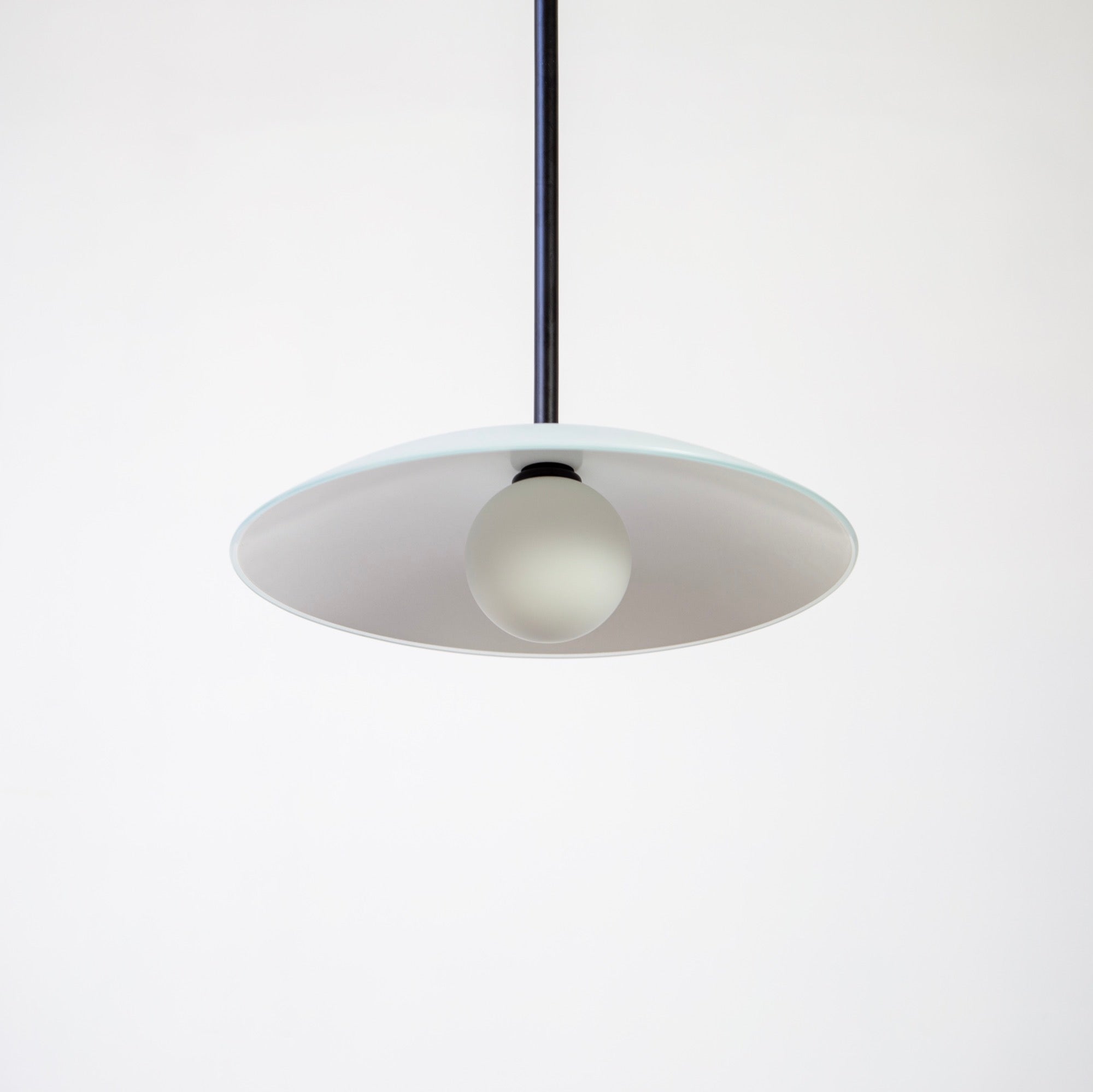
Dome Pendant Light by Research Lighting
Glare, Comfort & Visual Quality
How do I avoid glare from exposed bulbs in a kitchen?
Glare happens when you can see a very bright, bare bulb directly in your line of sight. To avoid that, use shades, diffusers, or bulbs that soften the output. Aim fixtures so you’re not looking straight into them when you stand at the sink or island. Dimmers help too; the same pendant can feel gentle at half brightness and harsh at full power. If you love an exposed-bulb look, choose lower-output bulbs with a softer finish and keep them slightly out of your main views.
How can I reduce reflections on glossy cabinets or shiny countertops?
Reflections are all about angle. Lights directly above glossy surfaces will mirror straight back at you. To minimize that, pull recessed fixtures slightly toward the front of cabinets and counters so the beam grazes rather than points straight down. Diffused fixtures also help, because a soft glow is less distracting than a sharp point of light. If one spot is especially reflective, even a small shift in fixture placement or beam angle can make it feel calmer without losing brightness.
How do I prevent harsh light on faces in an open kitchen?
Faces look best with soft, indirect light rather than strong downlights. Avoid putting tight-beam recessed lights directly over seating or in the center of an island where people gather. Instead, let pendants with shades or diffusers handle most of the illumination in those spots. Warmer bulbs and dimmers also help keep things flattering. In open kitchens, think about how people look from both sides of the island—the cooking side and the living room side—when you place and aim fixtures.
How do I avoid seeing the light source when seated at the island?
Hang fixtures so the bottom of the shade or diffuser is slightly above seated eye level, and choose designs where the bulb isn’t exposed sideways. When you sit down, you should be aware of the glow, not staring into the filament. Taller, narrower shades or opal glass globes can help. It also matters how far fixtures are spread across the island; if they’re clustered too closely in front of certain seats, those spots will always feel a bit more glaring.
What shade materials help soften kitchen lighting?
Opal glass, fabric, and some acrylic diffusers all soften light nicely. Opal or etched glass spreads brightness evenly and is easy to wipe down. Fabric shades give a very gentle glow but need more care in a room with steam and the occasional splatter. Metal shades with a white interior can also soften the beam while keeping it directional. The main idea is to avoid hard, bare bulbs as your primary light source, especially in areas where people sit or look up frequently.

Y Pendant Light Mini by Research.Lighting
Cleaning, Grease & Durability
What kitchen light fixtures are easiest to clean?
Fixtures with smooth surfaces, minimal detailing, and accessible shades are easiest to live with. Simple glass, metal, or acrylic pieces you can reach with a cloth will always beat ornate designs full of tiny crevices. Flush and semi-flush mounts with removable diffusers are straightforward. Over islands and tables, choose shapes you can comfortably wipe from all sides without climbing into awkward positions. If you look at a fixture and immediately imagine dreading dusting it, that’s a clue to choose something simpler.
Do certain fixture styles collect more grease or dust?
Yes. Multi-arm chandeliers, intricate scrollwork, and complex layered designs tend to grab dust and airborne grease more easily, especially near the stove. Horizontal surfaces and lots of small details act like little shelves for buildup. Open-top shades can collect debris inside without you noticing for a while. By contrast, smooth, closed forms and downward-facing shades stay cleaner longer. You don’t have to avoid character, but in a hard-working kitchen, fewer little ledges usually means less maintenance.
Are open-bottom fixtures a bad idea near a cooktop?
They’re not automatically bad, but they do require a bit more cleaning and common sense. Open-bottom fixtures close to a cooktop will catch more grease and steam, especially if your ventilation isn’t strong. Over an island cooktop, you might prefer fixtures that are easier to wipe inside or designs that enclose the bulb more fully. If the lights are farther from direct steam and splatter, open bottoms can be fine. Just be honest about how often you cook and how often you’ll realistically clean them.
What fixture materials hold up best in kitchens over time?
Glass and metal tend to age gracefully in kitchens. Brushed or matte finishes often show fewer fingerprints than highly polished ones. Powder-coated surfaces can be durable, especially in neutral tones. Fabric can work in spots away from steam and food but needs more care. Plastic diffusers are lightweight and practical but can yellow over many years, depending on quality. If you’re unsure, choose materials you know you can wipe regularly without babying—if it cleans like a plate, it will probably be fine.
When do kitchen fixtures need to be damp-rated?
Code and manufacturer guidelines vary, but damp-rated fixtures are generally recommended in spots exposed to higher humidity or occasional light moisture, like near sinks or dishwashers. You usually don’t need wet-location ratings unless a fixture is directly exposed to water. The main kitchen area often does fine with standard indoor ratings, but if you’re placing a piece very close to a source of steam or in a space that sees lots of moisture, it’s worth checking for a damp rating and confirming with your electrician.
What lighting works best in kitchens with heavy cooking or steam?
In a kitchen that sees a lot of serious cooking, prioritize fixtures that are sealed or easy to wipe and pair them with strong ventilation. Recessed lights with proper trims, simple glass shades, and sturdy metal fixtures tend to handle steam well. Under-cabinet lighting encased in channels or lenses is easier to keep clean than bare strips. Avoid very intricate designs over the cook line. The more heat and steam you have, the more you’ll appreciate fixtures that can be restored with a quick wipe.

Hive Sconce by Research.Lighting
Electrical, Installation & Flexibility
Do kitchen fixtures require special junction boxes or support?
Most standard kitchen fixtures use regular junction boxes, but heavy pendants, chandeliers, or linear pieces often need boxes rated for higher loads and securely attached to framing. Over islands and peninsulas, you want to be sure the mounting can handle both weight and the occasional bump. Your electrician can confirm what’s appropriate once you’ve chosen fixtures. It’s worth sharing dimensions and weight before installation so they can plan blocking or reinforcements where needed instead of improvising on the day.
Can I replace a recessed can with a decorative fixture?
Often yes, using retrofit kits or special adapters that convert a recessed opening into a mounting point for a surface fixture. You’ll want to check the size of your existing can and make sure the trim or canopy of the new fixture covers the hole cleanly. If the can is in an odd location, you might choose a fixture that feels comfortable slightly off-center, like a small track or bar. An electrician can also remove the can and install a proper box if needed.
What can I do if the junction box isn’t centered over the island?
You’re not stuck. One option is to swag the fixture using chain or cord and a ceiling hook, so the canopy stays over the box while the light hangs where you need it. Another is to use a linear fixture or track that visually bridges the distance. If you’re remodeling and the ceiling is open, you can relocate the box entirely. In finished spaces, a thoughtful swag or slightly asymmetrical fixture that still feels intentional is often the easiest fix.
Can ceiling fixtures be swagged or offset in a kitchen?
They can, and it’s often the most practical answer when junction boxes are in the wrong place. Swagged fixtures work best when the cord or chain path looks deliberate rather than random. Keep the line clean and avoid weaving it around too many obstacles. Make sure the hook or secondary anchor is properly attached to framing, not just drywall. In some kitchens, that slight offset can even become part of the charm, especially over an island or small table.
How do you handle lighting when ceiling access is limited?
When you can’t easily get into the ceiling, you work with what you have and supplement elsewhere. That might mean upgrading existing fixtures, adding track that uses current junction boxes, or leaning more on under-cabinet and wall-mounted lighting. Plug-in options can fill gaps if you have outlets in good spots. A good electrician can often fish limited wiring through without fully opening the ceiling, but planning becomes even more important. You want every new run to pull its weight.
Should kitchen lighting be split across multiple circuits or zones?
Yes, some separation helps a lot. At minimum, it’s nice to have general lighting, island or dining lighting, and under-cabinet or task lighting on separate switches or dimmers. That way you can run everything bright while cooking, then drop to a softer mix when you’re eating or hanging out. More complex kitchens might split into even more zones, but you don’t need to overcomplicate it. The goal is to avoid one master switch that turns the room from off to “operating room.”

Cone 2 Sconce by Research.Lighting
Kitchen-Specific Questions from Adjacent Topics
Should under-cabinet lighting be dimmable, and what type of dimmer works best?
Dimmable under-cabinet lighting is very useful. At full power, it’s perfect for chopping and cleaning; turned down, it becomes a great low-level evening light. Look for LED-compatible dimmers that match the specs of your strips or fixtures. Many under-cabinet systems have their own inline dimmers or recommended wall controls. The main thing is smooth, flicker-free dimming across the full range. If you’re unsure, test one run with a dimmer before committing to the same setup around the whole kitchen.
Should island lighting and under-cabinet lighting use the same color temperature?
Keeping them in the same general color family makes the room feel calmer. If the island lights are much warmer and the under-cabinet lights are much cooler, the counters and island can look like they belong to different rooms. A small difference—say, slightly warmer over the island where people sit and a touch crisper at the counters—is fine if it’s subtle. If you’re not chasing a specific effect, choosing one color temperature you like and using it consistently is the easiest path.
What’s the best approach for nighttime or low-level kitchen lighting?
Think of a “night mode” made from just one or two circuits. Under-cabinet lights on a low dim setting, a single pendant over the island, or a small fixture near the entry can give enough glow to navigate without fully waking up the room. Motion sensors in pantries or toe-kick lighting under cabinets are nice extras. The key is keeping the light low, warm, and directed downward so your eyes stay relaxed. You want a soft path, not a second daylight.
How can I make kitchen lighting flexible for both cooking and entertaining?
Flexibility comes from zones, dimming, and at least two distinct “modes.” Give yourself strong, clear task light at counters, sink, and stove for cooking, ideally on separate controls. Then layer in pendants, a dining room chandelier, and under-cabinet lighting that can run at lower levels when you’re hosting or just hanging out. Make sure all regularly used fixtures dim well and share a similar color temperature. When you can move from bright, everything-on energy to a softer mix with a couple of switches, the kitchen keeps up with you.

Shapes Sconce small by Research.Lighting
Island & Peninsula Lighting
What types of fixtures work best over a kitchen island?
Islands do well with fixtures that can handle both task and conversation. Pendants, linear suspensions, or a simple row of compact shades all work. You want light that pushes down onto the surface without blasting sideways into people’s eyes. Shades that are opaque on the sides and open at the bottom are great for this. In smaller kitchens, a single linear fixture can feel calmer than several separate pieces. Whatever you choose, the light should make food and hands easy to see.
How many lights should go over an island?
It depends on the island length and how present you want the fixtures to feel. Shorter islands often look and function best with one or two lights. Longer islands can handle two or three pendants, or one longer linear fixture. A simple test: each seat or work zone should feel like it has its own share of light, without big dark gaps. At the same time, the fixtures should have breathing room so the ceiling doesn’t feel crowded or over-decorated.
How do I choose the right size fixtures for an island?
Look at the island as the main reference, not the whole room. For two pendants, each one can be a little larger; for three, each usually needs to be slimmer. Leave some margin at the ends so the fixtures don’t feel jammed against the edges. From across the room, the shades should read as clearly intentional but not oversized for the surface beneath them. If your eye goes straight to the lights and barely registers the island, they’re probably too big.
Should island lights be centered on the island, the overhang, or the work area?
In most cases, center them on the island itself so the layout looks calm from every angle. Within that, you can cheat slightly toward the main work zone or seating area if one side gets more use. If there’s a strong overhang where people sit, the lights should feel visually aligned with that section, not floating over an unused strip of counter. When in doubt, stand at the island, pretend to chop or sit, and ask where you’d want the light to land.
How do I avoid blocking sightlines with island lighting in an open kitchen?
Keep fixtures high enough and light enough visually that you can see under and around them easily. Slimmer profiles, open frames, or smaller shades help. Avoid hanging the lights at eye level when you’re standing, which can make the room feel chopped up. If your island faces a view, TV, or living area, check sightlines from those spots too. You want the lights to frame the view, not sit right in the middle of it every time you look up.
Can I use a chandelier over a kitchen island?
You can, as long as the scale and style make sense for a working surface. A more linear or open chandelier often feels better than a very dense, formal one. The light should still reach the countertop clearly, not just make a pretty shape in the air. Keep the height comfortable so nobody feels like they’re dodging arms or crystals when they sit or serve. If it’s dimmable and easy to clean, it can be a nice way to add some character.
Does having a sink or cooktop in the island change the lighting approach?
Yes, a bit. If you’re washing dishes or cooking on the island, you’ll want more focused, practical light directly over those zones. That might mean a slightly stronger pendant, a linear fixture that spreads light evenly, or a supporting recessed light nearby. You also want to avoid fixtures that are hard to clean, because splashes and steam are inevitable. The island becomes more of a working line than just a hangout spot, so task lighting takes a small step forward.
How should lighting over a peninsula differ from an island?
A peninsula often sits closer to walls and upper cabinets, so the lighting has to play nicely with those. A single linear fixture or a small pair of pendants can work well, but they usually need to be more compact and a bit quieter visually than island pieces. You also have to consider how people walk around the end and how close the light is to the adjacent room. The peninsula often acts as a transition, so the lighting should feel a little more blended.
How do I balance decorative island lighting with functional task lighting?
Let the island fixtures carry some personality, but don’t make them your only serious light source. Pair them with good under-cabinet lighting or well-placed recessed lights so the rest of the kitchen still feels usable if the pendants are dimmed. Choose shades that look interesting but still direct a good portion of light downward. If you want something very sculptural, keep the beam strong enough or back it up with nearby task lights. The island can be pretty and practical at the same time.
Globe Table Lamp by Research.Lighting
Kitchen Dining & Breakfast Areas
How should I light a breakfast table or dining nook in the kitchen?
A single, well-placed pendant or small chandelier centered over the table usually does the trick. You want light that feels welcoming and relaxed, not as bright as your main prep zones. Shades that diffuse or soften the beam help faces and food look good without glare. If the nook sits near a window, think about how it feels at night, when that fixture has to carry the mood. Dimming is useful here so you can go from weekday breakfast to slower weekend brunch.
Should the dining light match the island lighting or be different?
They don’t have to be twins, but they should feel related. If your island pendants are simple and minimal, the dining room sconces can be a bit more expressive, or vice versa. Repeating a finish, general shape, or level of detail is enough to tie them together. What you want to avoid is a dining light that feels like it belongs in a different house. When you look across the room, the two pieces should feel like part of the same sentence, not competing headlines.
How can lighting help separate dining and cooking zones in the same space?
Use lighting levels and fixture types to subtly mark the shift. Brighter, more focused light in the kitchen signals “work mode,” while a lower, softer glow over the table says “sit, linger.” Pendants or a chandelier over the dining area instantly give it its own presence, even if the flooring and walls are continuous. At night, you can dim the kitchen and let the table glow a little more, which makes the whole room feel more like a place to gather than a workspace.
What’s the best lighting for a banquette or built-in breakfast nook?
Banquettes feel good with light that wraps rather than blasts. A pendant or small chandelier centered over the table usually works, hung low enough to feel intimate but high enough that people can slide in and out easily. Wall sconces along the bench back are another option if ceiling wiring is tricky. You want light that flatters faces and doesn’t glare off nearby windows or artwork. A slightly warmer, dimmable bulb helps this zone feel like a little pocket inside the busier kitchen.

Dish Sconce By Research.Lighting
Pantries, Secondary Zones & Adjacent Spaces
What’s the best lighting for a walk-in pantry?
Walk-in pantries just need clear, honest light that makes labels easy to read. A bright flush mount, a couple of recessed fixtures, or a simple strip down the center usually works. You want the shelves and floor lit evenly, without dark corners where things disappear. If the pantry door is often open, choose something that doesn’t clash with the main kitchen. Motion sensors are surprisingly nice here so you don’t have to think about switches with full hands and an armful of groceries.
How should a reach-in pantry or cabinet pantry be lit?
For reach-in pantries, a compact ceiling light or small recessed fixture placed slightly in front of the shelves helps you see into the depths. Cabinet pantries benefit more from interior lighting: LED strips along the sides, pucks at the top, or even motion-activated lights that turn on when doors open. The idea is to light the contents, not your shoulders. You don’t need drama—just enough brightness to grab what you need without rummaging through shadowy shelves.
What’s the best lighting for a coffee bar or beverage station?
A coffee station feels good with a little extra focus and a touch of mood. Under-cabinet lighting is often enough for the practical side—measuring, pouring, cleaning. A small sconce or pretty pendant nearby can layer in some atmosphere if the station is visible from other rooms. Since this zone gets a lot of early-morning and late-night use, dimming helps. It’s nice to keep the rest of the kitchen lower and just have this area quietly glowing when you make something.
How should lighting work for a wet bar connected to the kitchen?
A wet bar is part task zone, part display. You want enough light to mix drinks, rinse glasses, and find bottles without squinting, but you also want it to feel a bit more relaxed than the main prep counters. Under-cabinet or under-shelf lighting paired with a small overhead or nearby wall light usually works. If there’s glassware or bottles on display, softer interior or backlighting can make them feel like part of the room’s personality without turning the area into a stage.
How do I handle lighting where the kitchen connects to a hallway or mudroom?
That transition zone should feel clear and safe, but not as bright as your counters. A ceiling fixture or a couple of recessed lights in the hallway or mudroom give you a defined path. If the spaces are open to each other, keep color temperature consistent so the connection feels natural. Wall sconces or low-level lights near hooks, benches, or shoe areas help those zones work better. The idea is to gently guide people between “arriving” and “cooking” without harsh contrast.

Y Flush Mount by Research.Lighting
Accent, Atmosphere & Visual Impact
How can I add accent lighting without making the kitchen feel busy?
Pick one or two things you actually want to emphasize and stop there. That might be open shelving, a backsplash, or a glass-front cabinet. Use simple, hidden sources—like slim LED strips or small, directed fixtures—so the effect is about the light, not the hardware. Keep accent lighting on its own dimmer or switch so it can drop to a supporting role when you’re cooking. When accents are subtle and controlled, the kitchen feels layered instead of cluttered.
Should I light open shelves or keep them unlit for a cleaner look?
It depends on how much you want the shelves to participate in the room. If they hold everyday items and you like a calmer look, leaving them unlit can be simple and clean. If they display objects you enjoy seeing at night, gentle lighting can bring them to life. A compromise is to light only one key shelf or niche rather than every open surface. Whatever you choose, make sure the lighting feels like it belongs to the shelves, not just another floating glow.
What’s the best way to highlight a backsplash with lighting?
Under-cabinet lighting is the workhorse here. Mounted toward the front of the cabinet, it sends light down the wall and across the counter, bringing out tile texture, stone pattern, or color. If you have no uppers, small wall washers or adjustable recessed lights aimed at the backsplash can do the job. You want an even wash with minimal harsh hotspots. Think “soft reveal” rather than gallery spotlight, especially if the backsplash has any reflective surfaces.
Can lighting make a small kitchen feel larger?
Yes, if it’s used to stretch the eye. Lighting walls, corners, and vertical surfaces helps the room feel deeper than it is. Under-cabinet lights pull brightness out to the edges instead of concentrating it in the center. Avoid extremely dark pockets or very bright single points, both of which visually shrink the space. Softer, even illumination across upper cabinets and ceilings also keeps the room from feeling cramped. It’s more about where the light lands than how many fixtures you have.
How do I add warmth and atmosphere to a modern or all-white kitchen?
Warmth comes from both the color of the light and what it touches. Slightly warmer bulbs, especially on dimmers, soften glossy white surfaces. Accent lighting on wood, textured tile, or open shelves adds depth. Swapping one or two very sharp, exposed fixtures for shaded or diffused ones helps too. Even a small table lamp or sconce near the edge of the kitchen can change how the whole room feels at night. You’re giving the light softer surfaces to bounce from, not just hard edges.
What are subtle ways to introduce a more “designer” lighting look?
It’s often about proportion and restraint. Choose island fixtures with a considered shape rather than something generic, and let them lead while the rest of the lighting stays quiet. Use one or two accent moments—like a lit niche or a thoughtful sconce—rather than a dozen features. Keep color temperature consistent so the whole space feels intentional. Even aligning fixtures carefully with cabinetry and architectural lines makes the room read as more designed, without adding a single extra light.

Shapes Sconce by Research.Lighting
Style, Finish & Cohesion
How do I choose lighting that complements my cabinet style and architecture?
Start by looking at the major lines in your kitchen. Slab-front cabinets and minimal hardware usually pair well with simple, clean fixtures. More detailed doors or traditional trim can handle slightly softer forms and a bit more detail. You don’t need to mimic every profile, but the lights should feel like they speak the same language as the cabinetry and architecture. Hold photos of fixtures up against the room and ask if they feel like they could have been chosen at the same time.
How should lighting finishes relate to cabinet hardware and appliances?
You don’t need every metal to match exactly, but there should be some logic. Often, one finish “leads”—maybe that’s your faucet and cabinet hardware—and lighting either repeats it or introduces a second supporting tone. For example, black hardware with warm metal lights, or stainless appliances with softer, brushed fixtures. Try to show each finish in at least a couple of places so it feels intentional. If a finish appears only once, it can look accidental rather than part of the palette.
Is it okay to mix metal finishes in kitchen lighting?
Absolutely. Mixing can make a kitchen feel more layered and less rigid. The key is balance. Limit yourself to two, maybe three metals, and repeat each of them more than once. For instance, black and brass can live together easily if both appear in hardware, lights, or nearby furniture. Keep sheen levels compatible—too many different gloss levels can feel noisy. When metals share a similar warmth or coolness, they usually get along without much effort.
Do all kitchen fixtures need to come from the same collection?
No, and it often looks better when they don’t. Matching everything from one collection can feel a bit like a catalog page. Instead, think in families: pieces that share some traits—finish, general shape, or attitude—without being identical. Maybe your island pendants and dining room flush mounts relate, while the over-sink fixture is a simpler supporting piece. The goal is for someone to believe all the lights were chosen together, not necessarily bought as a set.
How do I choose lighting that won’t feel dated in a few years?
Focus on good proportions and simple forms over very specific trends. Fixtures that rely heavily on one “it” detail tend to timestamp a room quickly. Clean shapes, thoughtful scale, and materials that age reasonably well usually last longer visually. You can still have fun with lighting; just let the more expressive pieces be easy to swap, like pendants, and keep the hardest-to-change fixtures calmer. If you’d still like it in a different color or finish, that’s a good sign.
What fixture shapes work best in kitchens with lots of straight lines and hard surfaces?
Round or softened shapes often help balance all the right angles. Globes, gentle cones, or curved forms over an island or table can make a rigid kitchen feel more inviting. That said, crisp, linear fixtures can look great too if they align carefully with counters or islands. The key is avoiding a room where every single element is the same kind of sharp. A mix of straight and curved, solid and open, usually creates a more relaxed, livable rhythm.
Glare, Comfort & Visual Quality
How do I avoid glare from exposed bulbs in a kitchen?
Glare happens when you can see a very bright, bare bulb directly in your line of sight. To avoid that, use shades, diffusers, or bulbs that soften the output. Aim fixtures so you’re not looking straight into them when you stand at the sink or island. Dimmers help too; the same pendant can feel gentle at half brightness and harsh at full power. If you love an exposed-bulb look, choose lower-output bulbs with a softer finish and keep them slightly out of your main views.
How can I reduce reflections on glossy cabinets or shiny countertops?
Reflections are all about angle. Lights directly above glossy surfaces will mirror straight back at you. To minimize that, pull recessed fixtures slightly toward the front of cabinets and counters so the beam grazes rather than points straight down. Diffused fixtures also help, because a soft glow is less distracting than a sharp point of light. If one spot is especially reflective, even a small shift in fixture placement or beam angle can make it feel calmer without losing brightness.
How do I prevent harsh light on faces in an open kitchen?
Faces look best with soft, indirect light rather than strong downlights. Avoid putting tight-beam recessed lights directly over seating or in the center of an island where people gather. Instead, let pendants with shades or diffusers handle most of the illumination in those spots. Warmer bulbs and dimmers also help keep things flattering. In open kitchens, think about how people look from both sides of the island—the cooking side and the living room side—when you place and aim fixtures.
How do I avoid seeing the light source when seated at the island?
Hang fixtures so the bottom of the shade or diffuser is slightly above seated eye level, and choose designs where the bulb isn’t exposed sideways. When you sit down, you should be aware of the glow, not staring into the filament. Taller, narrower shades or opal glass globes can help. It also matters how far fixtures are spread across the island; if they’re clustered too closely in front of certain seats, those spots will always feel a bit more glaring.
What shade materials help soften kitchen lighting?
Opal glass, fabric, and some acrylic diffusers all soften light nicely. Opal or etched glass spreads brightness evenly and is easy to wipe down. Fabric shades give a very gentle glow but need more care in a room with steam and the occasional splatter. Metal shades with a white interior can also soften the beam while keeping it directional. The main idea is to avoid hard, bare bulbs as your primary light source, especially in areas where people sit or look up frequently.

Dome Sconce by Research.Lighting
Cleaning, Grease & Durability
What kitchen light fixtures are easiest to clean?
Fixtures with smooth surfaces, minimal detailing, and accessible shades are easiest to live with. Simple glass, metal, or acrylic pieces you can reach with a cloth will always beat ornate designs full of tiny crevices. Flush and semi-flush mounts with removable diffusers are straightforward. Over islands and tables, choose shapes you can comfortably wipe from all sides without climbing into awkward positions. If you look at a fixture and immediately imagine dreading dusting it, that’s a clue to choose something simpler.
Do certain fixture styles collect more grease or dust?
Yes. Multi-arm chandeliers, intricate scrollwork, and complex layered designs tend to grab dust and airborne grease more easily, especially near the stove. Horizontal surfaces and lots of small details act like little shelves for buildup. Open-top shades can collect debris inside without you noticing for a while. By contrast, smooth, closed forms and downward-facing shades stay cleaner longer. You don’t have to avoid character, but in a hard-working kitchen, fewer little ledges usually means less maintenance.
Are open-bottom fixtures a bad idea near a cooktop?
They’re not automatically bad, but they do require a bit more cleaning and common sense. Open-bottom fixtures close to a cooktop will catch more grease and steam, especially if your ventilation isn’t strong. Over an island cooktop, you might prefer fixtures that are easier to wipe inside or designs that enclose the bulb more fully. If the lights are farther from direct steam and splatter, open bottoms can be fine. Just be honest about how often you cook and how often you’ll realistically clean them.
What fixture materials hold up best in kitchens over time?
Glass and metal tend to age gracefully in kitchens. Brushed or matte finishes often show fewer fingerprints than highly polished ones. Powder-coated surfaces can be durable, especially in neutral tones. Fabric can work in spots away from steam and food but needs more care. Plastic diffusers are lightweight and practical but can yellow over many years, depending on quality. If you’re unsure, choose materials you know you can wipe regularly without babying—if it cleans like a plate, it will probably be fine.
When do kitchen fixtures need to be damp-rated?
Code and manufacturer guidelines vary, but damp-rated fixtures are generally recommended in spots exposed to higher humidity or occasional light moisture, like near sinks or dishwashers. You usually don’t need wet-location ratings unless a fixture is directly exposed to water. The main kitchen area often does fine with standard indoor ratings, but if you’re placing a piece very close to a source of steam or in a space that sees lots of moisture, it’s worth checking for a damp rating and confirming with your electrician.
What lighting works best in kitchens with heavy cooking or steam?
In a kitchen that sees a lot of serious cooking, prioritize fixtures that are sealed or easy to wipe and pair them with strong ventilation. Recessed lights with proper trims, simple glass shades, and sturdy metal fixtures tend to handle steam well. Under-cabinet lighting encased in channels or lenses is easier to keep clean than bare strips. Avoid very intricate designs over the cook line. The more heat and steam you have, the more you’ll appreciate fixtures that can be restored with a quick wipe.

Globe Sconce by Research.lighting
Electrical, Installation & Flexibility
Do kitchen fixtures require special junction boxes or support?
Most standard kitchen fixtures use regular junction boxes, but heavy pendants, chandeliers, or linear pieces often need boxes rated for higher loads and securely attached to framing. Over islands and peninsulas, you want to be sure the mounting can handle both weight and the occasional bump. Your electrician can confirm what’s appropriate once you’ve chosen fixtures. It’s worth sharing dimensions and weight before installation so they can plan blocking or reinforcements where needed instead of improvising on the day.
Can I replace a recessed can with a decorative fixture?
Often yes, using retrofit kits or special adapters that convert a recessed opening into a mounting point for a surface fixture. You’ll want to check the size of your existing can and make sure the trim or canopy of the new fixture covers the hole cleanly. If the can is in an odd location, you might choose a fixture that feels comfortable slightly off-center, like a small track or bar. An electrician can also remove the can and install a proper box if needed.
What can I do if the junction box isn’t centered over the island?
You’re not stuck. One option is to swag the fixture using chain or cord and a ceiling hook, so the canopy stays over the box while the light hangs where you need it. Another is to use a linear fixture or track that visually bridges the distance. If you’re remodeling and the ceiling is open, you can relocate the box entirely. In finished spaces, a thoughtful swag or slightly asymmetrical fixture that still feels intentional is often the easiest fix.
Can ceiling fixtures be swagged or offset in a kitchen?
They can, and it’s often the most practical answer when junction boxes are in the wrong place. Swagged fixtures work best when the cord or chain path looks deliberate rather than random. Keep the line clean and avoid weaving it around too many obstacles. Make sure the hook or secondary anchor is properly attached to framing, not just drywall. In some kitchens, that slight offset can even become part of the charm, especially over an island or small table.
How do you handle lighting when ceiling access is limited?
When you can’t easily get into the ceiling, you work with what you have and supplement elsewhere. That might mean upgrading existing fixtures, adding track that uses current junction boxes, or leaning more on under-cabinet and wall-mounted lighting. Plug-in options can fill gaps if you have outlets in good spots. A good electrician can often fish limited wiring through without fully opening the ceiling, but planning becomes even more important. You want every new run to pull its weight.
Should kitchen lighting be split across multiple circuits or zones?
Yes, some separation helps a lot. At minimum, it’s nice to have general lighting, island or dining lighting, and under-cabinet or task lighting on separate switches or dimmers. That way you can run everything bright while cooking, then drop to a softer mix when you’re eating or hanging out. More complex kitchens might split into even more zones, but you don’t need to overcomplicate it. The goal is to avoid one master switch that turns the room from off to “operating room.”

Globe 3 Chandelier by Research.Lighting
Kitchen-Specific Questions from Adjacent Topics
Should under-cabinet lighting be dimmable, and what type of dimmer works best?
Dimmable under-cabinet lighting is very useful. At full power, it’s perfect for chopping and cleaning; turned down, it becomes a great low-level evening light. Look for LED-compatible dimmers that match the specs of your strips or fixtures. Many under-cabinet systems have their own inline dimmers or recommended wall controls. The main thing is smooth, flicker-free dimming across the full range. If you’re unsure, test one run with a dimmer before committing to the same setup around the whole kitchen.
Should island lighting and under-cabinet lighting use the same color temperature?
Keeping them in the same general color family makes the room feel calmer. If the island lights are much warmer and the under-cabinet lights are much cooler, the counters and island can look like they belong to different rooms. A small difference—say, slightly warmer over the island where people sit and a touch crisper at the counters—is fine if it’s subtle. If you’re not chasing a specific effect, choosing one color temperature you like and using it consistently is the easiest path.
What’s the best approach for nighttime or low-level kitchen lighting?
Think of a “night mode” made from just one or two circuits. Under-cabinet lights on a low dim setting, a single pendant over the island, or a small fixture near the entry can give enough glow to navigate without fully waking up the room. Motion sensors in pantries or toe-kick lighting under cabinets are nice extras. The key is keeping the light low, warm, and directed downward so your eyes stay relaxed. You want a soft path, not a second daylight.
How can I make kitchen lighting flexible for both cooking and entertaining?
Flexibility comes from zones, dimming, and at least two distinct “modes.” Give yourself strong, clear task light at counters, sink, and stove for cooking, ideally on separate controls. Then layer in pendants, dining fixtures, and under-cabinet lighting that can run at lower levels when you’re hosting or just hanging out. Make sure all regularly used fixtures dim well and share a similar color temperature. When you can move from bright, everything-on energy to a softer mix with a couple of switches, the kitchen keeps up with you.
Great kitchen lighting is rarely about a single fixture stealing the spotlight. It’s about how light shows up where you need it, how different sources play together, and how the room feels when everything’s on. Or when only one light is pulling the shift.
If you’re still weighing options after reading through the FAQs, that’s part of the process. Kitchens are layered spaces, and lighting decisions tend to be personal. Use this as a framework, trust your instincts, and take a closer look at how you actually use the room. The right setup usually feels obvious once it’s there.