Lighting Placement & Spacing Rules & FAQs
Lighting placement and spacing tend to cause problems not because people do not care, but because the rules are rarely obvious. A fixture can look great on its own and still feel wrong once it is installed. Often the issue is not the light itself, but where it ended up on the ceiling or wall, or how it relates to everything around it.
This guide focuses on general lighting placement and spacing principles that apply across many rooms and fixture types. The goal is not to give rigid formulas, but to explain how to think about alignment, proportion, and layout so lighting feels intentional instead of improvised.
The guidance below is general and does not apply to any specific Research.Lighting products. Fixture dimensions, mounting details, and installation requirements vary by design. For product-specific information, refer to the individual product pages and documentation.

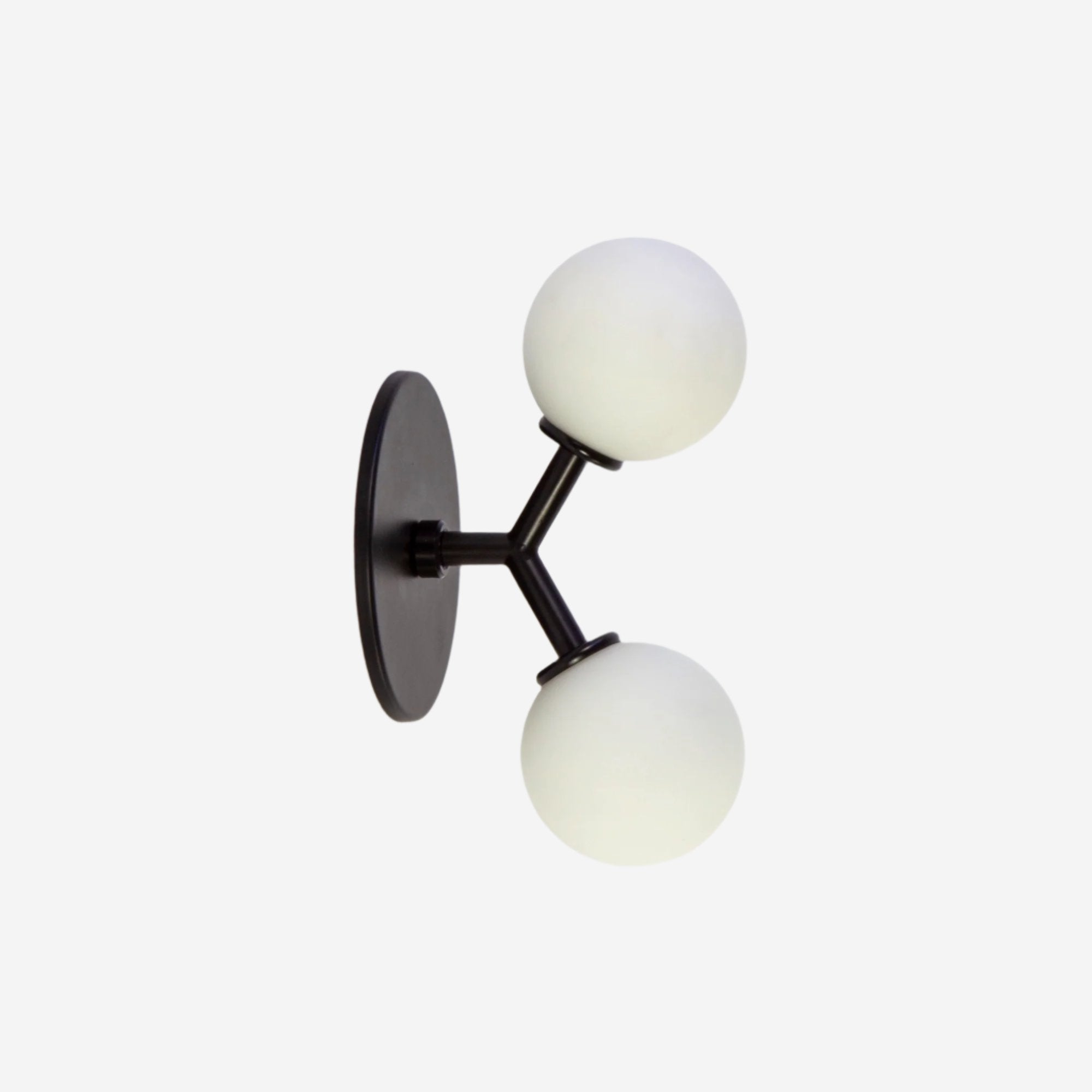
Hive Sconce by Research.Lighting
Basics: Understanding placement and spacing
What is the difference between lighting placement and lighting spacing?
Placement is about where a fixture lives in a space. Spacing is about how fixtures relate to one another when there is more than one. Placement answers where the light should go in relation to furniture, architecture, and circulation. Spacing answers how far apart multiple fixtures should be so they feel evenly distributed. Both matter. You can space fixtures perfectly and still have a bad result if they are placed without a clear logic.
What does “centered” mean in lighting design?
Centered does not always mean the mathematical center of the room. In lighting, centered usually means centered on what the light is serving. That might be a table, a seating area, or a focal feature. Centering on the room only works when the room is symmetrical and used evenly. In most real homes, centering on use creates a result that feels more natural.
What is the difference between visual center and measured center?
Measured center is what you get with a tape measure. Visual center is what looks balanced to the eye. Doors, windows, furniture, and ceiling changes all affect where visual center lands. When those two centers do not match, visual center usually wins. This is why fixtures that are technically centered can still feel off once installed.
What does center-to-center spacing mean, and when should I use it?
Center-to-center spacing measures from the middle of one fixture to the middle of the next. It is the most common method because it stays consistent even if fixture sizes change slightly. It works best when fixtures are identical and arranged in rows or grids. When fixtures are large or visually heavy, center-to-center spacing may need small adjustments.
Should spacing be measured from fixture centers, canopies, or edges?
Most layouts start with center-to-center spacing. From there, it is important to step back and look at the fixtures visually. If shades are wide or shapes are irregular, edge spacing may matter more than center spacing. The goal is even visual weight, not just matching measurements.
What makes a lighting layout feel intentional instead of random?
Intentional layouts have a reason behind every decision. Fixtures align with something meaningful, repeat at consistent intervals, and relate clearly to how the space is used. Random layouts often happen when fixtures are added reactively or placed only where wiring is easiest. If you can explain why each fixture is where it is, the layout usually reads as intentional.
Why can a fixture look wrong even when it is technically centered?
Because rooms are rarely neutral boxes. Nearby doors, windows, furniture, or ceiling details can shift how the eye reads balance. In these cases, perfect measurements do not guarantee a good result. Slight adjustments often look better than strict centering.

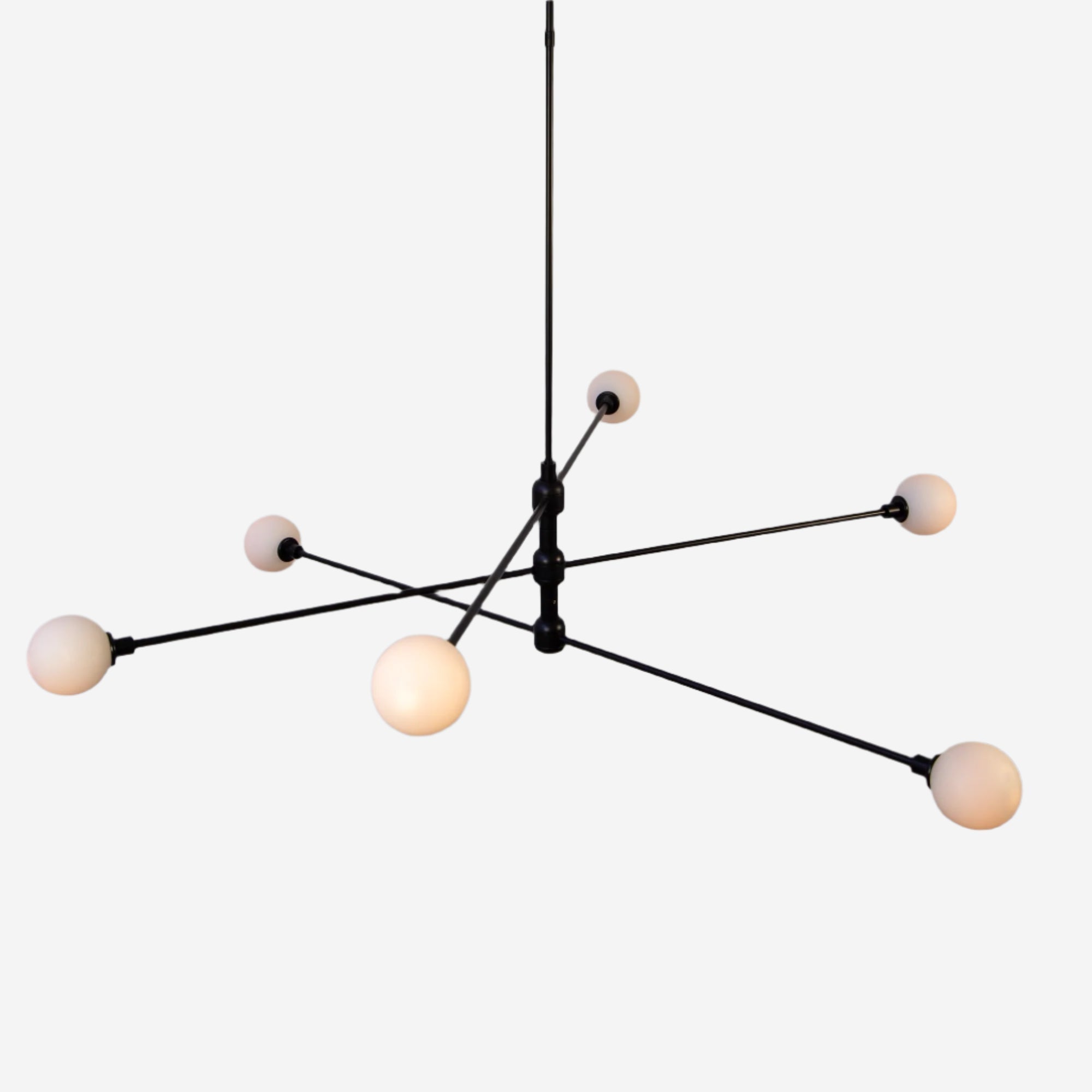
Globe 4 Chandelier by Research.Lighting
Planning a lighting layout
What should come first: fixture selection, placement, or electrical planning?
Ideally, fixture type and rough placement come first, with electrical planning built around those decisions. When wiring is locked in too early, it often forces compromises that show up later as awkward centering, poor spacing, or fixtures that feel like they landed wherever the box happened to be. You do not need to choose exact models at the outset, but you should know the general fixture category, approximate size, and how many fixtures the space will need. That information allows electrical boxes, switching, and dimming to support the design instead of dictating it. Good lighting layouts usually start with intent, then get engineered.
What measurements should I take before planning lighting placement?
Start with the basics: overall room dimensions, ceiling height, and the location of doors, windows, and major architectural features. From there, note soffits, beams, changes in ceiling plane, and anything else that breaks up the space visually. It is also important to think beyond the empty room and consider circulation paths, furniture footprints, and how people actually move through the space. These measurements give context to placement decisions and help prevent fixtures from landing in visually awkward or functionally inconvenient locations once the room is in use.
How do I plan lighting placement before furniture is finalized?
Instead of planning around specific furniture pieces, plan around use. Most rooms have predictable functional zones even if the exact furniture changes over time. Dining areas, seating groupings, work surfaces, and circulation paths are usually consistent. Lighting that supports those zones tends to stay relevant even as layouts evolve. This approach also builds flexibility into the design, allowing furniture to shift slightly without breaking the lighting logic. When placement responds to function rather than fixed objects, it usually ages better and feels less fragile.
How do I work with existing electrical locations without compromising the layout?
Existing junction boxes should be treated as constraints, not as the design driver. Start by deciding where the light should ideally be, then see how close the existing box gets you. In many cases, changing fixture scale, canopy size, or orientation can visually correct a less-than-perfect location. Furniture placement and layering can also help rebalance the space so the ceiling fixture is not carrying all the weight. The goal is not perfection, but clarity. If the placement still has a clear reason behind it, small compromises usually fade into the background.
How do I plan placement so it looks good from key viewpoints?
Lighting is experienced in motion, so it is important to consider how the space is entered and where people naturally pause or spend time. Entry points, seating positions, and major sightlines matter far more than secondary views. Walk through the room and imagine how the fixtures will read as you move. A placement that looks fine on paper can feel awkward when you see it head-on from a doorway or sofa. Adjusting placement to favor these primary viewpoints often improves the overall impression, even if it means accepting minor imperfections elsewhere.
How do I plan lighting in open-plan spaces without clear room boundaries?
Open-plan spaces benefit from being treated as a series of connected zones rather than one large, uniform layout. Each area should have lighting that clearly supports its use, while still feeling visually related to the next zone. Fixtures do not need to line up perfectly across the entire space to feel cohesive. Shared spacing logic, consistent light quality, or similar fixture families can create rhythm without rigidity. This approach avoids the grid-like look that often feels forced in open plans and helps each area feel intentional without losing flow.

Globe Sconce by Research.lighting
Centering and alignment
When should a fixture be centered on the room versus on what it lights?
Centering on the room makes sense when the room itself is symmetrical and evenly used, such as a simple square space without a dominant focal point. In most real-world situations, however, centering on what the light serves produces a more grounded result. Tables, seating areas, and work surfaces usually matter more than the room perimeter. This approach also allows furniture to shift slightly over time without making the lighting feel wrong. Centering on use prioritizes function and visual balance over strict geometry.
Should fixtures align with architectural elements like doors and windows?
Alignment can be powerful when the architecture is strong, symmetrical, and intentional. In those cases, lining fixtures up with doors, windows, or structural elements reinforces order and calm. When architecture is irregular or layered, however, strict alignment can exaggerate inconsistencies and draw attention to awkward proportions. The key is to let alignment support balance rather than override it. If following an architectural line makes the lighting feel strained or unnatural, it is usually better to prioritize visual comfort over perfect alignment.
Should fixtures line up across connected spaces or be centered per room?
If fixtures are visible across connected spaces, some level of alignment or shared spacing logic can help maintain visual continuity. That does not mean everything must be perfectly lined up. Often, repeating a rhythm or general spacing interval is enough. When spaces have different functions or proportions, centering each area independently usually feels more natural. The goal is visual calm, not forced order. A layout that acknowledges connections while allowing each space to stand on its own tends to feel more intentional.
How do I handle off-center focal points like fireplaces or feature walls?
When a focal point is off-center, it should usually become the anchor for the lighting rather than something you try to correct. Forcing symmetry around an off-center element often highlights the imbalance instead of hiding it. Lighting that acknowledges and supports the focal point feels more confident and deliberate. This might mean shifting a fixture, grouping lights asymmetrically, or allowing one side of the room to carry more visual weight. Embracing the asymmetry often produces a stronger and more comfortable result.
What do I do when the ideal centered location lands on a joist?
This situation is common, especially in renovations. Fortunately, small shifts are rarely noticeable if the overall layout still makes sense. Moving a fixture a few inches usually does not register visually, particularly when it is centered on a table or zone rather than the room itself. In some cases, choosing a slightly larger fixture or a canopy with more coverage can absorb the shift. The key is to keep the placement feeling intentional. Small compromises are fine when they support a clear design logic.
How do I avoid the “almost centered” look that feels accidental?
The worst outcome is a fixture that looks like it was meant to be centered but missed. If true centering is not possible, do not split the difference. Move the fixture far enough that the offset feels deliberate. Clear alignment or clear asymmetry reads as intentional, while slight misalignment reads as a mistake. When in doubt, exaggerate the decision just enough that the placement looks chosen rather than compromised.

Dome Sconce by Research.Lighting
Spacing fundamentals
How far apart should fixtures generally be spaced to feel balanced?
There is no single spacing rule that works everywhere. Spacing should respond to ceiling height, fixture size, and the overall scale of the room. Taller ceilings and visually substantial fixtures can tolerate wider spacing, while lower ceilings usually benefit from tighter intervals. What matters most is consistency. Even spacing that relates to the room proportions will almost always feel more balanced than uneven or arbitrary placement, regardless of the exact measurement.
How do I know if spacing is too tight or too spread out?
Spacing is too tight when fixtures visually clump together and start competing with one another. It is too spread out when the ceiling feels patchy, with bright spots separated by noticeable dark areas. Instead of judging spacing fixture by fixture, step back and look at the ceiling as a whole. If the pattern reads evenly and calmly from a distance, spacing is probably working. If your eye jumps from one spot to another, adjustments are likely needed.
How do I avoid dark gaps caused by poor spacing?
Start with even spacing across the usable area of the room, then adjust for walls, cabinets, or architectural interruptions. Avoid pushing fixtures too close to the perimeter unless you are intentionally lighting a surface. Dark gaps often appear when fixtures are pulled away from the center without a clear reason. Balanced layouts usually distribute light so walls and circulation areas receive enough illumination to keep the space feeling cohesive.
How do I avoid layouts that feel crowded even with consistent spacing?
Crowding is often a sign that there are simply too many fixtures. Even perfectly spaced lights can feel busy if each one is trying to do the same job. Before adding more fixtures, consider whether each one has a clear role. Fewer fixtures with defined purposes usually feel calmer and more intentional than many redundant lights spread evenly across the ceiling.
How should spacing change in long or narrow rooms?
In long or narrow rooms, spacing should reinforce movement rather than exaggerate the proportions. Evenly repeating fixtures along the long axis often works, but spacing may need to tighten slightly to avoid a stretched, tunnel-like feel. In some cases, grouping or staggering fixtures helps break up the length and creates a more comfortable rhythm. The goal is to guide the eye smoothly through the space without turning the ceiling into a runway.
When does a grid layout make sense, and when does it not?
Grid layouts work best in simple, symmetrical spaces where the ceiling plane is uninterrupted and the use is evenly distributed. Kitchens and workspaces often benefit from this clarity. In rooms with strong focal points, varied furniture layouts, or irregular architecture, grids can feel rigid and disconnected from how the space is actually used. In those cases, layouts that respond to function usually feel more natural and less forced.
How do I space fixtures across multiple zones in one room?
Each zone should feel complete and legible on its own before you worry about how it relates to the next. Once individual zones work, look for opportunities to relate them through similar spacing, fixture size, or alignment. They do not need to line up exactly to feel connected. Thinking of the room as several coordinated layouts rather than one unified pattern often produces a more comfortable result.

Shapes Sconce by Research.Lighting
Mounting height and vertical placement
How do I choose mounting height for wall-mounted fixtures?
A good starting point is around eye level, but that is only a guideline. Ceiling height, fixture size, and the role of the light all matter. A tall fixture may need to sit lower to feel connected, while a compact fixture might need to be raised slightly to avoid crowding. Consistency across similar walls helps create calm, but minor adjustments are often necessary to respond to architecture and use.
How do I choose hanging height for fixtures over surfaces?
Fixtures should feel visually tied to the surface they light without blocking views or feeling intrusive. Over tables and counters, that usually means hanging low enough to create intimacy but high enough to preserve sightlines. Testing different heights with tape or temporary marks is often the fastest way to find the sweet spot. What looks right on paper can feel very different in the room.
How should placement change with high or low ceilings?
High ceilings offer more vertical freedom and often benefit from fixtures that hang lower to bring light closer to people. Low ceilings require tighter clearances and more compact forms to avoid crowding and glare. In both cases, vertical placement should respond to human scale. Lighting that ignores ceiling height often feels disconnected or uncomfortable.
How do I decide hanging height in areas where people walk underneath?
Comfort and safety always come first. Fixtures should never feel like obstacles, even when someone is carrying something or moving quickly. Establish a comfortable clearance range, then refine the height within that window for visual balance. If a fixture feels threatening or distracting, it is too low, no matter how good it looks in isolation.
How do I place fixtures on sloped or vaulted ceilings?
Use the ceiling plane as your primary reference. Fixtures usually feel best when they visually follow the slope rather than fighting it. This might mean varying mounting heights or using fixtures designed for angled ceilings. Forcing everything into a level alignment often looks awkward and draws attention to the slope instead of working with it.
How do I handle vertical placement along stair walls?
Stairway lighting generally looks best when it follows the incline of the stairs rather than staying level. Consistent spacing along the slope creates rhythm and reinforces movement. This approach also helps avoid awkward gaps or crowding at landings. The goal is a smooth visual progression that supports both safety and aesthetics.
How consistent should mounting heights be within a space or home?
Consistency helps create cohesion, but rigid uniformity is rarely practical. Different ceiling heights, fixture types, and uses often require adjustments. Aim for visual consistency rather than identical measurements. When heights feel related and intentional, small variations usually go unnoticed.

Clearances and physical constraints
How much clearance should I allow under hanging fixtures?
Clearance should allow people to move comfortably without ducking, weaving, or feeling constrained. The exact requirement depends on location and use, but circulation paths should always feel open and relaxed. In areas where people pass frequently, err on the side of more clearance. A fixture that technically meets code but feels intrusive will quickly become a daily annoyance.
How do I place fixtures so they do not interfere with door swings?
Door arcs should be checked early in the planning process. Fixtures placed too close to door swings risk collisions, drafts, and visual clutter. Keeping lights outside of these arcs maintains both function and visual clarity. When space is tight, low-profile or wall-mounted options often solve the problem more cleanly than forcing a hanging fixture into a compromised position.
How close can fixtures be to trim, cabinetry, or millwork?
Fixtures need enough space around them to feel intentional. When lights are squeezed too close to trim or cabinetry, they often look accidental and visually cramped. Allowing a bit of breathing room helps each element read clearly. If spacing is tight, choosing simpler fixtures with cleaner lines can reduce visual tension.
How do I plan around ceiling fans, vents, or sprinklers?
These elements are usually fixed and non-negotiable, so the lighting layout needs to adapt. Adjust alignment or spacing to avoid visual clashes, even if that means relaxing symmetry. It is better for lighting to feel slightly asymmetrical than to compete with mechanical elements. Clear hierarchy helps the ceiling read as organized instead of cluttered.
How do I avoid blocking views through a space with lighting?
Think about major sightlines between rooms and through openings. Hanging fixtures should frame these views rather than sit directly in the line of sight. Shifting a fixture a few inches can preserve openness without sacrificing function. Good placement supports flow and connection rather than interrupting it.
How do I prevent ceilings from feeling visually crowded?
Limit the number of competing elements and keep spacing consistent. Group similar items, such as lights and vents, so the ceiling reads as organized rather than scattered. Choosing fixtures with appropriate scale and avoiding unnecessary redundancy helps maintain visual calm, even in busy spaces.

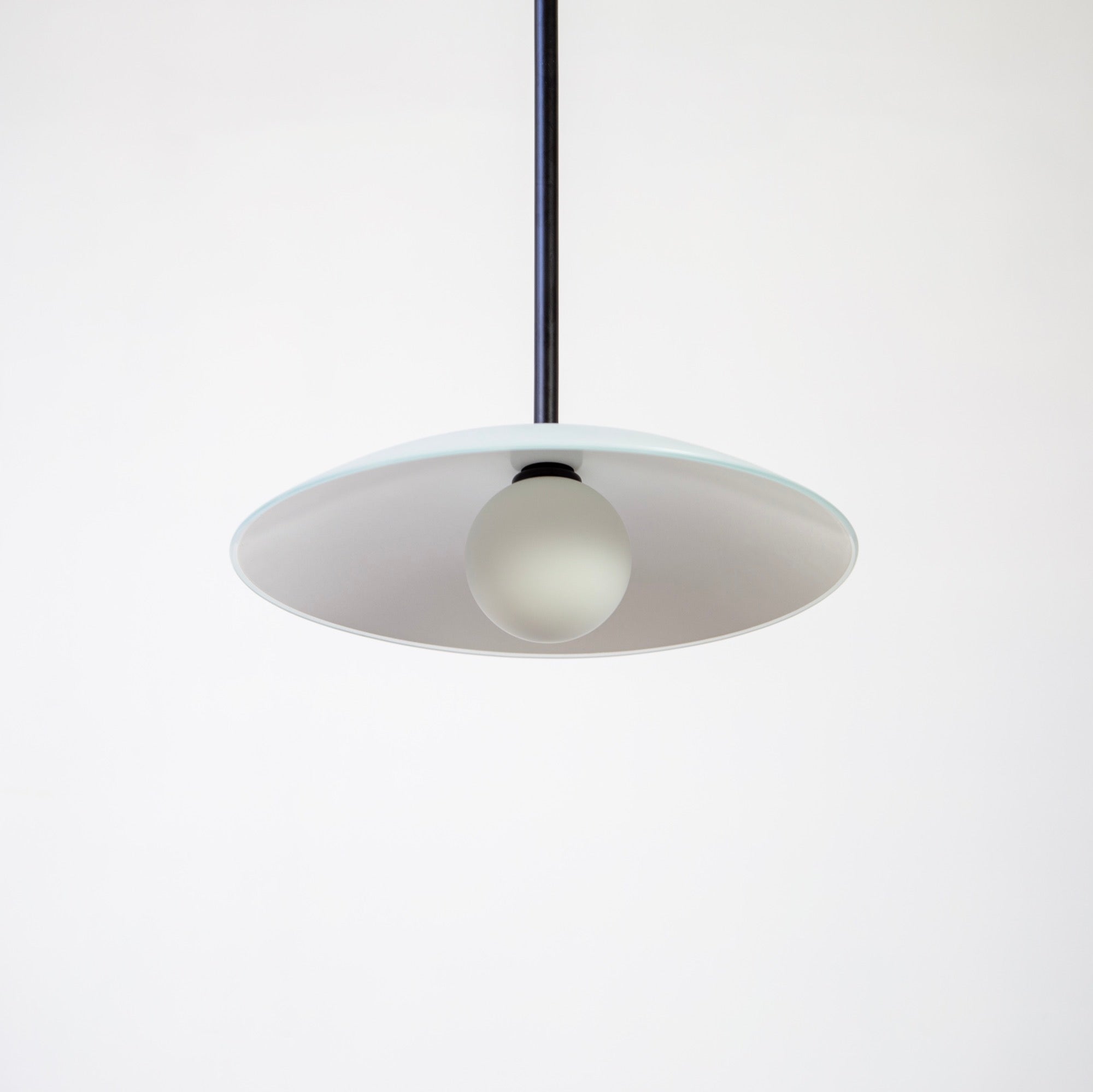
Deep Pendant Light by Research.Lighting
Sightlines, glare, and reflections
How do I place lights so the source is not in direct view?
Start by identifying common sightlines from seating, entry points, and circulation paths. Avoid placing fixtures directly in those lines of view. Small shifts in position or height often make a big difference. Choosing fixtures with diffusion or shielding also helps keep the light comfortable without relying entirely on placement.
How do I reduce glare from common seated or standing positions?
Test lighting from the positions people actually occupy. What feels fine when standing may be uncomfortable when seated. Adjusting height, offsetting placement, or switching to more diffused fixtures can dramatically reduce glare. Dimming also plays a role, allowing you to soften the light when full output is not needed.
How do I avoid seeing bare bulbs from main viewpoints?
Bare bulbs are most noticeable when they sit directly in the line of sight. Slightly raising, lowering, or offsetting a fixture often hides the bulb without changing the overall layout. Fixture selection matters as well. Designs that shield or diffuse the source tend to be more forgiving across different viewpoints.
How do I place lighting to reduce reflections on screens or mirrors?
Reflections usually happen when a light source is directly opposite a reflective surface. Offsetting fixtures to the side or changing height can solve the problem quickly. In some cases, using wall light instead of ceiling light reduces reflections by spreading illumination more evenly across surfaces.
How do I avoid harsh shadows on faces caused by placement?
Lights placed directly overhead tend to cast strong shadows on faces. Slightly offsetting fixtures or adding a secondary light source at a different height softens these shadows. Wall-mounted or indirect light often produces more flattering results, especially in areas where people gather.
How do I prevent uneven or blotchy wall lighting?
Uneven wall lighting usually comes from inconsistent spacing or varying distances from the wall. Keeping fixtures evenly spaced and at a consistent offset helps create a smooth wash. Testing placement before final installation can reveal issues early and prevent patchy results.

Three Tier Chandelier by Research.Lighting
Working with existing conditions
How do I improve lighting placement without moving junction boxes?
Improvement often comes from reframing what the fixture relates to. Adjusting fixture scale, canopy size, or orientation can visually correct a less-than-ideal box location. Furniture placement and layering can also help rebalance the space. The goal is to restore a clear logic so the placement feels intentional rather than compromised.
What visual tricks help disguise slightly off-center fixtures?
Larger fixtures, paired arrangements, or alignment with nearby elements can absorb small offsets. When a fixture relates clearly to something else in the room, the exact ceiling position becomes less noticeable. Visual context often matters more than perfect centering.
When is it better to move furniture instead of lighting?
If correcting lighting placement requires major construction, adjusting furniture is often the simpler and more flexible solution. Furniture strongly influences how balance is perceived. Shifting a table or seating area slightly can make existing lighting feel intentional without touching the ceiling.
How do I correct a layout that looks uneven after installation?
Start by identifying the real issue. If fixtures feel crowded, scale may be wrong. If there are odd gaps, spacing is likely the problem. If measurements are correct but something still feels off, placement relative to the room or furniture is usually to blame. Small adjustments can often resolve the issue without starting over.
How do I add a new fixture location with minimal disruption?
Surface-mounted fixtures, plug-in lights, or track systems can add light where it is needed without opening walls or ceilings. These options allow you to fill gaps and improve balance while keeping disruption low. Thoughtful additions often solve problems more effectively than invasive changes.

Globe Table Lamp by Research.Lighting
Multiple fixtures and patterns
How do I decide how many fixtures a space really needs?
Begin with function rather than symmetry. Each fixture should serve a clear purpose, whether that is task lighting, ambient light, or emphasis. Adding fixtures simply to fill space often leads to clutter. Fewer, well-placed lights usually feel calmer and more intentional than many redundant ones.
When are fewer larger fixtures better than more smaller ones?
Larger fixtures create strong visual anchors and work well when you want a clear focal point. Smaller fixtures excel when they are evenly spaced and provide consistent coverage. The choice depends on room scale and how the lighting is meant to read. A mix of both can also work when roles are clearly defined.
How do I lay out fixtures in a straight line versus staggered?
Straight-line layouts feel orderly and formal, reinforcing structure and symmetry. Staggered layouts feel more relaxed and organic. The character of the room should guide the choice. Formal spaces often benefit from alignment, while casual spaces can handle more variation.
How do I create symmetry without making a room feel stiff?
Use symmetry where it supports the design, such as around a focal point, and allow variation elsewhere. Perfect symmetry throughout a room can feel rigid and overly controlled. Balancing symmetrical moments with more relaxed elements keeps the space feeling natural.
How do I create asymmetry that still feels balanced?
Asymmetry works when visual weight is balanced. Offset fixtures with furniture, artwork, or architectural features so one side does not feel heavier than the other. When elements relate to one another, asymmetry feels intentional rather than chaotic.
How do I keep spacing consistent when fixture sizes vary?
When fixture sizes change, strict measurements matter less than visual balance. Adjust spacing by eye to account for different diameters or visual weight. Stepping back and evaluating the ceiling as a whole usually produces better results than relying on numbers alone.
Consistency and troubleshooting
Should mounting heights stay consistent throughout a house?
Consistency helps create cohesion, but different ceiling heights and room functions often require adjustments. The goal is visual continuity rather than identical numbers. When mounting heights feel related and intentional, small variations are rarely noticeable.
How do I keep lighting placement cohesive across different rooms?
Repeating alignment strategies, spacing logic, or fixture families creates a subtle throughline across the home. Even when fixtures change, shared principles help spaces feel connected. Cohesion comes from consistent thinking, not repetition.
Why does spacing feel uneven even when measurements match?
Perception is influenced by room geometry, ceiling height, and sightlines. Equal measurements do not always look equal, especially in irregular spaces. Visual balance often requires small adjustments beyond what the tape measure suggests.
How do I tell if the issue is fixture size, spacing, or placement?
Step back and evaluate the room as a whole. If fixtures feel crowded, size may be the problem. If there are awkward gaps, spacing is likely off. If everything measures correctly but still feels wrong, placement relative to architecture or furniture is usually the issue. Understanding which factor is at play helps guide the right fix.

Cone 2 Sconce by Research.Lighting
The Takeaway
Good lighting placement and spacing are about intention, not perfection. Small adjustments often have a bigger impact than new fixtures. Understanding how placement interacts with architecture, furniture, and movement helps prevent common mistakes and makes real-world constraints easier to navigate.
When something feels wrong, step back and look at the entire space. Ask what the lighting is meant to support and what it should align with. Thoughtful placement almost always matters more than exact measurements.
Have questions about other types of fixtures, check out The Ultimate Guide to Modern Lighting.