Foyer & Entryway Lighting FAQs: What Actually Matters
Foyers and entryways work harder than they get credit for. They are the handoff between outside and inside, where keys land, shoes pile up, and first impressions happen whether you planned them or not. Lighting sets the tone here. Too dim and the space feels unsure. Too bright and it starts to feel like a building, not a home. The goal is clear, welcoming light that feels intentional without trying too hard.
This is general entryway & foyer lighting advice, not guidance tied to specific Research.Lighting fixtures. We are talking fundamentals: scale, layering, glare control, and how to make the transition from outdoors feel easy on the eyes. For details on a particular Research.Lighting piece, including mounting and lamping, those live on the individual product pages.
Good entryway lighting usually does more than one thing at once. It helps you see what you are doing, and it quietly sets the mood for everything that follows. That might mean a ceiling fixture with presence, softened by wall light or a nearby lamp, plus dimming so nights feel calmer than mornings. The best foyers feel like a small pause before the rest of the house opens up.
Big-picture foyer lighting planning
How should foyer or entryway lighting differ from lighting in other rooms?
Entry lighting has a different job than most rooms. It is about transition. You are moving from outdoors to indoors, from bright to calm, from public to private. The light needs to be welcoming and legible without feeling theatrical. Unlike living rooms or kitchens, the foyer is not a place you linger long, so lighting should feel immediate and clear. Think even illumination, comfortable brightness, and a little softness to ease your eyes when you walk in.
Why is entryway lighting so important for first impressions?
The entry sets expectations for the rest of the house. Before someone notices finishes or furniture, they notice how the space feels. Good lighting makes an entry feel intentional, cared for, and easy to navigate. Bad lighting makes it feel unfinished or awkward. Because guests often pause here, adjust, and look around, lighting shapes that first emotional read. It quietly signals whether the home feels warm and thoughtful or rushed and overlooked.
What fixture types are most common in foyers and entry spaces?
Most foyers rely on a central ceiling fixture, often a chandelier, pendant, semi-flush, or flush mount depending on ceiling height. Wall sconces are also common, especially in wider entries or spaces with staircases. In larger or layered entries, table lamps on a console can play a supporting role. Recessed lighting shows up occasionally, but usually as backup rather than the main character. The best entries mix presence with practicality.
When during a renovation should foyer lighting be planned?
As early as possible. Foyer lighting affects ceiling boxes, switch locations, dimming plans, and clearances, especially near doors and stairs. Once framing and electrical rough-in are done, your options narrow fast. Planning early lets you center fixtures properly, add sconces if needed, and avoid awkward compromises later. Even if fixture selection comes later, knowing the type, size range, and control strategy early makes everything smoother.
What are the most common foyer lighting mistakes people regret?
The big ones are scale, glare, and lack of control. Modern light fixtures that are too small look timid, while oversized ones overwhelm the space. Exposed bulbs at eye level can cause glare, especially near doors. Another common regret is skipping dimming. A foyer that feels fine during the day can feel harsh at night without it. People also underestimate how much layered light helps an entry feel finished.
What should we prioritize if we can only upgrade one or two fixtures?
Start with the main ceiling fixture. It sets the tone and usually does most of the work. Choose something appropriately scaled with comfortable light output. If budget allows for a second move, add dimming or a secondary light source like a sconce or console lamp. Those two changes alone can dramatically improve how the entry feels, without touching wiring everywhere.
How can foyer lighting help set the tone for the rest of the home?
Lighting acts like a visual handshake. If the foyer light feels calm, warm, and intentional, the rest of the house feels more cohesive right away. Matching the general brightness and color temperature to nearby spaces helps everything flow. The style does not need to match exactly, but it should feel related. A good foyer light hints at what is coming next without giving the whole story away.
How can lighting make an entryway feel intentional rather than leftover space?
Intentional entries usually have clear hierarchy. One main light that feels chosen, supported by secondary light where needed. Even spacing, controlled brightness, and thoughtful scale go a long way. Adding dimming or a lamp on a console helps the space feel designed, not accidental. When lighting feels considered, the entry stops feeling like a pass-through and starts feeling like a room.

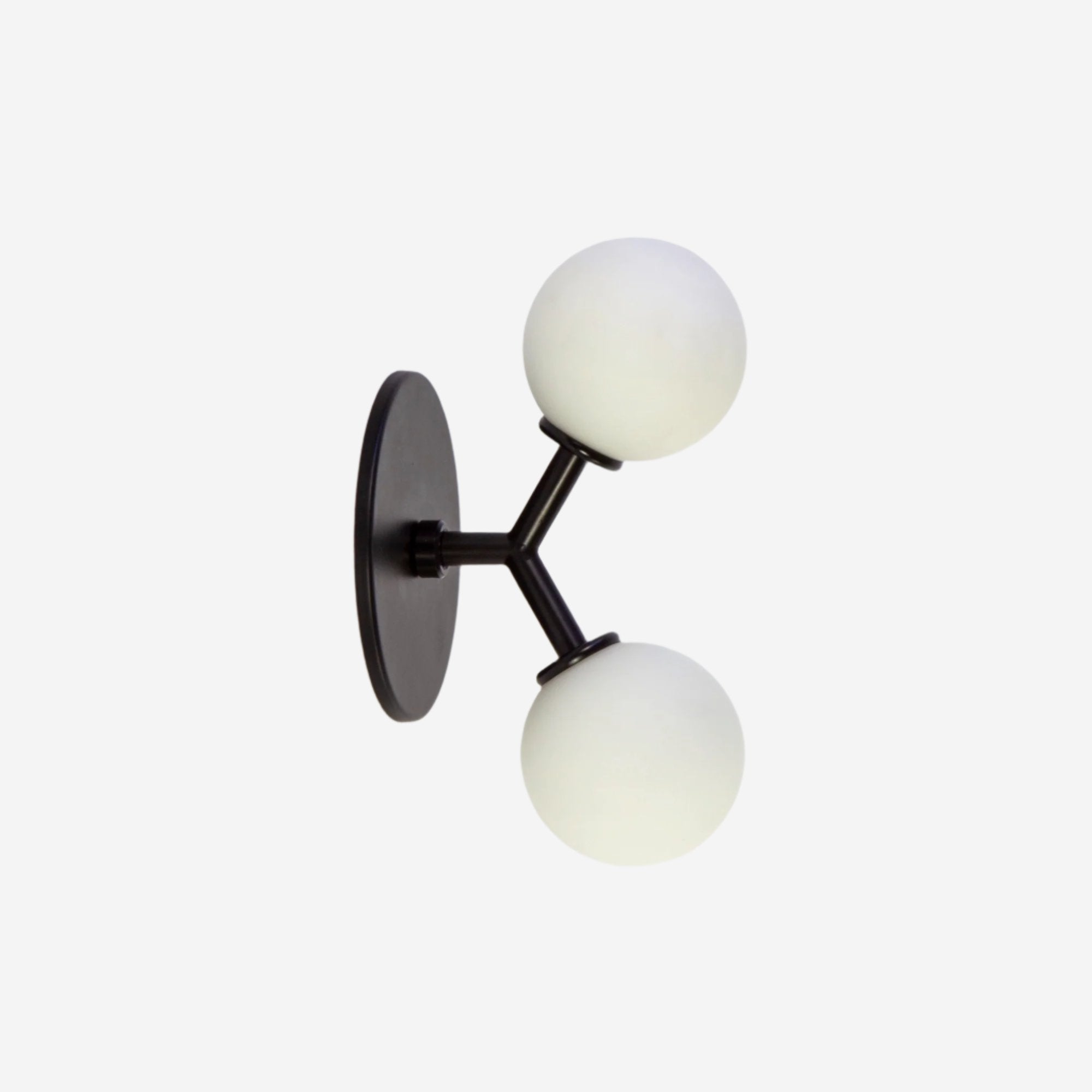
Shapes Sconce, Large, by Research.Lighting
Understanding your foyer: size, layout, and architecture
How does ceiling height affect fixture choice in a foyer?
Ceiling height is one of the biggest drivers of fixture choice. Higher ceilings can support hanging fixtures with more presence and vertical drop. Standard ceilings often work better with semi-flush or compact pendant lights. Low ceilings usually call for flush mounts or shallow fixtures to preserve headroom. The goal is balance. You want the fixture to feel proportional without intruding into the space or blocking sightlines.
What should we consider when lighting a small, defined entry versus an open-concept one?
A small, defined entry benefits from focused, contained light that makes it feel complete without spilling everywhere. An open-concept entry needs lighting that relates to nearby spaces and does not feel like a hard stop. In open layouts, matching brightness and color temperature becomes more important. You are lighting a transition, not a standalone box, so the fixture needs to play well with what surrounds it.
How should we light a foyer that opens directly into a larger living or dining room?
In this case, the foyer lighting should feel like part of a sequence. It can be slightly brighter than the living space for orientation, but not dramatically different. Coordinating color temperature helps avoid visual jolts. Using a fixture with presence but softer output works well. Dimming is especially helpful so the entry can adjust to the mood of the adjacent room throughout the day.
What lighting works well in long, hallway-style entries?
Long entries usually need rhythm. One fixture rarely does the job. Evenly spaced ceiling fixtures, or a combination of ceiling lights and sconces, helps avoid dark gaps. Consistency matters more than drama here. The goal is even, comfortable light that pulls you forward. Dimming is helpful so the hallway does not feel overlit at night.
How should we light square versus narrow rectangular foyers?
Square foyers often work well with a single centered fixture that anchors the space. Rectangular foyers usually benefit from multiple light sources or elongated fixtures that follow the shape of the room. In narrow spaces, keeping fixtures visually light and avoiding glare at eye level is key. Let the geometry of the room guide the lighting layout.
How can lighting support entries with closets, mudrooms, or multiple doors?
These entries need task clarity as well as atmosphere. Closet doors, hooks, and benches benefit from focused light so everything is easy to use. That might mean adding sconces or directional ceiling light near storage areas. The main entry fixture can still set the tone, but secondary lighting makes the space function smoothly without feeling cluttered.
How do windows, sidelights, or transoms influence foyer lighting needs?
Natural light can be a big asset, but it changes constantly. During the day, you may need very little electric light. At night, the same space can feel flat or dark. Adjustable lighting helps bridge that gap. Be mindful of glare on glass and reflections at night. Layered lighting lets the foyer feel balanced regardless of what is happening outside.
How can we balance natural daylight with electric lighting so the foyer feels right day and night?
The key is flexibility. Use dimmers or multiple circuits so electric light can step in as daylight fades. Avoid fixtures that are only comfortable at one brightness level. During the day, the light should support natural brightness without competing. At night, it should take over gently. When done well, the transition feels seamless.
How does the position of the staircase affect fixture placement?
Stairs add vertical movement and sightlines. Hanging fixtures need to be positioned so they do not glare from above or feel awkward when viewed from landings. Sometimes it makes sense to align the foyer fixture with the stair volume rather than the door. Coordinating stair and entry lighting helps the whole area feel connected instead of fragmented.

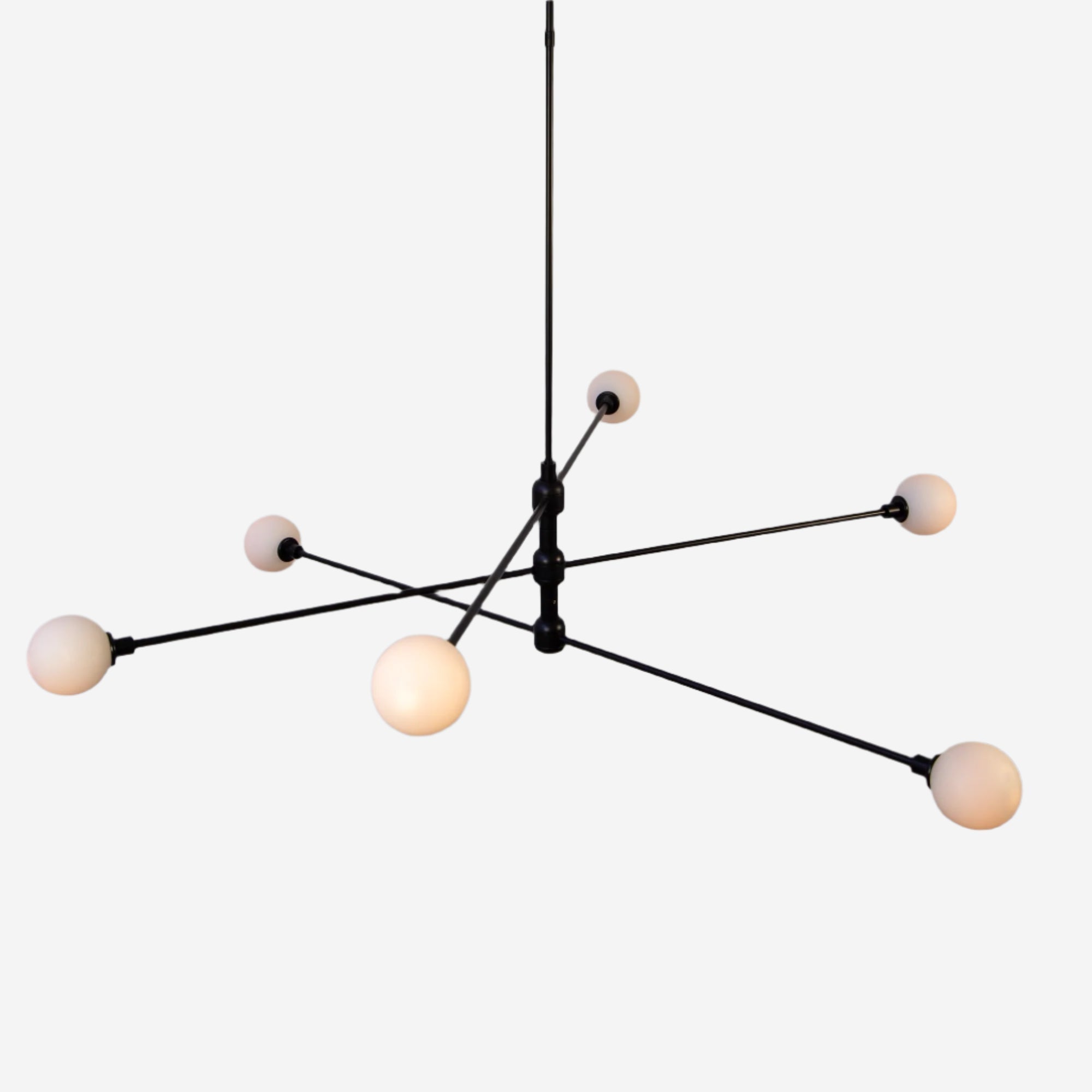
Bunch Pendant Light by Research.Lighting
Choosing fixture types for foyers and entries
How do we choose between a chandelier, pendant, semi-flush, or flush mount for the foyer?
Start with ceiling height and footprint. Tall ceilings can handle entryway chandeliers or pendants with drop. Standard ceilings often feel best with semi-flush fixtures that add presence without hanging too low. Low ceilings usually call for flush mounts. Then consider style and light quality. The right choice feels proportional, comfortable, and appropriate for how people move through the space.
When is a flush or semi-flush mount better than a hanging fixture?
Flush and semi-flush mounts shine in spaces with limited clearance, frequent door swings, or heavy foot traffic. They keep sightlines clean and reduce the risk of glare or collisions. They also work well in smaller entries where a hanging fixture might feel intrusive. You still want something with character, but contained and close to the ceiling.
Do most foyers benefit from layered lighting, or is one main fixture enough?
Many foyers work with just one fixture, but layered lighting almost always feels better. A main ceiling light handles general illumination, while sconces or a console lamp add softness and depth. Layers give you flexibility for different times of day and make the space feel more finished. Even small entries benefit from at least two light sources.
When do wall sconces make sense in an entry?
Sconces work well in wider entries, near staircases, or where you want to highlight walls, art, or mirrors. They help reduce shadows and add visual interest at eye level. In narrow entries, they need careful placement to avoid crowding. When used thoughtfully, sconces make an entry feel more architectural and less flat.
Are recessed downlights useful in foyers, or do they feel too commercial?
Recessed lights can be useful as supporting players, especially in larger or open entries. On their own, they often feel flat and utilitarian. When combined with a decorative fixture, they help fill in dark corners or highlight circulation paths. The key is restraint. Too many recessed lights can make an entry feel like a corridor instead of a welcome.
Can console lamps or table lamps meaningfully contribute to entry lighting?
Absolutely. A lamp on a console adds warmth and makes the entry feel lived-in. It also provides low-level light that is great in the evening. Lamps work best as a supplement, not the only source. They soften the space and make transitions gentler, especially at night.
When should we use multiple fixtures instead of one large centerpiece?
Use multiple fixtures when the space is long, broken up, or visually complex. One large fixture can feel lost or awkward in those cases. Multiple smaller fixtures create rhythm and even light distribution. This approach often feels calmer and more intentional than forcing one oversized piece to do everything.
Are clustered pendants a good alternative to a traditional chandelier?
Clustered entryway pendant lights can work beautifully in taller or more contemporary spaces. They add movement and visual interest without feeling formal. The key is spacing and scale. Too tight feels busy, too loose feels accidental. When done well, clusters feel sculptural and modern while still providing useful light.
How do we select fixtures that feel substantial but not overwhelming?
Look at proportion rather than absolute size. A fixture should relate to ceiling height, room width, and door scale. Visual weight matters too. Open frames feel lighter, solid forms feel heavier. Choosing something with presence but restraint helps the entry feel confident without shouting.
Should interior entry lighting coordinate with exterior porch or lantern fixtures?
They do not need to match, but they should feel related. Similar materials, finishes, or general mood help the transition feel smooth. If exterior lights are very cool or bright, warming things up slightly inside can be a relief. Think continuity, not duplication.

Double-height foyers and stair-adjacent entries
What special considerations apply to double-height or two-story foyers?
Scale and sightlines become critical. Fixtures need enough presence to hold their own in a tall volume, but not so much that they overwhelm. You also need to consider how the fixture looks from multiple levels. Cleaning, lamp access, and glare from above all matter more here than in standard-height spaces.
How big should a chandelier be for a tall entry space?
Bigger than you think, but not as big as you fear. Tall spaces need fixtures with visual weight to avoid looking lost. Diameter and vertical proportion both matter. A taller fixture often works better than one that is just wide. The goal is to fill the vertical space gracefully, not dominate it.
How low should a hanging fixture drop in a double-height foyer?
A common approach is to hang the fixture so its bottom aligns roughly with the upper floor sightline, not the ceiling. You want it visible and connected to human scale. It should never feel like it is floating randomly in space or hanging so low that it feels threatening when you walk underneath.
How can we maintain or clean a high foyer fixture safely?
This is often overlooked. Choose fixtures that allow for lamp access without full removal. Consider motorized lifts or long-life LED sources to reduce maintenance. If cleaning will require scaffolding, be honest about whether that is realistic long term. Practicality matters even in dramatic spaces.
Should stair lighting be integrated with the foyer lighting or handled separately?
They should feel coordinated but not necessarily on the same circuit. Stairwell lighting has safety needs that may require different control. Visually, using related fixtures or similar color temperature helps everything feel unified. Functionally, separating controls often makes daily use easier.
How can lighting visually connect the foyer to the staircase and upper landing?
Using consistent light quality and related fixture styles helps tie the spaces together. Highlighting vertical surfaces or using entryway sconces along the stair can create a visual thread. The goal is flow, not repetition. Light should guide the eye upward naturally.
Are multiple smaller fixtures better than one large one in tall foyers?
Sometimes. Multiple fixtures can create balance and reduce glare, especially if the space is wide or irregular. One large fixture can be striking, but it needs careful placement. The right answer depends on the architecture and how people move through the space.
How do we reduce glare when viewing a hanging fixture from an upstairs overlook?
Choose fixtures that shield the light source or use diffused light. Avoid exposed bulbs aimed upward. Dimming also helps. Testing sightlines early can prevent unpleasant surprises once everything is installed.

Small, narrow, or low-ceiling entries
How should we light a very small or compact entry?
Keep it simple and intentional. One well-chosen fixture with good light quality often works better than multiple small ones. Avoid harsh brightness. Adding a sconce or entryway table lamp can help soften the space. In small entries, glare control and proportion matter more than drama.
What fixtures work best for low-ceiling entryways near the front door?
Flush mounts or shallow semi-flush fixtures are usually best. Look for designs that spread light evenly without exposing the bulb directly. Low ceilings benefit from fixtures that visually recede while still offering character.
How can lighting keep a narrow entry from feeling tight or tunnel-like?
Even light distribution is key. Avoid single bright spots with dark gaps between. Wall washing or evenly spaced fixtures help widen the feel. Softer light on walls makes the space feel broader and less compressed.
Can a single flush mount be enough in a tiny entry?
Yes, if it provides comfortable, even light and is paired with dimming. In very small spaces, one good fixture is often better than layering poorly. The fixture should feel deliberate, not like an afterthought.
How do we choose fixture scale so it feels intentional but not oversized?
Measure carefully and think about visual weight. Open designs feel lighter than solid ones. A slightly larger fixture can work if it is visually airy. The goal is confidence without crowding.
What should we do when the door swings close to the fixture location?
Clearance comes first. Choose low-profile fixtures or adjust placement to avoid collisions. Wall sconces or entryway flush mount ceiling lights often solve this problem cleanly.
How can lighting visually expand a small entry?
Light walls evenly, reduce shadows, and avoid harsh contrast. Softer, diffused light makes boundaries feel less tight. Mirrors paired with good lighting can also help bounce light and open things up.

Doors, daylight, and transition zones
How does natural light from the front door affect the lighting plan?
Natural light can make an entry feel great, but it also makes it unpredictable. A glass door or sidelights might flood the space at noon, then disappear at 5pm. Plan for both. In bright daytime, you want electric light that supports, not competes. At night, you want enough layered light to replace what daylight was doing so the foyer does not go flat. Also pay attention to reflections. Glass can bounce interior light back at you once it is dark outside.
How bright should the entry feel when moving from outdoor daylight into the home?
You want an easy step-down, not a cliff. If the entry is much darker than outdoors on a sunny day, it can feel like you are walking into a cave for a second. On the other hand, if you overcompensate and blast the foyer bright, it can feel harsh at night. A good approach is moderate ambient light plus dimming, so you can adjust seasonally and by time of day. If you have sidelights, you can often keep electric light a touch softer and still feel comfortable.
How can we avoid glare on glass doors or sidelights?
Glare usually comes from seeing the light source reflected in the glass. The fix is diffusion and placement. Choose fixtures that hide or soften the bulb, and avoid aiming bright light directly at the door. Wall light helps because it spreads brightness without creating a single hot reflection. If you have sconces, place them so they light the walls and faces, not the glass panel. Dimming helps too. Many glare issues disappear when you are not running the entry at full brightness all night.
Should foyer lighting match the brightness and color of exterior entry lights?
They should feel related, not identical. A big mismatch can feel weird, like two different worlds on either side of the threshold. Keeping color temperature in the same neighborhood helps the transition feel smooth. Brightness is trickier. Exterior lights often need to be bright enough for safety, while the interior entry wants to feel welcoming, not lit like a driveway. If you can, put both on dimmers or smart controls so you can tune them together seasonally and avoid that harsh inside-outside contrast.
How can lighting help visitors find the front door and transition indoors confidently?
Good entry lighting is basically wayfinding. Outside, you want the door area clearly defined, not just the yard. Inside, you want the landing zone visible: the floor, the lock, the mat, the first step if there is one. Even, glare-free light does that better than a single bright point. A layered approach helps too, a main ceiling fixture for general light plus something lower like sconces or a console lamp. The goal is simple: nobody should hesitate or fumble when they arrive.
What should we consider for foyers that open into darker interior rooms?
Think about the sightline. If you walk into a bright foyer and immediately look into a darker living room, the contrast can feel abrupt and a little unwelcoming. You can solve this by keeping the foyer light more moderate and adding dimming so it can settle down at night. Another strategy is to add a soft layer that extends a bit into the next space, like a lamp or wall light that helps the transition. You are not trying to light the whole house from the entry. You are just smoothing the handoff.

Style, finishes, and coordination with the home
How closely should foyer fixtures match lighting in nearby rooms?
You do not need a perfect match, but you do want a family resemblance. The foyer is the connector, so if it feels totally unrelated, the house can feel choppy. A simple way to keep things cohesive is to repeat one element, a finish, a material, a shape language, or even just the level of simplicity. Light quality matters even more than style. If the foyer is warm and soft and the next room is cool and bright, it will feel off no matter how pretty the fixtures are.
Can the foyer have a statement fixture that stands apart from the rest of the home?
Absolutely. The foyer is one of the best places for a statement, because it is naturally a moment. The key is making sure the fixture still feels connected to the home through scale, finish, or overall vibe. A statement piece should feel intentional, not random. Also remember the entry is a functional space. If your statement fixture creates glare, feels too low, or overwhelms the room, it will stop feeling special and start feeling annoying. Big personality is great. Bad light is not.
How should we coordinate metal finishes with door hardware or stair railings?
Think coordination, not exact matching. If you match every metal perfectly, the entry can feel overly controlled, like a showroom. Instead, keep the finishes in a compatible range. Warm with warm, cool with cool, or mix intentionally with one dominant finish and one supporting finish. Door hardware and railings are high-touch and visually strong, so they do influence the read. If you are mixing, repeat each finish at least twice so it feels deliberate. And remember: light quality will matter more daily than whether the brass is identical.
What fixture styles tend to age well in entryways?
Simple silhouettes, good proportions, and comfortable diffusion usually outlast trends. Entryways are seen constantly, so anything overly specific or fussy can tire quickly. Fixtures that feel architectural, clean, and well made tend to age well because they rely on form and light quality, not novelty. Clear lines, thoughtful scale, and materials that patina nicely are safer bets than hyper-trendy shapes. Also, avoid anything that relies on exposed, high-glare bulbs. Even the coolest fixture gets old when it makes you squint every time you walk in.
How can lighting highlight mirrors, art, or console tables in the foyer?
Layering is your friend. A console lamp adds warm, low-level light that makes an entry feel lived-in immediately. Sconces can flank a mirror or artwork and create flattering, face-friendly light. If you want a more gallery feel, a subtle accent aimed at the wall can work, but avoid harsh beams that create glare on glass frames. Also consider what you are highlighting. If the console is where keys land, you want enough light to find them without turning the foyer into an operating room.
Are clear glass light fixtures practical in high-touch or high-traffic entries?
They can be, but they are honest. Clear glass shows dust, fingerprints, and every bulb choice. In an entry, where doors open, air moves, and people brush past things, that can mean more cleaning than you want. Clear glass also tends to expose the light source, which can create glare. If you love the look, choose a bulb you actually like seeing and consider a shape that shields the brightest part from direct view. If you want low-maintenance comfort, diffused or enclosed glass is usually the easier daily choice.
How do we use lighting to emphasize architectural features like beams, arches, or millwork?
Use light to create gentle contrast. Wall light can skim across millwork and make profiles pop. A fixture with a wide, soft spread can brighten an arch without spotlighting it. If you have beams, grazing light from the side can add depth and make the ceiling feel more dimensional. The trick is subtlety. You want the architecture to feel more legible, not like it is being highlighted with a highlighter. Avoid tight, bright beams that create scallops and distraction. Soft, controlled light usually does the best work here.

Safety, clearance, and code considerations
How high should foyer fixtures be installed to avoid door interference?
Think about both the door swing and the sightline. If the fixture is near the door, it needs to clear the path of the door and not feel like it is hovering in your face when you enter. In most cases, this means keeping fixtures centered in the foyer rather than close to the threshold, or choosing a flush or semi-flush option when the box is tight to the door area. If you are unsure, mock it up with tape and measure the door swing. A few inches can be the difference between fine and constantly annoying.
What clearance is needed beneath hanging fixtures in entries with foot traffic?
You want enough headroom that nobody feels like they have to duck, ever, even carrying a box. A typical rule of thumb is to keep the bottom of a hanging fixture comfortably above head height in the main walking path. In tall foyers, you can hang lower for presence, but still keep clearance over circulation zones and near stairs. If the entry is tight or you have tall people in the house, err on the side of higher. A beautiful fixture that feels like an obstacle will not stay beloved for long.
Are there code rules for fixture height near stairs and walkways?
Often, yes, but they vary by location and the specifics of your space. Stairways and walkways usually have clearance requirements and rules around safe passage, especially in multi-level entries. Even if your local code is flexible in a single-family home, safety should still guide the decision. If a fixture is within reach from a landing or could be bumped while moving furniture, it is worth reconsidering. The best move is to ask your electrician what applies locally and design within that reality.
How close can a hanging fixture be to a door swing or glass panel?
As far away as you can manage, honestly. Hanging fixtures near door swings risk collisions, drafts, and uncomfortable glare reflected in glass. If the electrical box forces you close, choose a fixture that is compact, well-diffused, and does not hang low. You can also use a semi-flush or flush mount to avoid the problem entirely. With glass panels, think about reflection. Even if the fixture clears physically, it may still create bright reflections at night. Position and diffusion solve most of this.
What fixtures are safest for homes with tall residents or frequent furniture moves?
Low-profile fixtures are your friend. Flush mounts, semi-flush fixtures, and compact pendants reduce collision risk and make moving furniture less stressful. If you want a hanging fixture, choose one that stays higher and has a sturdy build. Avoid delicate open frames at head level near stairs or tight entries. Also think about maintenance. If a fixture requires a ladder that barely fits the foyer, that becomes a safety issue too. The safest foyer lighting is the kind you do not have to think about when you are carrying something awkward.
Are enclosed fixtures better than open-frame ones near busy doorways?
Often, yes. Enclosed fixtures tend to reduce glare, protect bulbs, and hold up better in high-traffic areas. Open-frame fixtures can look great, but they expose the light source, which can be harsh when you are walking directly under it. They also collect dust more visibly and can get bumped more easily. If you love an open look, prioritize diffusion and consider placement so you are not staring into the bulb on entry. In a busy doorway zone, comfort and durability usually win.

Remodeling, retrofits, and lighting upgrades
How much improvement can we achieve without moving the junction box?
Usually a lot. Swapping the fixture for something better scaled and more diffused can transform how the entry feels, even if the box stays put. Bulb choice matters too. A warmer, higher quality bulb can make an entry feel calmer instantly. Adding a dimmer is another big win that rarely requires rewiring. You might not be able to perfectly center the fixture without moving the box, but you can choose a canopy, stem, or shape that visually recenters the light and makes the placement feel intentional.
What are the simplest ways to update a dated foyer fixture?
Start with the easiest improvements first: a better bulb, cleaner diffusion, and dimming. If the fixture is the problem, replace it with something appropriately scaled and less glaring. Updating the switch to a dimmer often makes a bigger difference than people expect. If you have a console, adding a lamp can soften the whole space and make it feel less like overhead-only lighting. Even small upgrades, like matching bulb color temperatures and removing harsh exposed bulbs, can make a foyer feel more current without changing the layout.
When is it worth adding sconces or additional lighting to the entry?
When the ceiling fixture cannot do it all. If the entry feels flat, has dark corners, or includes a mirror or console that needs more functional light, sconces can solve that beautifully. They also help in tall foyers, where a ceiling fixture might be too high to provide comfortable light at face level. Adding sconces is especially worth it if you use the entry as a drop zone, mudroom, or mini gallery. If walls are open during a remodel, it is a smart moment to add them. Retrofitting later is possible, but harder.
How should lighting be planned when adding built-ins, benches, or new millwork?
Plan lighting at the same time as the millwork layout, not after. Built-ins change how you use the space, which changes where you need light. If you are adding a bench, hooks, or a console zone, consider a sconce or nearby light so it is actually functional. Millwork also affects where wiring can run, so early coordination saves headaches. Think about shadowing too. Tall built-ins can block light and create dark pockets. A layered plan, overhead plus wall or task light, keeps the new features looking intentional and usable.
What should we know about replacing a foyer ceiling fan with a chandelier?
First, confirm the box and mounting are rated for the weight of the new fixture. Ceiling fans often have specific bracing, but you cannot assume it will work for a heavy chandelier. You will also want to consider how the fan was controlled. If it had separate fan and light switches, you may need to reconfigure controls. And think about airflow. If the entry relied on that fan for comfort, removing it might change how the space feels. From a design standpoint, a chandelier can be a great upgrade, just make sure the infrastructure and controls support it cleanly.
How can we upgrade foyer lighting in an older home with limited wiring options?
Work with what you have, but make it behave better. Choose a fixture that spreads light widely and softly, so one box can cover more. Add a dimmer if possible. If you need a second layer, plug-in sconces or a console lamp can add warmth without opening walls. Also look at finishes. Lighter walls and ceilings bounce light and can make an older entry feel brighter with the same electrical setup. If you do open walls for any reason, prioritize adding 3-way switching and a secondary light point where it will actually improve daily use.
What should we consider when switching a classic entry fixture to LED?
Focus on light quality and compatibility. You want LEDs that dim smoothly, do not flicker, and have a color temperature that feels welcoming. If you are using a dimmer, make sure the LED and the dimmer are compatible, especially in older homes. Also pay attention to how the light distributes. Some LED bulbs are more directional than traditional lamps, which can create harsh spots in an entry. If you are considering an integrated LED fixture, think about long-term service. If the driver fails, can it be repaired, or are you replacing the whole thing?

Controls and dimming
Is dimming useful for foyer lighting?
Yes, very. The foyer is used in every lighting condition: bright daytime arrivals, evening dinners, late-night dog walks, early morning exits. One fixed brightness level rarely feels right for all of that. Dimming lets the entry feel welcoming at night without blasting light into the rest of the house, and it helps the space adjust to seasonal daylight changes. It also makes statement fixtures more livable, because you can enjoy the presence without running them at full intensity. If you do one upgrade, a dimmer is usually the best bang for the effort.
Should foyer lights be controlled with the same dimming zone as nearby spaces?
Sometimes, but not always. If the foyer opens directly into a living room, tying them together can help the home feel cohesive. But foyers also have their own needs, like a brighter level for finding keys or a softer level late at night. Separate control gives you flexibility. A good compromise is separate zones with simple scene control, so you can set a welcoming entry plus adjacent room lighting together when you want. The key is daily usability. If you are constantly adjusting two dimmers to get one comfortable moment, rethink the zoning.
How can switches be positioned for easy access when entering or leaving the home?
Make them obvious and reachable. The main entry switch should be right where your hand expects it when you walk in, not hidden behind the door swing or across the room. If there are multiple points of entry, consider 3-way switching so you can control lighting from more than one location. Think about how you actually move through the space: front door to closet, closet to stairs, stairs to living area. Good switch placement supports that path. And keep controls consistent. A foyer is not the place for five different switch styles and guessing games.
Are motion sensors, timers, or smart controls practical for entry lighting?
They can be great, especially for exterior coordination and for making the house feel welcoming when you arrive. Timers or smart schedules work well for porch and foyer lighting, turning on at dusk and settling to a softer level later. Motion sensors are helpful in mudroom-style entries, but they should be tuned so they do not blast full brightness every time someone walks by. If you go smart, keep it simple for guests. The best system is the one everyone can use without instructions.

Brightness and light levels
How bright should a foyer be compared to adjacent rooms?
Usually similar, or just a touch brighter for orientation. The foyer is where you are adjusting, looking for keys, stepping out of shoes, greeting people. It should feel clear and easy. But if it is dramatically brighter than nearby rooms, it will feel like a corridor or lobby. Balance is the goal. Keep light levels close enough that sightlines into the next space feel smooth. Dimming makes this simple, because you can run the foyer brighter when needed and softer when the house is settling down for the evening.
What level feels welcoming at night without creating glare?
A moderate level with good diffusion. At night, you want enough light to see faces and navigate safely, but not so much that you are squinting or lighting up the whole house through open doorways. Glare usually comes from exposed bulbs and overly bright points, so prioritize fixtures that soften the source. Add wall light where possible, because it feels less harsh than overhead-only illumination. Dimming is the easiest way to hit the sweet spot. A welcoming foyer at night feels calm, not bright.
Do smaller entries need less light than large, open foyers?
Not necessarily less, just different. Small entries can feel harsh quickly because you are close to the light source, so diffusion and glare control matter more than raw output. A large open foyer needs more total light to feel balanced, but it can tolerate higher output because there is more distance. In both cases, the goal is comfortable, even light. A small entry can feel plenty bright with one well-chosen diffused fixture plus a lamp. A big foyer often needs layering so it does not feel spotlit in the middle and dark at the edges.
How can we brighten a dark entry without making it feel harsh?
Brighten by spreading light, not by blasting it. Choose fixtures that distribute light widely and softly, and add a secondary layer like sconces or a console lamp to lift the walls. Vertical light makes entries feel brighter and more open than floor-only downlight. Also check bulb quality. Better color rendering can make the space feel clearer without pushing into cold brightness. Light finishes help too. If the entry has dark walls and floors, it will absorb light. A little bounce goes a long way. Harshness is usually glare and contrast, not brightness itself.

Color temperature and light quality
What color temperature works best for a warm, welcoming entry?
Most homes feel best with a warm to warm-neutral entry. Warm enough to feel inviting, neutral enough that faces and finishes still look true. Too cool can read like a light for a commercial space, especially in an entry where you are already dealing with outdoor light shifts. If your home is filled with daylight and lighter finishes, you can lean slightly more neutral. If the entry is darker or windowless, a warmer tone often feels more comfortable. Whatever you choose, keep it consistent. An entry is not the place for surprise color shifts.
Should the foyer match the color temperature of surrounding spaces?
Generally, yes. The foyer is the connector, so mismatched color temperature is very noticeable. If the entry is warmer than the adjacent room, that room can suddenly feel cold. If the entry is cooler, it can feel disconnected from the rest of the home. You do not need perfect matching down to the Kelvin, but you want them in the same family. If you like variety, do it with brightness and layering, not with drastically different color temperatures. Smooth transitions make the house feel cohesive.
How important is color rendering if the entry includes artwork or natural materials?
Pretty important. Entries often include wood, stone, textiles, and art, and those materials look better under light that renders color accurately. Poor color rendering can make wood look dull, stone look gray, and artwork look flat. It also affects faces, which matters in the space where you greet people. You do not need museum-level lighting, but choosing lamps or fixtures with good color quality is one of those upgrades that quietly makes everything feel richer and more real.
Can we mix outdoor and indoor color temperatures without it feeling disjointed?
You can, but keep the gap small. A slightly cooler outdoor light can feel fine if the indoor foyer is a touch warmer, because it creates a sense of welcome as you step inside. The problem is when one is very cool and the other is very warm, then the threshold feels jarring. Also consider how the two spaces are seen together at night through glass. If the porch light is icy and the foyer is golden, the reflections can get strange. If you can, choose compatible temperatures and use dimming or smart controls to soften the transition.

LEDs and fixture performance in foyers
Are LEDs a good choice for fixtures used with timers or photocells?
Yes. LEDs are generally well suited to frequent switching and scheduled use, and they reach full brightness right away. The key is quality. Cheaper LEDs can flicker, shift color, or behave badly on certain controls. If the fixture is on a timer or photocell, choose LED lamps or fixtures that are known to be stable and, if dimming is involved, actually rated for it. In an entry, you notice weird behavior immediately because you are walking right into it. Reliable LEDs are worth it here.
Do integrated LED chandeliers and pendants make sense in foyers?
They can, especially if you want a very clean look and smooth diffusion. The tradeoff is long-term service. If the LED board or driver fails, you may need replacement parts or potentially replace the fixture. Ask about support and availability before committing. Also pay attention to dimming performance and color temperature, because those are harder to change later than swapping a bulb. Integrated LED can be a great choice when the fixture is high quality and the manufacturer supports it long term. Otherwise, a classic lamped fixture keeps your options open.
What should we look for to ensure LED fixtures dim smoothly in entry spaces?
Compatibility is everything. Make sure the LED source is actually dimmable and that the dimmer type is appropriate for the load. Look for notes about smooth dimming, low-end performance, and flicker. If possible, choose a dimmer designed for LEDs and test the range before the electrician leaves. Some LEDs look fine at 100% but strobe or drop out at low levels, which is exactly where you want to live at night. A foyer dimmer should feel like a gentle dial, not a light switch with attitude.

Placement and spacing
How do we center a foyer fixture when the electrical box and door don’t align?
This is common, especially in older homes. First, decide what the fixture should be centered on: the room, the entry path, or the door. Often, centering to the space feels better than centering to the door. If moving the box is not an option, you can sometimes use a larger canopy, a fixture with an offset mount, or a design that visually recenters the light. Another trick is layering: add sconces or a lamp so the ceiling fixture is not doing all the visual work. The goal is for the entry to feel balanced, even if the box is not perfect.
Where should sconces be placed relative to artwork, mirrors, or doorways?
Sconces should support what you want people to look at, and they should be comfortable as you walk by. If you are flanking a mirror or artwork, aim for symmetry and keep the light from reflecting harshly in glass. Near doors, place sconces so they are not hidden by the door swing and not blasting directly into eyes when someone enters. Also consider spacing from the ceiling fixture so the entry does not feel cluttered. Sconces work best when they create a gentle wall glow and a sense of rhythm, not a spotlight effect.
How high should wall sconces be mounted in an entry?
High enough to avoid shoulder bumps and low enough to feel human-scaled. In most entries, sconces land around eye level or slightly above, but the right height depends on the fixture size, the ceiling height, and whether the sconce is meant to light faces, artwork, or a wall surface. If the entry is narrow, mount a bit higher to keep the path clear and reduce glare. Always consider sightlines from the door and from the staircase if you have one. A quick tape mockup can save you from an expensive redo.
How should multiple fixtures be spaced in a larger or L-shaped foyer?
Think in zones. A larger foyer often has an arrival zone near the door, a circulation zone toward the next room, and sometimes a stair or landing zone. Spacing fixtures to support those zones will feel more natural than trying to create one perfect grid. In an L-shape, treat each leg like its own segment and make sure light overlaps so you do not get a dark turn. Matching light quality and using dimming keeps the whole space cohesive. The goal is even, calm coverage, not a runway of bright circles.

Troubleshooting common foyer lighting issues
Why does our foyer still feel dim even with a large fixture?
Usually it is not the size of the fixture, it is what the light is doing. If the fixture is too directional, or if the light is concentrated downward, walls can stay dark and the foyer will still feel dim. Dark paint and floors also absorb light. Start by checking bulbs, are they bright enough and good quality. Then look at diffusion and distribution. Adding a secondary layer like sconces or a console lamp can dramatically change perceived brightness because it lifts the walls and reduces contrast. A large fixture can look impressive and still be bad at lighting the room.
How can we fix glare on glass doors or sidelights from interior lights?
First, reduce point-source brightness. Exposed bulbs and clear glass fixtures are common culprits. Switch to a more diffused fixture, add shades, or use bulbs with softer output. Placement matters too. Avoid aiming bright downlight directly at the glass plane. Wall lighting often helps because it spreads brightness across surfaces instead of creating a single reflected hotspot. Dimming is also a practical fix, many glare problems happen because the entry is simply run too bright at night. If the glass is unavoidable, control the light source and the angle.
What can we do if the foyer chandelier feels too bright or overwhelming?
Start with control. Put it on a dimmer and make sure the bulbs are dimmable and compatible. Then check bulb output and color temperature. Often the fix is simply using lower output bulbs or a warmer tone that feels less intense. If the chandelier has exposed bulbs, consider diffusing them with appropriate shades or switching to a bulb shape that is less glaring. You can also balance the chandelier by adding softer secondary light, like sconces or a lamp, so the chandelier is not the only source. Overwhelming usually means too much brightness in one place.
How do we know if our fixture is incorrectly scaled for the space?
If it feels timid, lost, or visually noisy, scale might be the issue. Too small and the fixture looks like it is floating without purpose, especially in taller entries. Too large and it can make the ceiling feel lower or crowd the space near doors and stairs. Another clue is how it relates to the door. If the fixture is dwarfed by the door height, it may be too small. If it competes with the door swing or feels like a head hazard, it is probably too big or too low. Scale is about proportion, not just size.
How can lighting fix dark corners or uneven brightness in the entry?
Layering is the fix. A single ceiling fixture often leaves corners dark because light falls in the center and drops off at the edges. Add wall light with sconces, or add a console lamp to lift one side of the room. In larger entries, a few recessed lights used sparingly can help fill gaps, but avoid turning the foyer into an office ceiling. Also check bulb type and fixture distribution. A fixture that throws light sideways as well as down will feel more even. Dark corners usually mean the walls are not getting enough light. Light the walls, and the whole space brightens.
Entryway lighting does not need to be precious. Get the scale right, keep the light comfortable, and give yourself some control. That is usually enough.