Dimming & Lighting Controls FAQs: How LED Dimming Actually Works
Dimming plays a major role in how lighting feels and functions in everyday spaces. A dimmer can turn a bright task light into a softer ambient glow, reduce glare, and make a room feel calmer and more flexible without changing the fixture itself. At the same time, modern lighting, especially LED lighting, has made dimming more nuanced than it once was. Compatibility between fixtures, drivers, dimmers, and wiring now matters far more than it did in the past.
This guide is meant as general, educational information about dimming and lighting controls, not advice tied to any specific product or brand. While the concepts here apply broadly across residential lighting, individual fixtures may have their own requirements or limitations. For details about dimming performance, compatibility, or controls for a particular light, refer to the specific product pages or specification sheets.
What follows is a practical overview of the most common questions people ask about dimming, LED compatibility, wiring, smart controls, and everyday use, written to be useful whether you are planning a renovation, working with a designer, or simply trying to understand why your lights behave the way they do.

Globe Chandelier 4 from Research.Lighting
Table of Contents
- Dimming Basics: How Light Dimming Works
- LED Dimmer Compatibility: Fixtures, Drivers, and Controls
- Types of Light Dimming Systems Explained
- LED Dimming Problems and Troubleshooting
- Dimmer Load, Wattage, and Multiple Fixtures
- Dimmer Wiring and Installation Basics
- 3-Way and Multi-Location Light Dimming
- Smart Dimmers and Lighting Control Systems
- Dimming Curves, Brightness Control, and User Experience
- Choosing the Right Dimmer and Lighting Controls

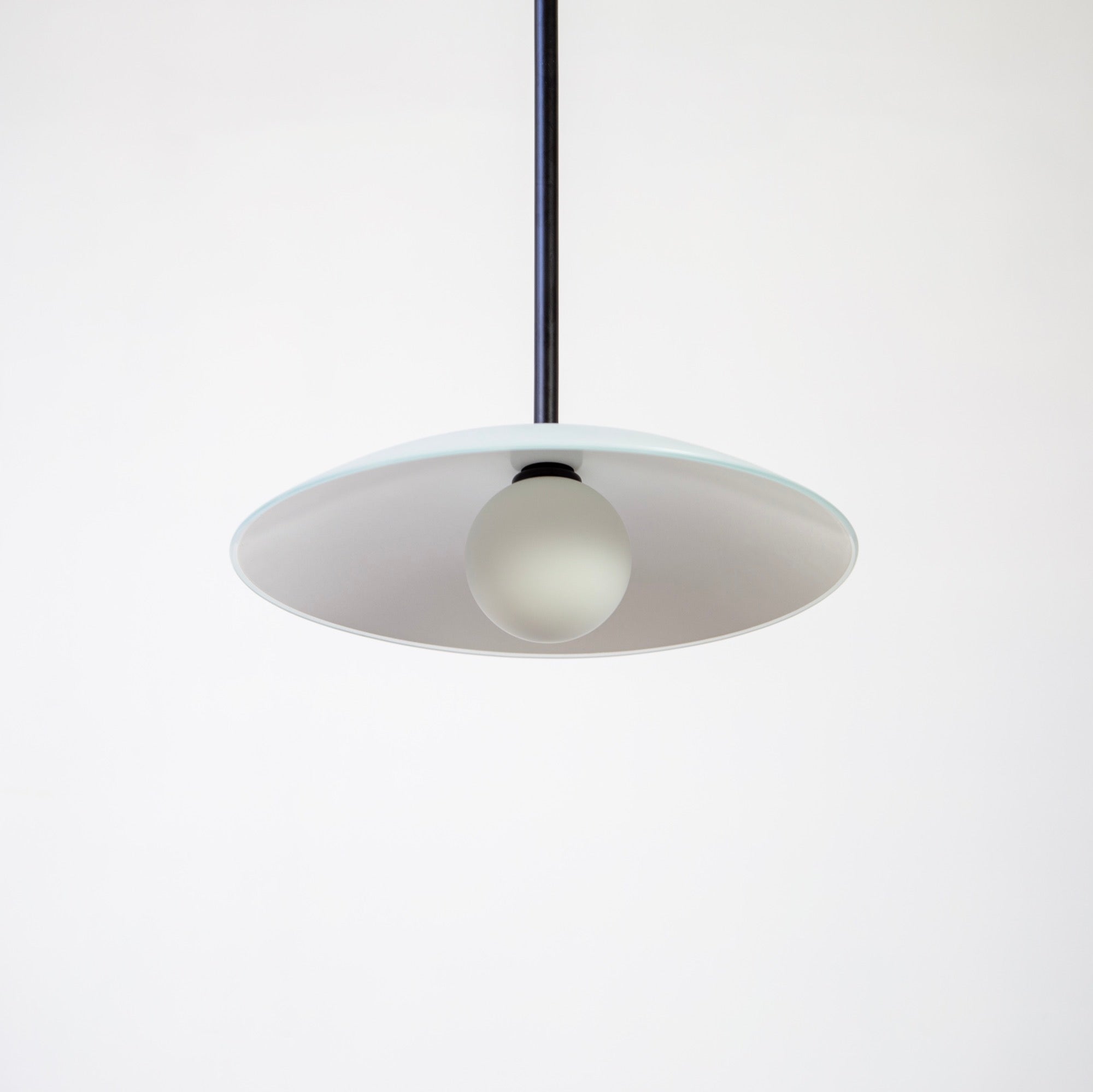
Dish Pendant Light from Research.Lighting
Dimming Basics: How Light Dimming Works
What does dimming actually do to a light?
Dimming lowers the amount of usable electrical power reaching a light, which reduces how much light it produces. With older incandescent bulbs, dimming worked by lowering voltage so the filament generated less heat and glow. LEDs work differently. Most LED fixtures use a driver that controls current, and dimming tells that driver to reduce output. The light becomes dimmer without relying on heat loss. Because drivers vary in design and quality, two LED fixtures that look similar on paper can behave very differently when dimmed.
Does dimming affect light quality or appearance?
It can, depending on the fixture and driver. Well-designed LED systems tend to maintain consistent color and smooth output as they dim. Others may show slight color shifts, uneven light, or instability near the lowest settings. These effects are usually related to the electronics, not dimming itself. In many spaces, dimming actually improves how light feels by reducing glare and softening contrast, especially in the evening. When noticeable changes occur, they often point to compatibility or driver limitations.
What does “dimming range” mean?
Dimming range refers to how far a light can be reduced from full brightness to its lowest stable output. A fixture that dims from 100 percent to 10 percent offers a smaller range than one that dims to 1 percent. The number alone does not tell the full story. What matters most is whether the light remains steady and usable near the bottom. Some fixtures technically reach very low levels but flicker or shut off in real use. A good dimming range balances depth with reliability.
What does it mean when a light “dims to 1%”?
When a light is said to dim to 1 percent, it means the system can reduce output to roughly one percent of its maximum before turning off. This is not a precise measure of how bright the light looks to the eye. Human vision is not linear, so one percent often appears brighter than people expect. The figure should be treated as a general indicator of low-end capability. Two fixtures that both claim one percent dimming can still look quite different at their lowest usable setting.
Why does a light turn off before reaching the lowest dimmer setting?
This usually happens when the LED driver cannot operate below a certain input level. As the dimmer lowers power, the driver reaches a point where it can no longer regulate current and shuts off. This is common when the dimmer and driver are not well matched, or when the driver has a relatively high minimum threshold. Many dimmers allow you to raise the minimum level slightly to avoid this cutoff. If that does not help, switching to a more compatible dimmer is often the solution.
Why does a light stay too bright at low dim levels?
Some LED drivers are designed with a higher minimum output to ensure stable operation, which limits how low the light can go. In other cases, the dimmer may not offer fine control near the bottom of its range. Perception also plays a role, since small changes feel more noticeable in darker conditions. Using a dimmer designed for LED loads or pairing the fixture with a driver that supports deeper dimming can make low-level control feel more natural and usable.
Does dimming reduce energy use?
Yes. Dimming lowers energy use in proportion to how much the light output is reduced. Even though LEDs are already efficient, dimming them further reduces power draw and heat. Over time, this can lead to modest energy savings, especially in spaces where lights stay on for long periods or are regularly used at lower levels. While energy savings are not always the main reason people dim lights, they are a practical benefit of good lighting control.
Does dimming extend LED lifespan?
In general, running LEDs at lower output reduces heat and electrical stress on both the LEDs and the driver. This can support longer lifespan and more consistent performance over time. Dimming alone does not guarantee longer life, especially if the system is poorly matched. When fixtures and dimmers are compatible, operating lights below full output is usually gentler on the components and can help preserve light quality over the long term.

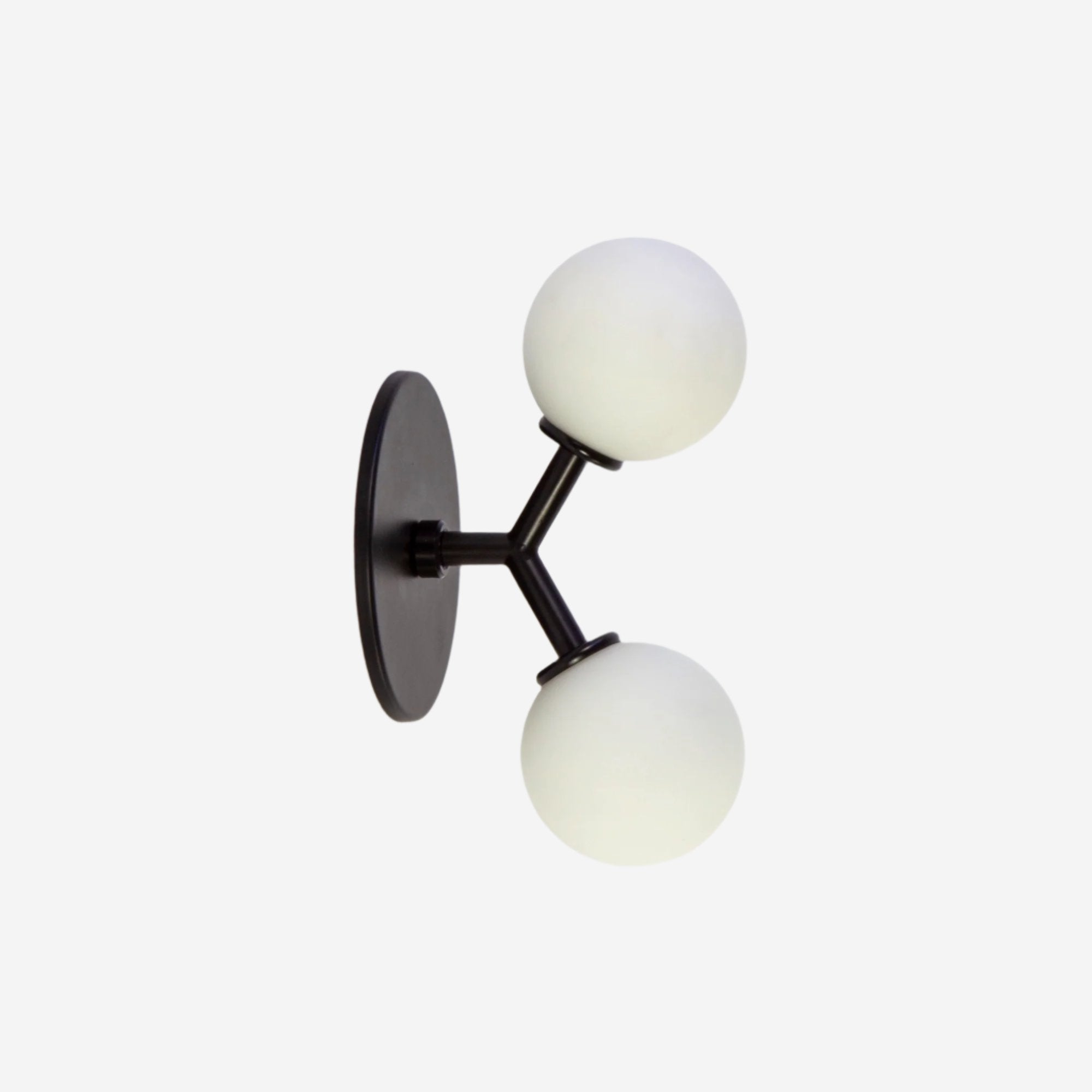
Hive Sconce from Research.Lighting
LED Dimmer Compatibility: Fixtures, Drivers, and Controls
How do I know if a fixture is dimmable?
A fixture is dimmable only if its driver is designed to support dimming. This information should be listed on the product specification sheet or product page. The presence of LEDs alone does not guarantee dimmability. Integrated LED fixtures rely entirely on their internal drivers, while socketed fixtures depend on the bulb being used. If dimming capability is not clearly stated, it is safest to assume the fixture is not dimmable and confirm before installing controls.
Are all dimmable LEDs compatible with all dimmers?
No. The term “dimmable” simply means the fixture or bulb supports some type of dimming. Different dimmers control power in different ways, and LED drivers vary in how they respond to those signals. Incompatibility is one of the most common reasons for flicker, buzzing, uneven dimming, or lights dropping out at low levels. Matching the dimmer type to the driver’s requirements is essential for smooth and predictable performance.
Why does a “dimmable” fixture still flicker or buzz?
Flicker or buzzing usually points to a mismatch between the dimmer and the fixture’s driver, or an issue with load. The total wattage on the circuit may be too low for the dimmer to regulate cleanly, or the dimmer may not be designed for that driver’s behavior. Electrical noise can also play a role. In many cases, switching to a dimmer recommended for the fixture or designed for electronic LED drivers resolves the issue without changing the light itself.
How do I know which dimmer type a fixture requires?
The fixture’s specification sheet should list the supported dimming methods, such as forward-phase, reverse-phase, or 0–10V. If that information is not available, documentation from the driver manufacturer can often provide guidance. When neither is clear, it is best to confirm compatibility before purchasing a dimmer. Choosing controls without checking requirements often leads to trial and error after installation, which is more frustrating and costly than verifying details ahead of time.
What happens if I use the wrong type of dimmer?
Using an incompatible dimmer can cause flicker, audible noise, lights turning off unexpectedly, or poor low-end control. Some combinations may seem acceptable at first but develop issues over time. In some cases, improper pairing can stress components and shorten their lifespan. Matching the dimmer to the fixture’s driver protects both the control and the light and ensures the dimming range is usable in everyday conditions.
Can I swap a driver to change dimming compatibility?
Sometimes. If a fixture has an accessible and replaceable driver, swapping it for a different model can improve dimming behavior or expand compatibility. This is more common with fixtures that use remote drivers. Fully integrated fixtures usually have fixed drivers that cannot be changed. Any replacement driver must meet electrical ratings, fit the fixture, and comply with safety standards. Driver swaps should be done carefully and are not always practical.
Are smart dimmers compatible with standard LED fixtures?
Often they are, but the same compatibility rules still apply. From the fixture’s point of view, most smart dimmers behave like traditional phase-cut dimmers. This means dimming method, minimum load, and driver response all matter. Some smart dimmers handle low-wattage loads better than others. Checking supported dimming types and load requirements helps ensure a smart dimmer performs as expected with a given fixture.

Loop Sconce from Research.Lighting
Types of Light Dimming Systems Explained
What is phase-cut dimming?
Phase-cut dimming controls brightness by removing part of the AC electrical waveform before it reaches the fixture. This reduces the effective power delivered to the driver, which lowers light output. It is the most common dimming method in residential settings because it works with standard wiring and wall switches. Phase-cut dimming can perform well with LEDs when the dimmer and driver are compatible, but results vary depending on the electronics involved.
What’s the difference between forward-phase (TRIAC) and reverse-phase (ELV)?
Forward-phase dimming cuts the beginning of the electrical waveform and has long been used with incandescent lighting. Reverse-phase dimming cuts the end of the waveform and is generally smoother and quieter with modern LED drivers. Many electronic drivers respond better to reverse-phase control, especially at low dim levels. While both methods are common, reverse-phase dimmers are often preferred for LED fixtures because they reduce flicker and audible noise.
When should I choose ELV over standard LED dimmers?
ELV dimmers are often a good choice for fixtures with electronic LED drivers, low-wattage loads, or situations where smooth low-level dimming is important. They tend to deliver more stable performance than forward-phase dimmers and reduce buzzing in both the dimmer and the fixture. ELV dimmers usually cost more, but the improvement in dimming quality can be noticeable in spaces where lighting comfort matters.
What is 0–10V dimming?
0–10V dimming uses a separate low-voltage control signal to adjust brightness while the fixture continues to receive full line voltage. The light level is set by the voltage on the control wires, typically ranging from zero to ten volts. This method offers precise and stable control and is widely used in commercial lighting and architectural lighting. Because it requires additional wiring, it is less common in typical residential installations.
Is 0–10V dimming used in homes?
It can be, but it requires planning. Some high-end residential projects use 0–10V dimming to achieve consistent performance across many fixtures or to integrate with advanced lighting control systems. However, it requires extra wiring and compatible fixtures, which makes it less practical for most renovations. In many homes, phase-cut dimming provides adequate performance with far less complexity.
What’s the difference between line-voltage and low-voltage dimming?
Line-voltage dimming adjusts brightness by altering the power delivered directly on the main electrical circuit. Low-voltage dimming uses a separate control signal to tell the driver how bright to be while line voltage remains constant. Low-voltage systems often provide smoother and more predictable dimming, but they require additional wiring and coordination. Line-voltage dimming is simpler and more common in residential settings.
What does it mean to dim the driver versus the LED?
In modern lighting systems, dimming almost always happens at the driver level rather than directly at the LED. The driver controls current to the LED, and dimming adjusts that regulation. This approach allows LEDs to operate safely and consistently across a range of brightness levels. Directly dimming the LED itself is uncommon in residential lighting and would require specialized electronics. Driver-based dimming is the standard approach for reliable performance.

Bunch Pendant from Research.Lighting
LED Dimming Problems and Troubleshooting
Why do LED lights flicker when dimmed?
LED flicker when dimmed is most often caused by a mismatch between the dimmer and the fixture’s driver. LEDs draw very little power, and some dimmers struggle to regulate that load smoothly, especially at lower levels. Electrical noise on the circuit can also exaggerate the effect. Flicker is usually most noticeable near the bottom of the dimming range, where small fluctuations are easier to see. In many cases, switching to a dimmer designed for the specific driver type, such as reverse-phase for electronic drivers, or adjusting the dimmer’s low-end trim can significantly reduce or eliminate flicker.
Why do lights flicker even at full brightness?
Flicker at full brightness can occur when a dimmer never truly delivers uninterrupted power, even at its highest setting. Some dimmers still slightly modify the waveform, which certain LED drivers do not tolerate well. Line noise from other devices on the circuit can also contribute. In some situations, the issue disappears when the dimmer is replaced with a different model or when the fixture is tested on a standard on-off switch. If dimming is rarely used, switching to a non-dimming control may be the simplest solution.
Why do dimmers or fixtures buzz or hum?
Buzzing or humming usually comes from vibrations in electrical components responding to chopped or uneven waveforms. This can happen in the dimmer, the driver, or sometimes within the fixture itself. Forward-phase dimming is more likely to produce audible noise, especially with electronic LED drivers. Higher-quality drivers and reverse-phase dimmers tend to be quieter because they deliver smoother power. Mounting conditions can also matter, since metal boxes or thin fixture housings may amplify sound. Reducing load extremes or switching dimmer types often helps.
Why do lights pop on instead of fading up?
Lights that pop on abruptly instead of fading smoothly usually indicate that the driver requires a minimum input level before it can operate. Below that point, the light stays off, then suddenly jumps to a visible output. This behavior is common when the dimmer and driver are not well matched or when the driver has limited low-end capability. Adjusting the dimmer’s minimum setting can sometimes reduce the jump. If the issue persists, switching to a dimmer known to work well with the fixture’s driver often produces a smoother, more gradual turn-on.
Why do lights drop out at low dim levels?
Dropout at low levels happens when the driver can no longer regulate current reliably as input power decreases. Once the signal falls below a certain threshold, the driver shuts off entirely. This is especially common with LED systems that have a narrow dimming range or with dimmers that are not designed for very low loads. Many dimmers allow you to raise the minimum level slightly to keep the light stable. If that does not work, using a different dimmer or driver with better low-end performance is often necessary.
Why do multiple fixtures behave differently on the same dimmer?
Even when fixtures appear identical, small differences in drivers, internal components, or wiring length can cause them to respond differently to the same dimmer. Manufacturing tolerances also play a role, especially at very low dim levels. In mixed-fixture setups, different driver designs may react unevenly, leading to mismatched brightness or dropout. These differences are usually subtle at mid-range levels but become more noticeable near the bottom of the dimming range. Standardizing fixtures and drivers, or limiting how low the system is dimmed, often improves consistency.
How can I tell if the issue is the dimmer or the fixture?
A simple way to isolate the problem is to test the fixture on a different, known-compatible dimmer, or test the dimmer with a fixture that is known to dim well. If the issue follows the dimmer, the control is likely the cause. If it follows the fixture, the driver or internal electronics are usually responsible. Electricians often use this method to troubleshoot quickly without guesswork. Checking manufacturer compatibility notes can also help confirm whether the combination has been tested or is known to be problematic.
When should I replace the dimmer versus the fixture?
In most cases, replacing the dimmer is the first and easiest step. Dimmers are less expensive, simpler to swap, and more likely to be the source of compatibility issues. If changing the dimmer resolves flicker, buzzing, or poor low-end performance, there is no need to replace the fixture. If problems persist across multiple compatible dimmers, the fixture or its driver may be the limiting factor. At that point, replacing the driver or the fixture itself may be the only way to improve performance.

Cone 2 Sconce from Research.Lighting
Dimmer Load, Wattage, and Multiple Fixtures
What is a dimmer’s minimum load and why does it matter?
Minimum load refers to the smallest amount of electrical power a dimmer needs in order to operate correctly. Many older dimmers were designed for incandescent loads, which draw far more power than modern LEDs. When the connected load falls below the minimum, the dimmer may struggle to regulate output, leading to flicker, dropout, or erratic behavior. This is especially common when a single low-wattage LED fixture is connected to a dimmer. Choosing a dimmer designed for low LED loads helps ensure stable performance.
Why do LEDs cause minimum load issues?
LEDs are extremely efficient, so even multiple fixtures may draw very little power compared to older light sources. While this is good for energy use, it can be challenging for dimmers that rely on load to stabilize their electronics. When the load is too small, the dimmer may not function as intended, particularly at low dim levels. This can result in flicker, lights cutting out, or lights that never fully turn off. LED-specific dimmers are designed to handle these low loads more reliably.
How many fixtures can be on one dimmer?
The number of fixtures a dimmer can handle depends on its maximum rated load and the actual wattage of each fixture. Always use the real wattage listed on the fixture or driver, not incandescent-equivalent values. While LEDs draw less power, drivers can have startup surge that affects capacity. Staying comfortably below the dimmer’s maximum rating is recommended for long-term reliability. When in doubt, dividing fixtures across multiple dimmers or consulting the dimmer manufacturer’s guidelines helps avoid overheating or performance issues.
Can I mix different LED fixtures on one dimmer?
You can mix different LED fixtures on a single dimmer, but performance may vary. Different drivers can respond differently to the same dimming signal, leading to uneven brightness, flicker, or mismatched low-end behavior. These differences are often subtle at higher levels but become more noticeable when dimmed deeply. Mixing fixtures is more predictable when they use similar drivers and dimming methods. If uniform behavior is important, using the same fixture type or testing the combination before final installation is a good practice.
Can I mix LED and incandescent lights on the same dimmer?
Mixing LED and incandescent loads is sometimes possible and can even help stabilize a dimmer because incandescent bulbs draw more power. However, the two light sources dim very differently. Incandescent bulbs respond smoothly and predictably, while LEDs depend on driver behavior. As a result, brightness levels may not track evenly, and the LEDs may drop out before the incandescent bulbs. This setup can work in limited situations, but it is rarely ideal for consistent appearance or control.
What happens if I exceed a dimmer’s rated load?
Exceeding a dimmer’s rated load can cause overheating, premature failure, or in extreme cases, safety hazards. Dimmers are designed to dissipate heat based on their rating, and too much load stresses internal components. Even if the dimmer appears to work initially, long-term reliability can suffer. Always account for the total connected wattage and follow derating guidelines, especially in multi-gang boxes where heat buildup is greater. Staying within ratings protects both the dimmer and the lighting system.

Y Flush Mount from Research.Lighting
Dimmer Wiring and Installation Basics
Can I put a dimmer on any wall switch?
Many standard wall switches can be replaced with dimmers, but not every situation is suitable. The wiring configuration, type of load, and control location all matter. Some switches are part of multi-way circuits, which require specific dimmer models. Others may control outlets or non-dimmable loads, where dimmers are not appropriate. Before installing a dimmer, it is important to confirm that the circuit only controls dimmable lighting and that the dimmer is designed for that wiring setup.
Do dimmers require a neutral wire?
Traditional dimmers often do not require a neutral wire, but many smart dimmers do. The neutral provides a return path so the dimmer can power its internal electronics even when the lights are off. In newer homes, neutrals are typically present in switch boxes. In older homes, they may not be. If a neutral is not available, you will need a dimmer specifically designed for no-neutral installations, which may have more limitations with low-wattage LED loads.
What’s the difference between two-wire and three-wire dimmers?
Two-wire dimmers connect directly in line with the load and do not require a neutral wire. They are common in older installations and simpler systems. Three-wire dimmers include a neutral connection, which allows more stable operation and supports features like smart controls and indicators. The wiring difference affects which dimmers you can use, not just how they install. Knowing which wiring is present in your switch box helps narrow down compatible options.
Can dimmers be used in older homes without neutrals?
Yes, dimmers can be used in older homes without neutrals, but choices may be more limited. Many traditional analog dimmers are designed for these situations and work well with compatible LED fixtures. Smart dimmers without neutrals also exist, but they may require careful setup to avoid flicker or glowing when off. If you plan to upgrade lighting controls in an older home, confirming wiring early helps avoid surprises during installation.
Can a dimmer control a plug-in or switched outlet?
A dimmer can control a plug-in or switched outlet if that outlet is wired to the switch and the connected device is designed to be dimmed. Not all lamps or plug-in devices are dimmable, and many electronics should never be used on a dimmer. Table lamps with dimmable bulbs often work well in this setup. Always confirm that both the outlet wiring and the connected load are appropriate before installing a dimmer.
Does wire length or driver location affect dimming?
Yes. Long wire runs can introduce voltage drop or electrical noise, which may affect dimming stability, especially in sensitive LED systems. Remote drivers located far from the dimmer can also be more susceptible to interference. While these issues are not common in typical residential installations, they can appear in larger homes or renovations with long circuit runs. Using quality wiring practices and compatible dimmers helps minimize potential problems.

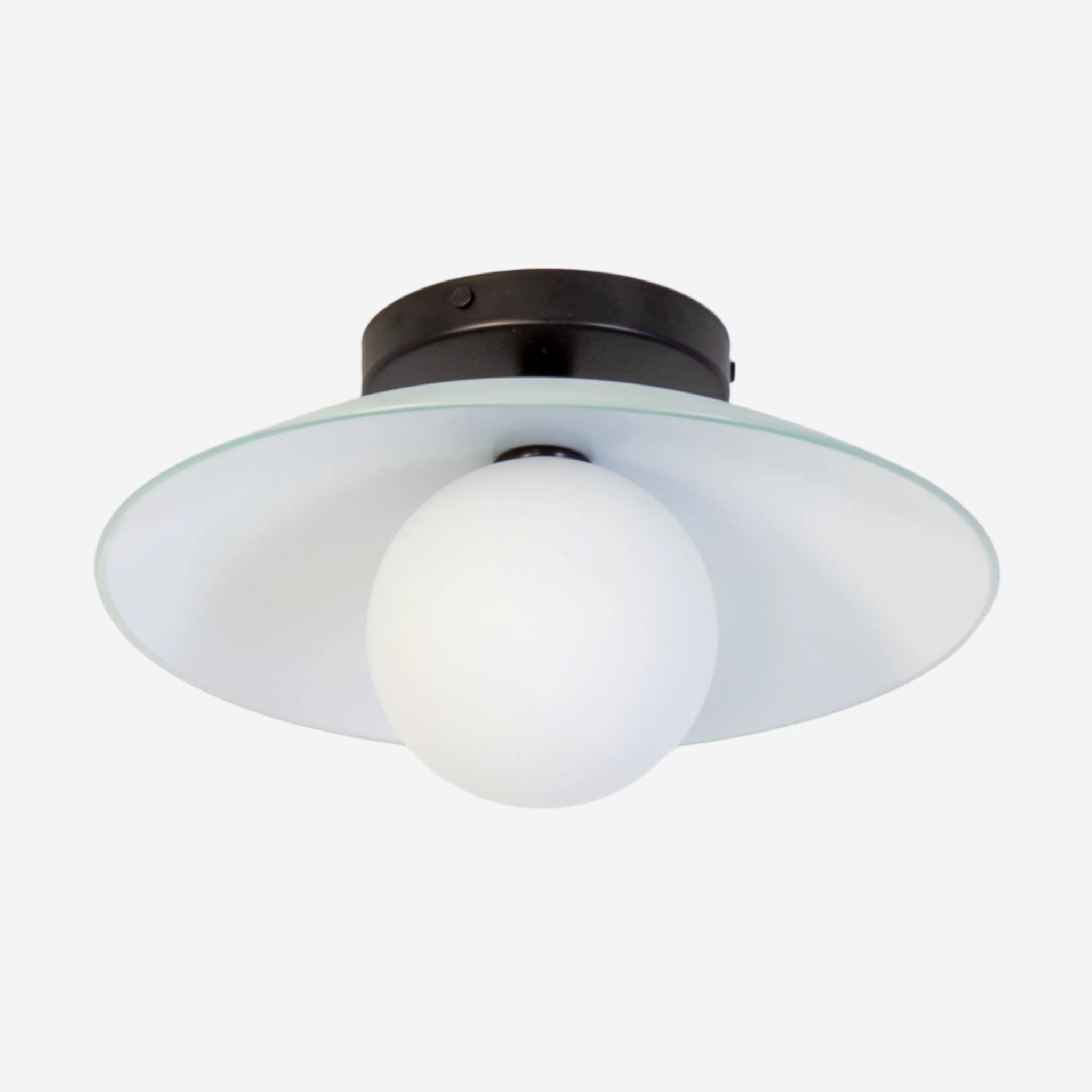
Dish Flush mount from Research.Lighting
3-Way and Multi-Location Light Dimming
Can I use a dimmer in a three-way or multi-way setup?
Yes, but not all dimmers are designed for multi-location control. Three-way and multi-way circuits require dimmers specifically labeled for those applications. Using the wrong type can result in lights that behave unpredictably or do not dim at all. Many modern dimmers offer a main control paired with one or more companion controls. Confirming compatibility between all components is essential before installation.
Can I dim lights from two locations?
You can dim lights from two locations by using a dimmer designed for multi-location control. This typically involves a primary dimmer that sets the brightness and a companion control that sends commands to it. Smart systems may allow multiple locations without traditional traveler wiring. The exact setup depends on the dimmer type and wiring. Planning this early helps avoid limitations once walls are finished.
What’s the difference between a three-way dimmer and companion dimmers?
A three-way dimmer is capable of controlling a load directly from either location, while companion dimmers act as remote inputs that communicate with a primary dimmer. Companion controls do not usually switch power themselves. This approach allows smoother dimming and better consistency across locations, especially with LEDs. It also simplifies wiring and improves reliability compared to older three-way dimmer designs.
Why do three-way dimmers sometimes behave unpredictably?
Unpredictable behavior is often caused by incorrect wiring, incompatible dimmer combinations, or mixing standard switches with dimmers that are not designed to work together. LED sensitivity makes these issues more noticeable than they were with incandescent lighting. Using the correct dimmer and companion components, and following wiring diagrams carefully, usually resolves the problem. When in doubt, having an electrician verify the setup can save time and frustration.

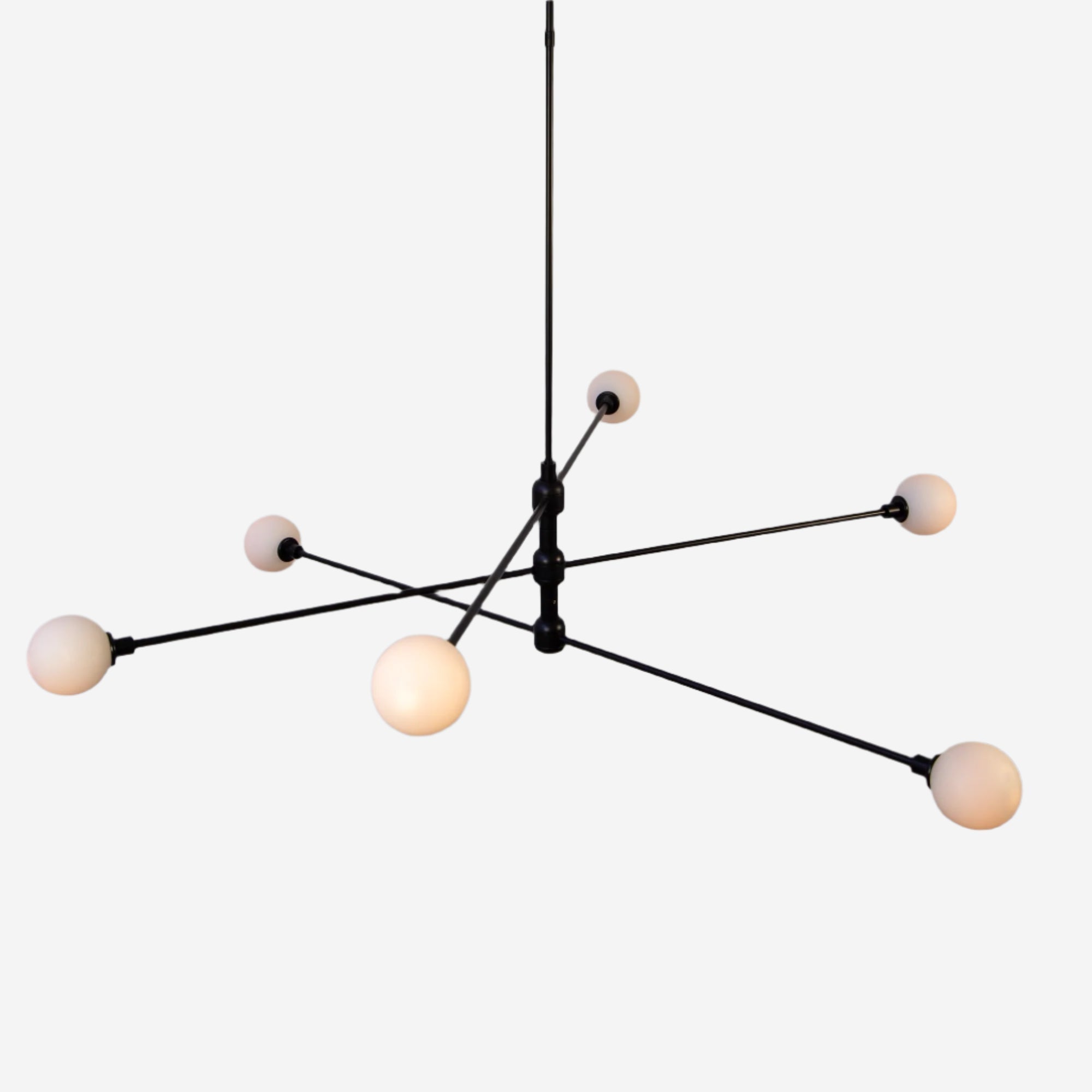
Three Tier Chandelier from Research.Lighting
Smart Dimmers and Lighting Control Systems
What’s the difference between a smart dimmer and a smart bulb?
A smart dimmer controls brightness at the wall, just like a traditional dimmer, but adds features like app control, scheduling, and scenes. It works with standard dimmable fixtures and bulbs and keeps the wiring logic simple. A smart bulb, by contrast, contains its own electronics and needs constant power to function properly. Control happens through an app, remote, or voice assistant rather than the switch. Because of this difference, smart dimmers tend to work best for hardwired fixtures, while smart bulbs are better suited to plug-in lamps or situations where rewiring is not possible. Problems usually arise when both are combined on the same circuit.
Can smart bulbs be used with wall dimmers?
In most cases, no. Smart bulbs expect a steady supply of power so their internal electronics can stay active. A wall dimmer changes the power level, which can cause flicker, buzzing, connectivity issues, or bulbs that reset unexpectedly. If you want smart bulbs, the safest setup is a standard on-off switch that stays on, paired with app-based dimming or a wireless remote. Some systems offer wall controls designed specifically for smart bulbs, but these are not traditional dimmers. As a general rule, use smart dimmers with standard dimmable bulbs or fixtures, and use smart bulbs with simple on-off switching.
Do smart dimmers work if the internet goes down?
Most smart dimmers continue to function as normal wall controls even if the internet is unavailable. You can usually turn lights on and off and adjust brightness directly at the switch. What may stop working are features that rely on cloud access, such as voice assistants, remote control from outside the home, or some app-based automations. The exact behavior depends on the system. Some platforms emphasize local control and keep schedules and scenes running through a hub, while others rely more heavily on internet access. If reliability is important, it is worth choosing a system known for strong local control.
Do smart dimmers require a neutral wire?
Many smart dimmers require a neutral wire so the device can power its internal electronics even when the lights are off. In newer homes, neutrals are usually present in switch boxes. In older homes, they may not be. There are smart dimmers designed to work without a neutral, but they can be more sensitive to low-wattage LED loads and may need careful setup to avoid flicker or glowing when off. If you are unsure what wiring you have, an electrician can confirm quickly. If you are remodeling, adding neutrals to switch boxes is a simple way to keep future options open.
Can smart dimmers control multiple lights or scenes?
Yes. A smart dimmer controls all fixtures on its circuit, and many systems allow multiple dimmers to be grouped so a room behaves as a single zone. Scenes let you save specific brightness levels across several circuits, such as a softer setting for evenings or brighter light for cleaning. Some systems also support schedules, occupancy-based triggers, or time-of-day behavior. It helps to understand how your lighting is wired, since scenes cannot bypass physical circuit boundaries. Good planning makes it easier to create scenes that feel intentional rather than complicated.

Globe Table Lamp from Research.Lighting
Dimming Curves, Brightness Control, and User Experience
What is a dimming curve?
A dimming curve describes how the movement of a dimmer translates into visible changes in brightness. The relationship is rarely linear because human vision does not perceive brightness evenly. Most dimmers and drivers are designed so changes feel smooth and natural rather than mathematically precise. This is why half way on a dimmer does not usually look like half the light. Different dimmers and drivers use different curves, which is why two fixtures can feel very different even when controlled the same way. The curve plays a big role in whether a dimmer feels intuitive or frustrating.
Why does a dimmer feel too sensitive at certain levels?
This usually happens near the low end of the range. In darker conditions, small changes in output feel much more noticeable to the eye. Some dimmers also compress too much change into a small portion of the control travel, which makes fine adjustment difficult. Driver behavior can add to the issue if it does not respond smoothly at low input levels. Using a dimmer with adjustable trim settings can help spread control more evenly. In many LED installations, switching to a reverse-phase dimmer also improves control and reduces sudden jumps in brightness.
Can I adjust the minimum or maximum brightness?
Often, yes. Many dimmers allow you to set a minimum level so the light does not flicker, shimmer, or shut off at the bottom of the range. Some also allow a maximum limit, which can reduce glare, help match different fixtures, or keep a space from feeling too bright at night. On traditional dimmers, these adjustments are often made with a small dial or screw. On smart dimmers, they are usually set in an app. Adjusting these limits can make a big difference in how usable and comfortable a dimmer feels.
Can lights fade on and off smoothly?
They can, as long as the dimmer and driver support it. Smooth fades require stable low-end performance and a control that ramps power gradually rather than switching abruptly. Many smart dimmers allow you to set fade times so lights ease on and off instead of snapping to a level. If lights pop on suddenly, it often means the driver needs a minimum input before it activates or the dimmer is not well matched. Changing dimmer type or adjusting trim settings often improves the transition.
Why does “1% brightness” look different between fixtures?
Percentages describe a fixture’s own output range, not an absolute level of light. One fixture may dim much lower in real terms than another, even if both claim to reach one percent. Optics also matter. A diffused fixture may appear softer and dimmer than a more exposed light source at the same output. The room itself affects perception as well. In a dark space, one percent can feel surprisingly bright. In a brighter room, it may barely register. Real-world context matters more than the number.

Globe Flush Mount from Research.Lighting
Choosing the Right Dimmer and Lighting Controls
Which dimming type is best for most homes?
For many homes, a good LED-compatible phase-cut dimmer is the simplest and most practical option. When fixtures use electronic drivers, reverse-phase dimming often delivers smoother performance and fewer issues like buzzing or flicker, especially at low levels. Forward-phase dimmers can work well, but they are more dependent on driver compatibility and load. Systems like 0–10V offer very stable control, but they require extra wiring and planning and are usually reserved for larger projects. In most cases, the best choice is the dimming method the fixture is designed for, paired with a quality dimmer.
What should I check on a fixture spec sheet before choosing a dimmer?
Start by confirming the supported dimming method, such as forward-phase, reverse-phase, or 0–10V. If recommended dimmer models are listed, that is a strong signal the combination has been tested. Look for notes about dimming range, minimum dim level, or known limitations at the low end. If the fixture uses an LED driver, check whether it is integral or remote, since that can affect compatibility and serviceability. When multiple fixtures share a dimmer, confirm both minimum and maximum load guidance. These details are where most dimming problems are avoided or created.
What should I tell my electrician to avoid dimming problems?
Bring the fixture specifications and explain what you want the lighting to feel like, not just that you want dimming. Let them know which dimming method the fixtures support and whether smooth low-level control is important to you. If you are using smart dimmers, ask them to confirm whether neutrals are present in the switch boxes and whether any locations are three-way or multi-way. Sharing this information early helps avoid mismatched controls and last-minute changes. Clear expectations lead to better results than assuming all dimmers behave the same.
Is it better to standardize on one dimmer brand across a home?
Often, yes. Using the same dimmer family creates a more consistent experience from room to room and makes controls easier to understand. Different brands can feel very different in how they dim, especially near the low end. Standardizing also simplifies troubleshooting and, in smart systems, makes scenes and multi-room control easier to manage. There are times when a specific fixture requires a different type of dimmer, and exceptions can make sense. A good approach is to choose one primary dimmer brand for most circuits and deviate only when a fixture’s requirements clearly call for it.

Dish Pendant Light from Research.Lighting
Conclusion
Dimming and lighting controls shape how a space feels just as much as the fixtures themselves. When paired thoughtfully, they add flexibility and comfort without calling attention to the technology behind them. Most problems arise not from dimming itself, but from mismatched components or assumptions carried over from older lighting systems.
Understanding compatibility, load, wiring, and control types makes it easier to plan lighting that behaves predictably and lasts over time. While this guide offers general guidance, final decisions should always be informed by specific product documentation. Well-matched fixtures and controls are the foundation of lighting that works as smoothly as it looks.
To learn a little more about lighting, check out our guide on FAQs About Pendant Lighting or The Ultimate Guide to Modern Lighting.