Defined: What Is a Pendant Light? Pendant Light Meaning
A pendant light is a ceiling fixture that hangs down into a room, usually from a cord, chain, or rod. Instead of sitting tight to the ceiling, it drops lower, bringing the light closer to where it’s actually needed.
Straightforward by design.
Pendant Light Meaning, In Practical Terms
In real life, pendant lights do two jobs at once. They provide light where you want it, and they give a space some structure from above. Because they hang into the room rather than staying out of sight, pendants feel intentional. You notice them, even when they’re quiet.
They’re often used where light needs direction, over a surface, along a line, or within a defined area. The fixture isn’t just lighting the room. It’s helping organize it.
If you want more info on lighting terms, check out our Lighting Glossary.

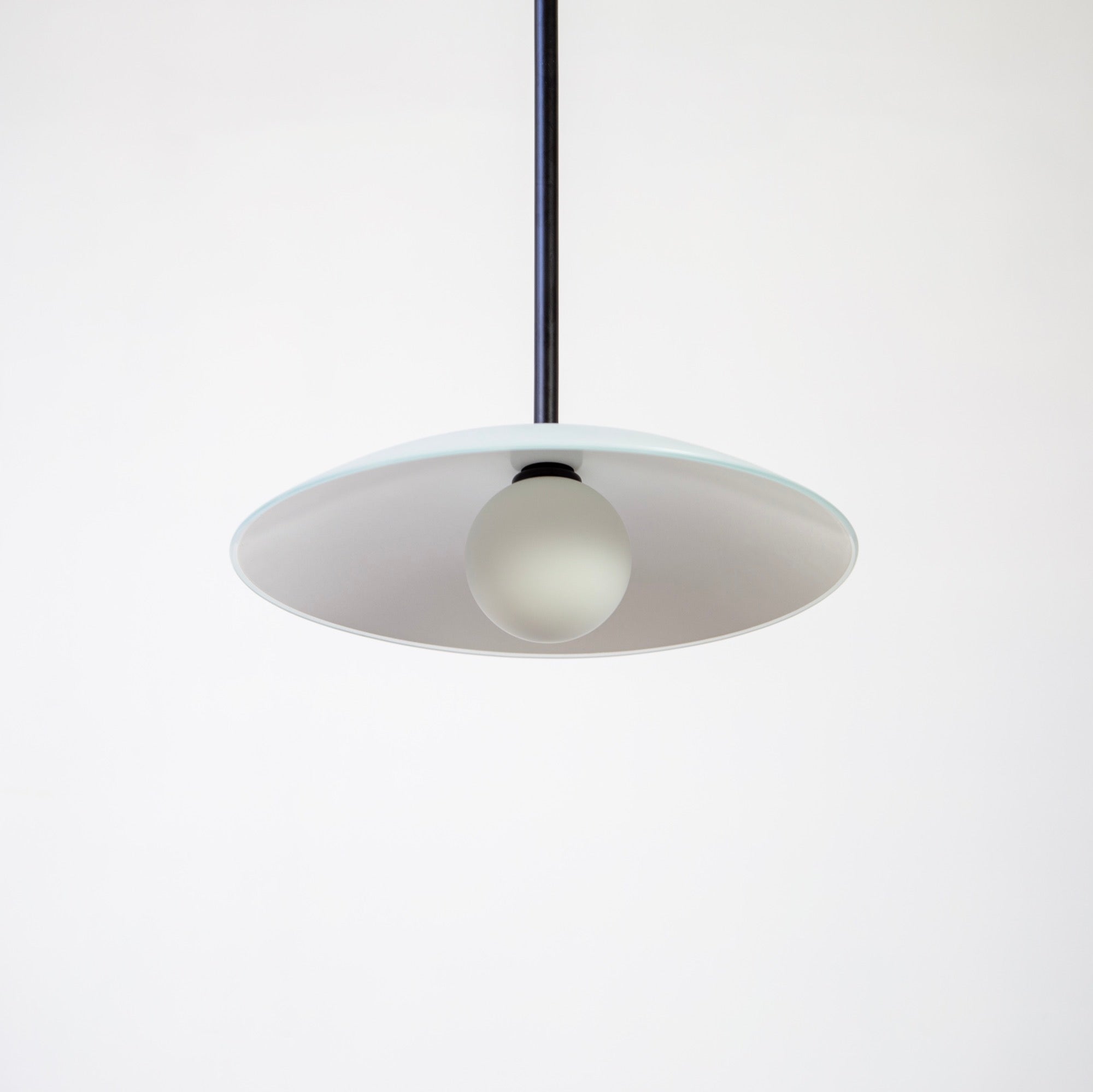
Dish Pendant Light by Research.Lighting
The Etymology of “Pendant”
The word “pendant” comes from the Latin pendere, which means “to hang.” Over time, it was used to describe anything suspended freely, from jewelry to decorative objects.
Lighting followed naturally. A pendant light is still exactly what the word implies. A light that hangs. Nothing fancy about it.
A Brief History of Pendant Lighting
Hanging light sources existed long before electricity. Candles, oil lamps, and lanterns were often suspended to spread light more evenly and keep flames away from surfaces below.
As gas and electric lighting developed, that same idea carried forward. Hanging fixtures became safer, more reliable, and easier to control. Eventually, they stopped being purely functional and started being designed, shaped by materials, proportion, and personal taste.
By the mid-20th century, pendant lights had become a familiar architectural element, not just a utility, but a visible part of how a room came together.
How Pendant Lights Are Used Today
Today, pendant lights often sit somewhere between task lighting and ambient lighting. A single pendant can create a focused pool of light. A series can stretch across a surface and set a rhythm.
They’re also used to define areas within open layouts. A well-placed pendant can suggest where one zone ends and another begins, without adding walls or partitions. Height, spacing, and scale make all the difference.
Pendant Lights are commonly placed over kitchen islands, in dining rooms, over a bedside table, in a stairwell, or in corridors with tall ceilings. They're used pretty widely in both residential lighting and lighting for commercial interiors.
See our guide to Pendant Lighting FAQs for more.

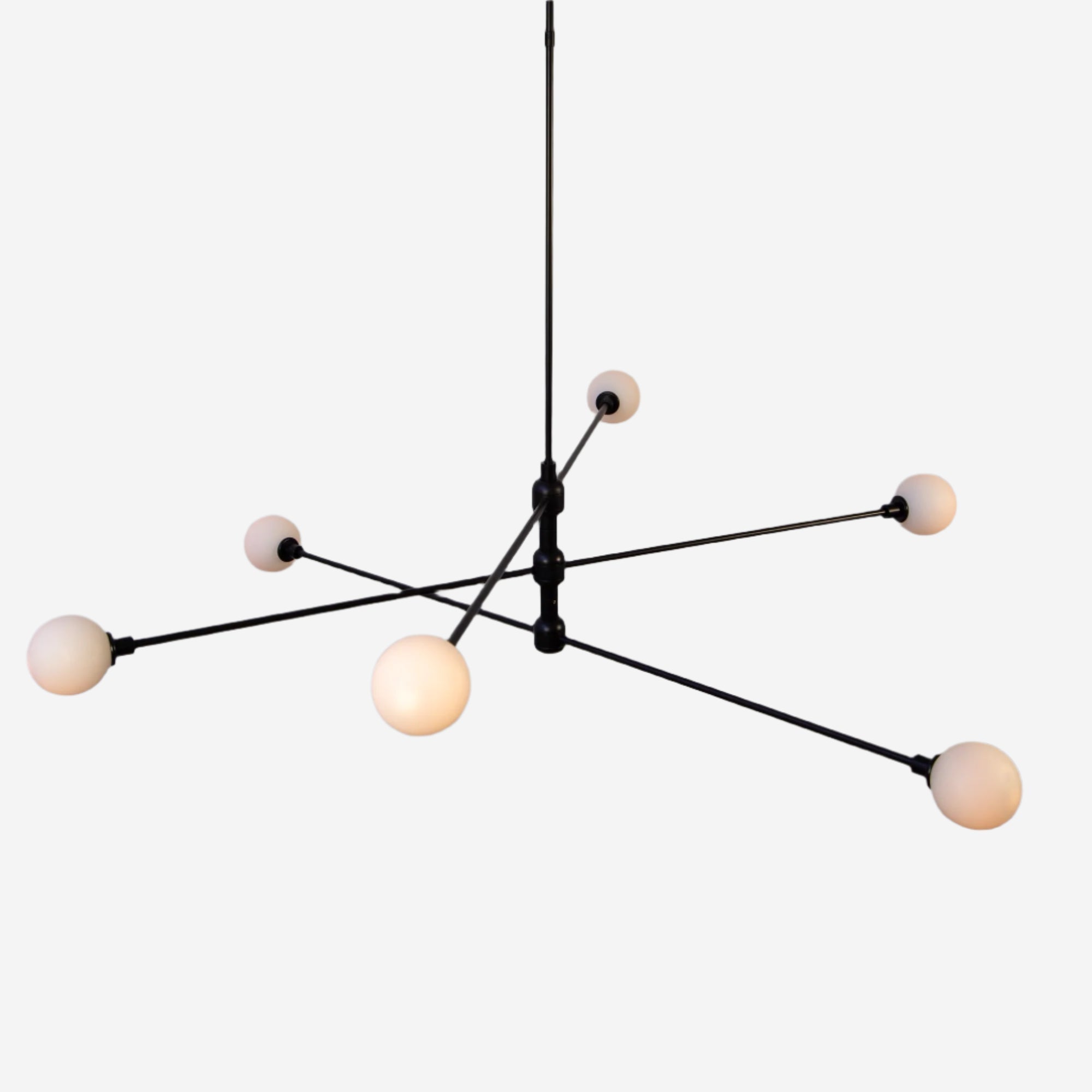
Bunch Pendant Light by Research.Lighting
Common Types of Pendant Lights
Pendant lights come in a range of forms, each with a slightly different role:
- Single pendants for focused light
- Mini pendants that work well in groups
- Multi-light or clustered pendants
- Linear pendants that run horizontally
- Oversized pendants that carry more visual weight
The type you choose affects both how the light behaves and how present the fixture feels.
Pendant Lights vs Other Ceiling Lights
What separates pendant lights from other ceiling fixtures is how they occupy space.
Flush mounts stay close to the ceiling. Recessed lights fade into it. Chandeliers tend to spread outward and fill a larger volume.
Pendants are more direct. They drop down, take up just enough room to matter, and stop there.
Why Pendant Lights Are So Popular
Pendant lights are flexible. You can adjust their height, group them, space them out, and use them to solve very specific lighting needs. They provide direction without harshness and presence without excess.
They also do something subtle. They give ceilings a role, instead of treating them like empty space.

Dome Pendant Light by Research Lighting
The Takeaway
So what is a pendant light? It’s a hanging fixture that brings light down into the room in a clear, deliberate way. The idea is old, the definition hasn’t changed much, and the usefulness hasn’t faded.
A good pendant doesn’t ask for attention. It just hangs there, doing what it’s meant to do.
Up next, check out Wall Sconce Meaning: What is a Sconce?.