How Bright is 650 Lumens? 650 Lumens to Watts
LED lighting changed the way we talk about brightness. Watts used to give everyone a quick way to guess how a bulb would feel, but that logic doesn’t hold up anymore. Lumens took over, especially with integrated LED fixtures where the bulb and the design work as one. If you’re trying to figure out what 650 lumens actually looks like in a real room, think of it as a sweet spot: bright enough for most everyday tasks, calm enough to blend into a layered lighting plan.

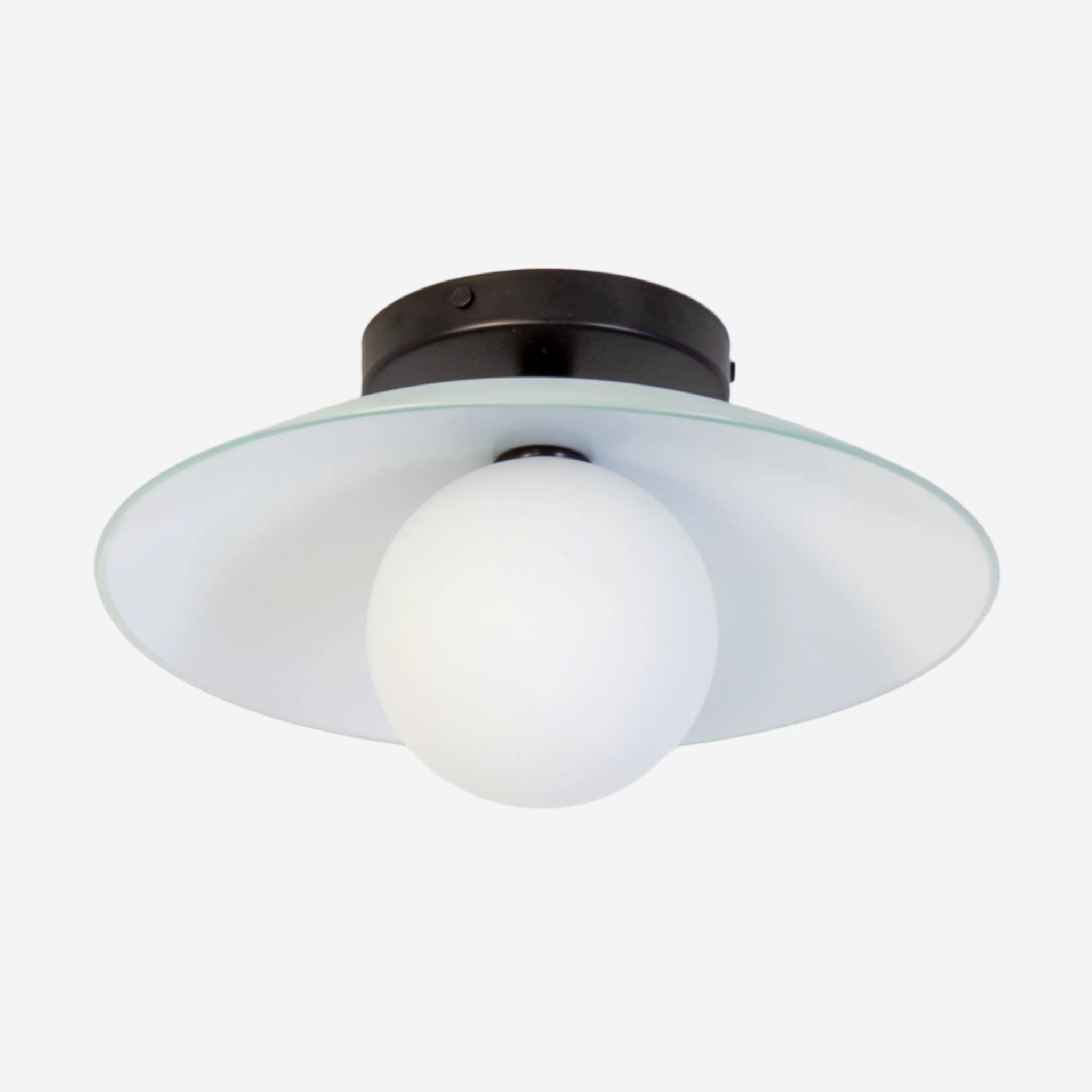
Hive Flush Mount from Research.Lighting
What are Lumens? 650 Lumens vs Watts
Lumens tell you how much visible light a fixture puts out. Watts only explain how much power it uses. With incandescent bulbs, the two were tightly linked, which is why people still think of wattage as brightness. LEDs changed that. A fixture producing around 650 lumens might use only a few watts, while an older incandescent needed roughly 50 watts to get there.
If you want a clearer breakdown of how all of this fits together, our piece on Lumens Explained: How Bright is Bright Enough walks through the basics in a simple way. If you prefer something more chart driven, the Lumens to Watts Conversion Chart & Brightness Comparison lays everything out neatly.
How Bright is 650 Lumens
Six hundred fifty lumens lands in that comfortable middle zone. It’s bright enough to feel crisp without overwhelming a smaller room, and it makes sense for a focused task layer in a larger one. Picture lighting your kitchen counter, or a reading nook, a bedside sconce, or an entryway light. In a pendant light, 650 lumens can feel direct and clear. In a frosted or shaded glass light fixture, it spreads into a softer, calmer fill.
How the fixture is built matters a lot. A directional spotlight will make this level feel punchy. A diffused globe spreads it out into something quieter.
Is 650 Lumens Bright Enough?
For many situations, yes. It’s a practical amount of brightness for reading, meal prep, and general use in smaller rooms. In bigger spaces, it’s a strong supporting player rather than the main light. Sometimes that’s all you need.
You might want more brightness for detailed work, like your kitchen pendants, or near vanities, larger office lights, or anywhere that calls for sharper visibility. Something closer to 1300 lumens feels more confident in those spots. On the other hand, accent lighting, nighttime glow, or architectural highlights often benefit from far less. If you want quick clarity on any lighting terminology you bump into, the glossary of lighting terminology keeps everything straightforward.

Dish Sconce from Research.Lighting
Closing / TLDR
Six hundred fifty lumens is a versatile level of light. Strong enough for daily tasks, subtle enough to blend into a layered plan, and far more informative than wattage when choosing LED fixtures.
In short, 650 lumens carries its weight without taking over. Pair it with the right fixture and the right room, and it settles in exactly where you need it.
Up next: Check out How Bright is 300 Lumens? 300 Lumens to Watts, How Bright is 500 Lumens? 500 Lumens to Watts, or How Bright is 1300 Lumens? 1300 Lumens to Watts.